


If you think of Elle Woods as a singular (albeit fictional) individual existing within a singular (albeit fictional) continuity, Amazon’s new Legally Blonde prequel defies all narrative logic.
The entire premise of the earlier film was that this California girl arrives at Harvard oblivious to life beyond boys, clothes and sorority sisterhood; Elle’s reveal that she’d previously spent her teen years amid the grunge rockers and activists of Seattle is a character inconsistency so gaping it’d require a Days of Our Lives-level bout of amnesia to fill it.
Elle
The Bottom Line
A for effort, B minus for execution.
Airdate: Wednesday, July 1 (Prime Video)
Cast: Lexi Minetree, June Diane Raphael, Tom Everett Scott, Jacob Moskovitz, Gabrielle Policano, Chandler Kinney, Zac Looker
Developed by: Laura Kittrell
But if, on the other hand, you think of Elle Woods as an endlessly rebootable franchise IP à la James Bond or Superman, and this latest adventure as a loose re-adaptation of Laura Brown’s source novel rather than an expansion of it, Elle makes perfect sense from a business standpoint — though still only somewhat from a creative one. Amiable enough but nowhere near as charming as its cinematic predecessor, the new series does as much to highlight the limits of the Legally Blonde concept as its adaptability.
As you’d expect, this Elle (Lexi Minetree) begins her story as a sheltered L.A. princess, though the choice to make her a rising high school junior in 1995, rather than a graduating college senior in 2001, makes her feel as much a kin to Clueless‘s Cher Horowitz as to the original Elle Woods. At the start, she’s got it all: two loving parents (Tom Everett Scott’s Wyatt and June Diane Raphael’s Eva), an enormous Bel-Air mansion, a tight-knit group of gal pals, a cute boy waiting in the wings, even a three-point plan for conquering the social hierarchy in the new school year.
Then, on the evening of her 16th birthday, Elle receives the devastating news that the Woodses are moving to Seattle. Suddenly, everything that made her so admired in L.A. — her girlishness, her bubbliness, her taste for Barbie-pink minidresses — makes her suspect to a student body so homogenously grungy that the requisite cafeteria clique tour just cuts from one table of kids in gray flannels and black Doc Martens to another.
This is, of course, in no way a fair portrayal of the Emerald City, and anyone who lived through the era or lived in the town is bound to roll their eyes at how cheesily stereotypical it feels. But Elle‘s tongue-in-cheek tone, soundtracked to nostalgic needle drops like Radiohead, Soundgarden and Garbage (the latter for the opening title sequence), is enough to keep it from feeling like a normie’s affectionate fantasy of ’90s anti-establishment cool rather than an insult to Seattle’s robust population of people who like team sports just fine and do not dress exclusively in neutral-toned plaids.
The bigger issue is that the flatness of the show’s setting contradicts its very premise. On the one hand, Seattle is all punky rebels marching to the beat of their own drums; on the other, all those individual drums are apparently synced to the exact same rhythm. Only Elle seems out of tune, and she’s scorned for this “conformity.” The framing awkwardly if unintentionally evokes the defensive reactionary position that rich, straight, feminine white women are the most oppressed of all, though the effect mellows as other individual characters become more fleshed out.
In any case, despite the obstacles of her flaxen hair and trendy designer wardrobe — and the even bigger disadvantage of having immediately pissed off the most popular girl in school (Chandler Kinney’s Kimberly) on her very first day — Elle begins to find her place. First it’s by helping raise money for the school’s underpaid support staff, then by campaigning to reinstate an unjustly fired member of said support staff (Amy Pietz as a messy but well-meaning secretary), then by investigating a larger conspiracy around these events that goes all the way to the top (i.e., a smarmy school principal played by Matt Oberg).
Much of Elle’s initial draw rests on the lead performance by Minetree, which hews uncannily close to Reese Witherspoon’s from the movie. Not only does Minetree look more like Witherspoon (who’s credited as an EP) than Witherspoon’s own daughter, she nails every vocal inflection and physical tic with sweet-as-pie precision. It’s a turn impressive enough on a technical level and likable enough on an emotional one to have you wishing Minetree had actually been allowed to make the role her own.
As with any ongoing series, though, Elle’s long-term sustainability will live or die by its ensemble. There, too, the results are promising but not yet spectacular. Scott has not much to do as the cheerfully dorky dad who takes to Seattle like a duck to water, but his very uselessness is part of the joke and then part of the plot. Raphael is very well cast as Eva, a comic-relief ditz who gradually transitions into a bittersweet journey of self-discovery to mirror Elle’s after she befriends a local politician (the late James Van Der Beek in his very last role).
Of the kids, Zac Looker is endearing as potential love interest Dustin, a stoner-skateboarder-activist who senses an unlikely kindred spirit in Elle, while Gabrielle Policano exudes a low-key cool as Liz, a shy musician Elle is drawn to. (Not like that. Unfortunately.) But characters like Elle’s nice-boy crush Miles (Jacob Moskovitz) seem conceptualized primarily for what they represent to Elle — in this case, the mainstream jock-lite foil to Seattle’s activists and artists — rather than uniquely interesting personalities in their own right.
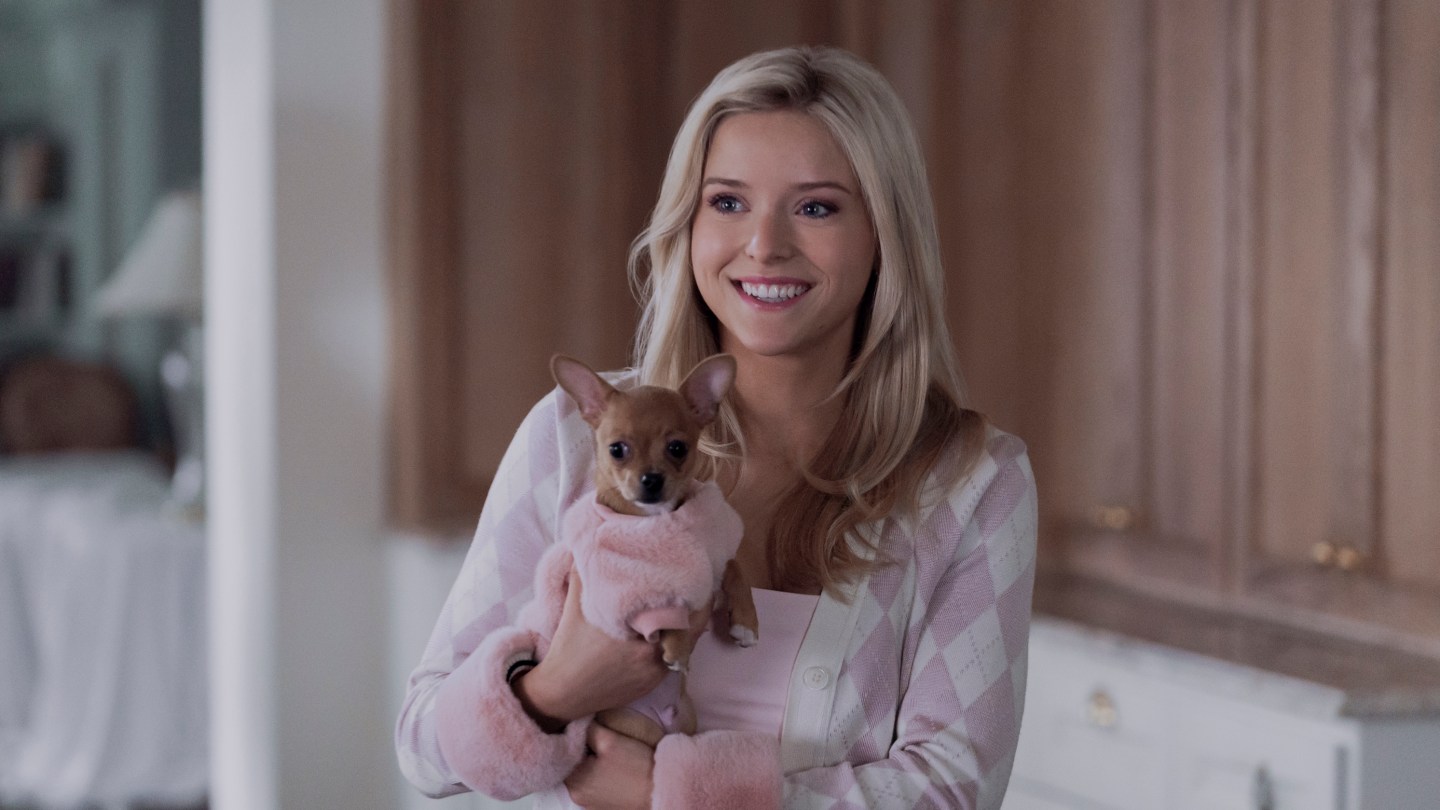
Meanwhile, though I’ll give the show credit for not going totally overboard with the Legally Blonde Easter eggs, the ones it does indulge in range from delightful (I will never complain about seeing her chihuahua, Bruiser) to downright groanworthy (“Hey, Elle, have you ever considered becoming a lawyer one day?”). It’s hard to blame Elle for wanting to make those connections, since capitalizing on the lingering affection for Legally Blonde is the only reason it exists in the first place. But like its own heroine, it feels stuck somewhere between the show it thought it wanted to be and the show it has the potential to become.
Read the full article here