





SINGAPORE – The current “It” food is not a cookie, pastry or ice cream flavour. It is pig blood curd.
Since the authorities approved the import of the item from one slaughterhouse in Thailand, restaurants have been racing to put it on the menu or are experimenting with pig blood curd dishes to serve.
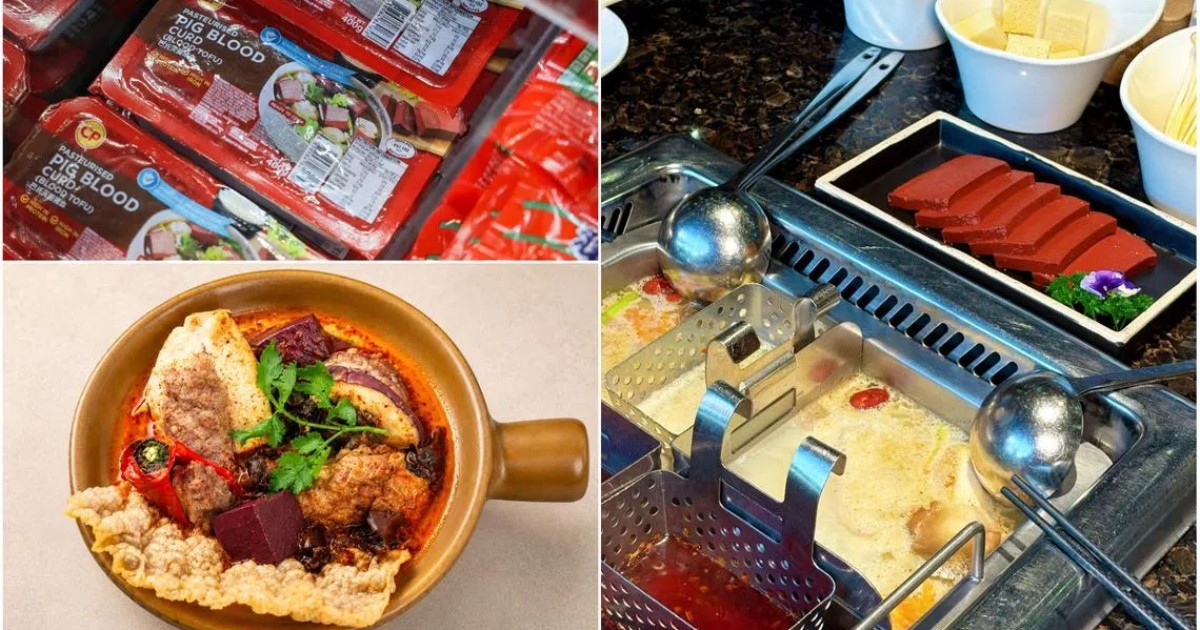
Supermarkets, including Cold Storage, FairPrice, Giant, Prime and Sheng Siong, started selling it earlier in June. The 400g packs of Pig Blood Curd ($6.95) come from CP Foods, the agro-industrial and food conglomerate from Thailand.
Its spokesman says demand has been “incredible”, and shoppers are saying they have had no luck finding it in supermarkets.
FairPrice, which has more than 160 supermarkets here, started selling the pig blood curd at the promotional price of $6.15 a pack on June 4. Its spokesman says it had “overwhelming” customer response on launch day.
“Over 80 per cent of our stocks were sold within the first five days, with several outlets selling out by the evening on the day of launch,” the spokesman says, adding that it is working with the supplier to progressively replenish its shelves.
Absent for 27 years
Food made with animal blood vanished from the Singapore scene in 1999, after the Nipah virus outbreak in Malaysia in 1998. It decimated pig farms there, and more than one million pigs had to be culled. The virus, which can spread from animals to humans, also killed more than 100 people, including an abattoir worker here.
CP Foods, which says it has six years of experience producing and supplying pig blood curd in Thailand, decided to review the original reasons for restricting blood curd, and sought “clarification on the specific requirements set by the Singapore Food Agency (SFA)”.
[[nid:732872]]
The company’s spokesman says it worked with its production team to see if any of the concerns could be addressed and if the product could fully comply with current regulatory standards here.
CP Foods also works with Thai health authorities to obtain the required testing, certification and supporting documents needed to meet SFA’s food safety requirements.
The blood comes from Bangkhla Pig Slaughterhouse in eastern Thailand. It is collected in sanitised vacuum tanks, and filtered to remove any contaminants. Then it gets transferred onto trays, which are sealed and then pasteurised via steam cooking – at 90 to 95 deg C – for 40 to 45 minutes. That process kills bacteria and turns the blood into curd. The curd is then cooled down.
Each batch of blood curd, the company says, is tested for the presence of bacteria, and kept at 0 to 4 deg C during the entire journey from factory to supermarket.
The first shipment of pig blood curd of 6,000 packs arrived in Singapore on May 28.
Aside from eating it in restaurants and buying it from supermarkets, people might soon be able to order pig blood curd dishes in hawker centres. CP Foods says its distributors are in talks with coffee-shop and hawker stalls to use the product.
Red wave
Restaurants have wasted no time putting pig blood curd on the menu.
Hotpot restaurant chain Haidilao introduced it at its 15 outlets on May 28. Until June 30, each portion is priced at $3 at all its restaurants except for the one at Marina Bay Sands, where it goes for $4 a portion. The promotional prices are half the regular price.
Tong Xin Ru Yi Traditional Hot Pot, in the Boat Quay area, is also offering pig blood curd as a hotpot ingredient, at $9 for a 400g serving.
Owner Oscar Zhang, 39, is working on dishes using the blood curd, including Sichuan-style Mala Pig Blood Curd and Pickled Mustard Green Pig Blood Soup.
Also experimenting is Martin Foo, 60, group executive chef of the Crystal Jade Group. He is working on dishes for a promotion running from July 10 to Aug 30 at Crystal Jade Hong Kong Kitchen, which has seven outlets.
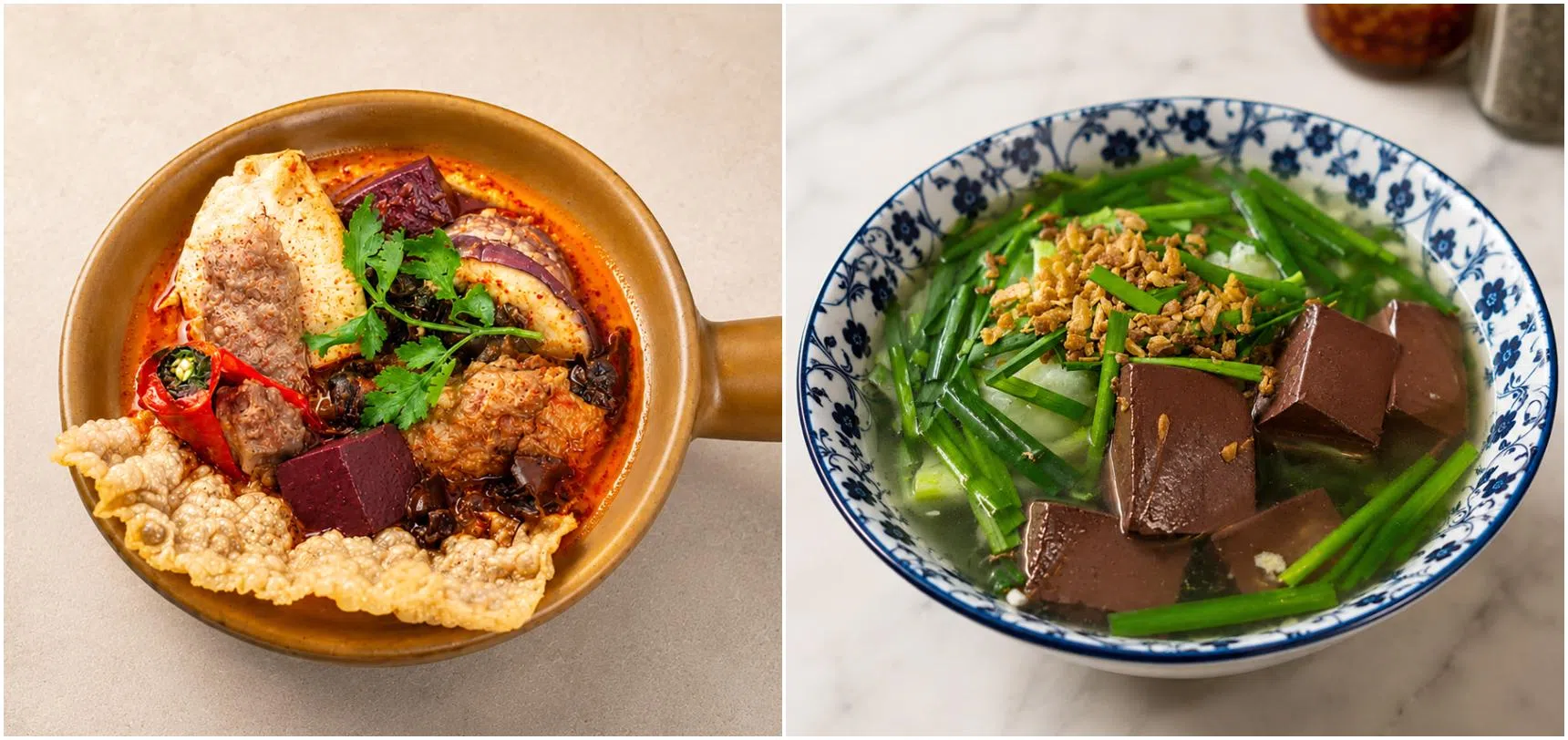
Diners will be able to order Boiled Pig Blood Curd & Handmade Meatball Congee, or add a serving of pig blood curd to their congee orders. There are two other offerings: Salted Fish, Minced Pork, Pig Blood Curd & Tofu Claypot; and Claypot Chive, Pepper, Pig Blood Curd & Pork Tripe Soup.
The soup, he says, is his favourite way to enjoy pig blood curd.
“It is a deeply soothing and fortifying dish, the kind that warms you from the inside out,” he says. “The pig blood curd is smooth and tender, the pork tripe has a nice bite, and the chives and pepper give the broth a warming, aromatic flavour. It is a good dish for anyone who needs a bit of nourishment.”
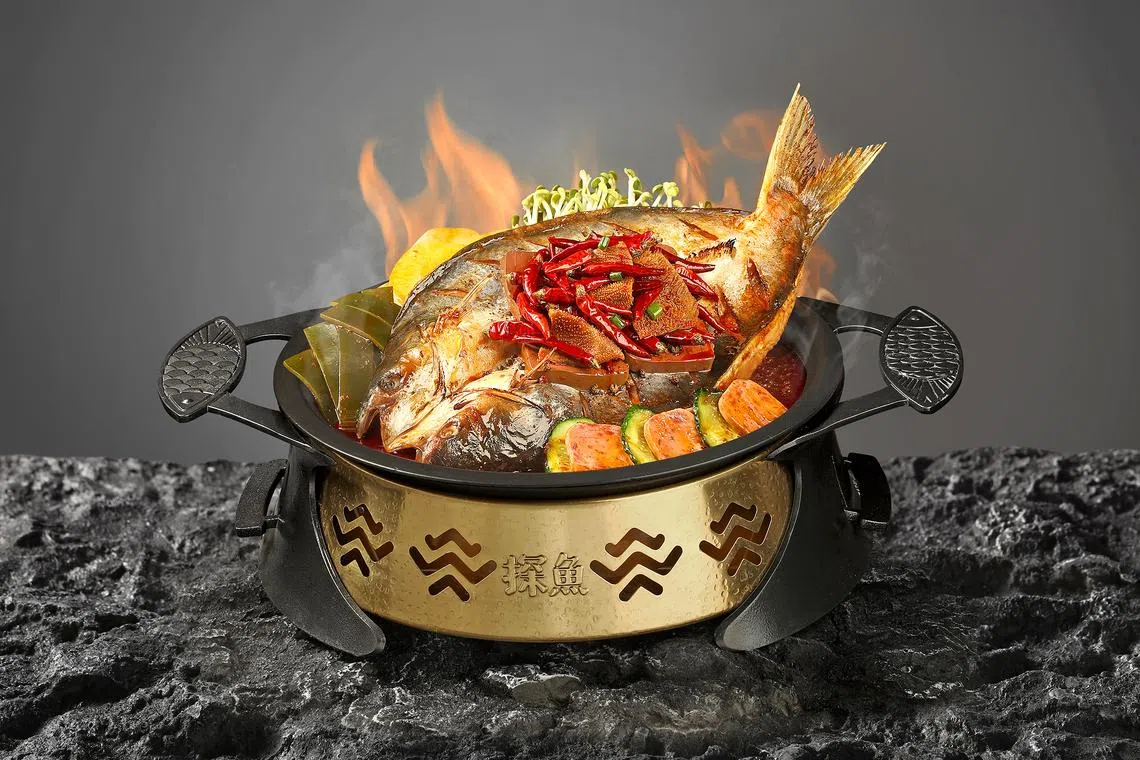
China grilled fish chain Tanyu, with five outlets here, is giving diners the option of adding pig blood curd to its Grilled Fish With Fresh Green Pepper and Grilled Fish In Spicy Sauce (each priced from $48.90).
From June 15 to 30, it is offering 100g of pig blood curd for $2.70, limited to one serving for each fish, with limited servings a day in each outlet. After that, the add-on will cost $6 for 100g.
The $2.70 limited-time price is not a random one. Chief operating officer Audrey Koh, 33, calls it symbolic, “a tribute to its 27-year journey back to the table”.
Spicy Noodle Singapore at Raffles City, an offshoot of Taiwan noodle chain Da Shi Xiong Xiao Hun Mian Pu, is looking to serve pig blood curd as a side-dish option with its noodle sets, and as an a la carte dish. It is likely to be simmered in the chain’s Master Chilli Sauce, like the Spicy Duck Blood it serves in Taiwan.
The Putien and Hakka Yu chains have options for pig blood curd lovers too.
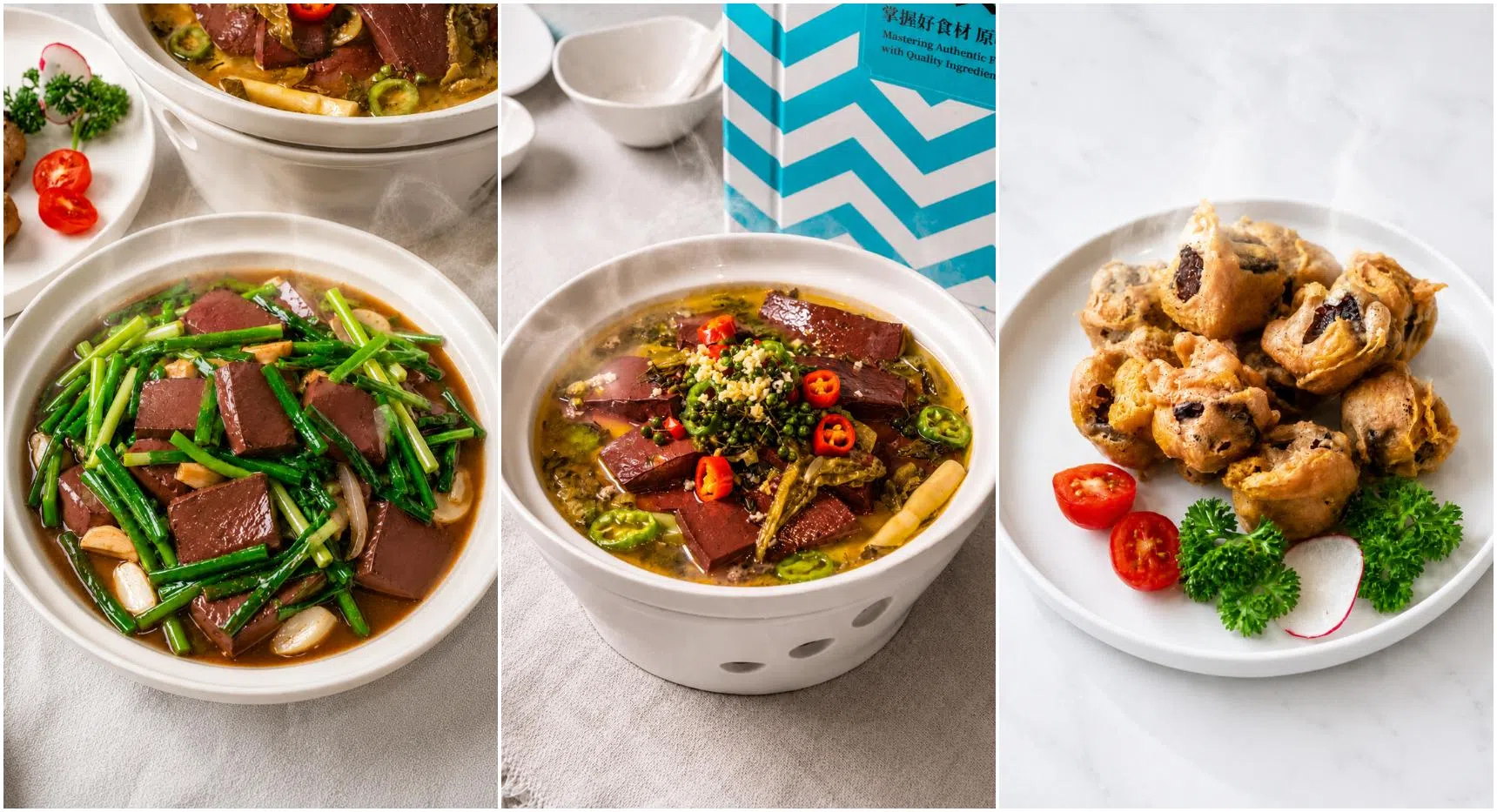
Putien, with 18 restaurants that serve Heng Hwa cuisine from the coastal city of Putian in Fujian, has Stir-fried Pig Blood Curd With Chinese Chives ($12.80), Pig Blood Curd With Glass Vermicelli And Chinese Sauerkraut ($16.80) and Crispy Fried Pig Blood Curd ($12.80).
Founder Fong Chi Chung, 58, says he has blood curd about once a month, when he is in China or Hong Kong.
He adds: “Whenever I have hotpot, especially spicy mala hotpot, I always order pork blood. It absorbs all the flavour from the broth, and the texture is incredibly smooth and silky. It’s something I really enjoy eating.”
At Hakka Yu, with five outlets here, diners can order Braised Pig Blood Curd With Chives And Chinese Sauerkraut ($15.80).
Restaurants offering pig blood curd extend beyond hotpot and Chinese ones. Thai-Chinese restaurant Yaowarat Seafood in Lavender Street is offering Thai Pork Blood Minced Pork Soup and Pork Blood Mapo Tofu (both $16 a serving).
People who might remember having blood curd in their laksa will find it now at Enjoy Eating House & Bar in Stevens Road. It launched Laksa Handmade Yong Tau Foo With Pork Blood Curd ($22) on June 8, following Pork Blood Curd And Chives Soup ($18) on June 3.
Co-owner Joel Ong, 39, says: “The most meaningful feedback is when customers say, ‘Wah, I haven’t eaten this in years.’ That tells me the dish is doing more than just feeding customers. It is also bringing back a memory, and that is something I love to do with my food.”
New fans and old
Restaurant operators say diners who order their pig blood curd offerings tend to be aged 30 and older. But all are hoping the protein-rich food will gain favour among the young.
Crystal Jade’s Foo says: “Palates today are increasingly adventurous and open-minded, and we feel this is a wonderful opportunity to reintroduce a traditional ingredient to a new generation. With today’s producers adhering to strict safety and hygiene standards, diners can feel reassured to give pig blood curd a try.”
Haidilao says its pig blood curd is gaining traction among Gen X diners.
“At the same time, we have also observed younger diners, including millennials and Gen Z customers, trying it out of curiosity and interest in nostalgic or traditional hotpot ingredients,” its spokesman says.
Those who seek out blood curd dishes on vacations overseas say they are glad they can now have it on home ground.
Colleagues Stella Lock, 53, and Jane Cheong, 64, who work in sales, have been looking out for it since finding out that the authorities here have given it the green light.
Lock says: “I’m so excited, and I’ve been waiting. I like that it’s pasteurised so it’s safe to eat.”
She is cooking pig organ soup with salted vegetables and blood curd, and giving packs of the curd to a relative who is giving birth, to have as confinement food.
Cheong is also making soup with the pig blood curd, and is contemplating a mala stir-fry. “I’ve had it in Taiwan, Thailand and China, and I love it very much,” she says.
ALSO READ: New ingredient unlocked: Haidilao to serve pig’s blood starting May 28
This article was first published in The Straits Times. Permission required for reproduction.
Read the full article here