



On Jan. 29, 2024, 6-year-old Palestinian girl Hind Rajab called the Palestinian Red Crescent Society from Gaza City. Trapped in a car surrounded by the bodies of her relatives killed by Israeli tank fire, she stayed on the line for more than an hour pleading for help.
The ambulance sent to rescue her was later destroyed, killing the two medics inside. While the Israeli Defense Force claimed that there were no IDF troops near Rajab’s vehicle, Forensic Architecture, a London-based independent research group, carried out an investigation using satellite imagery and visual evidence and concluded that several Israeli tanks indeed were present and one likely had fired 335 rounds on the car that Rajab and her family had been in. The investigation also concluded that an Israeli tank had also likely attacked the ambulance that came for Rajab.
Hind’s recorded voice — authenticated and analyzed by investigations from The Washington Post, Sky News and Forensic Architecture — became one of the most devastating documents of the war in Gaza.
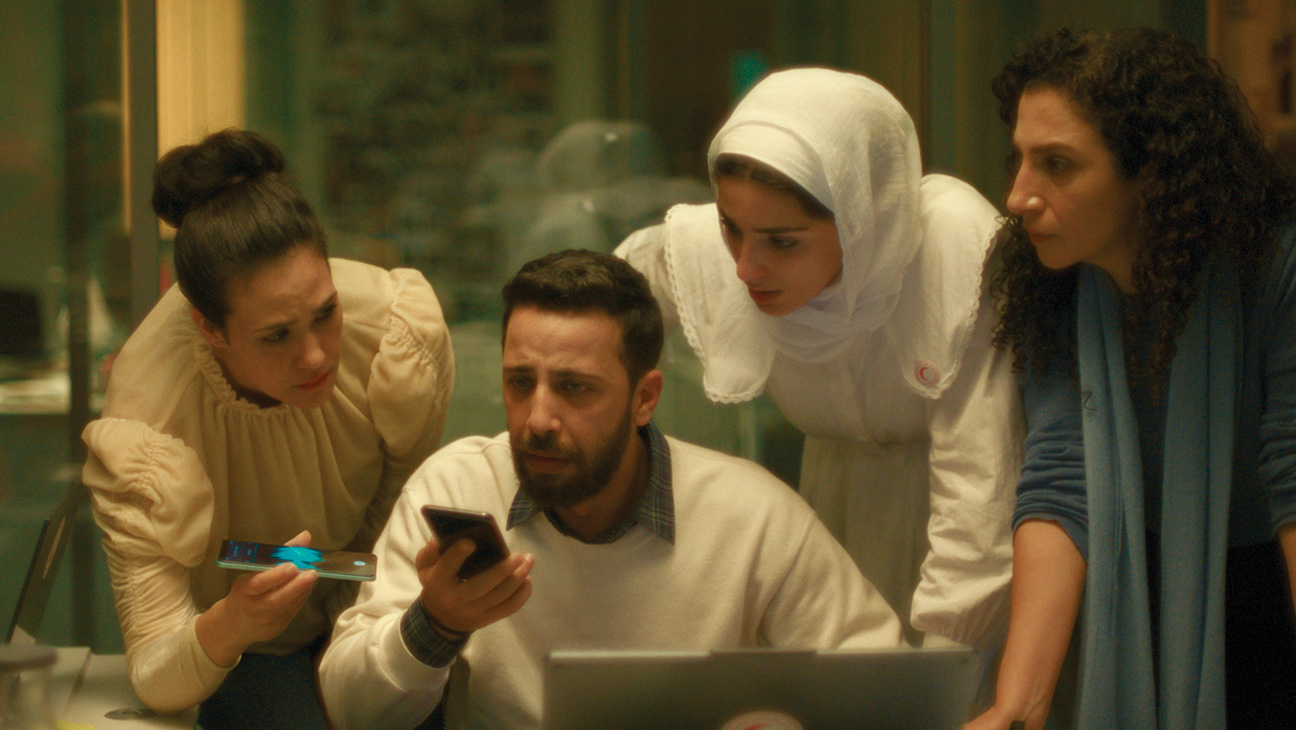
Denied access to Gaza, Tunisian filmmaker Kaouther Ben Hania built The Voice of Hind Rajab from those recordings, blending documentary and fiction to reconstruct the failed rescue effort. The film, representing Tunisia, is one of five Oscar nominees for best international feature.
What does it mean for you to be nominated for this film?
I’m honored, and I’m happy because the voice of Hind was heard with this nomination and now it will be heard more. For this movie, an award is not the destination. But I think that if this nomination helps keep attention on the children [in Gaza] who are still alive, who are waiting for help today, then it transforms for me into a meaning beyond cinema.
We often think that cinema is about escape, but this movie is a reminder, it’s not an escape. I’m very happy that the Academy members have recognized this and heard the voice of this little girl. I hope it will echo more and more.
Do you see this nomination as an opportunity to get the international media focused again on what’s still happening in Gaza?
I hope so. We can’t even measure the scale of what has happened in Gaza because Gaza is closed — no journalists can go inside. It will take time, but we should not forget.
What was behind your decision to use Hind’s original voice recordings for the film?
Everything started for me because I heard her voice on the internet, so the voice of Hind Rajab was the starting point of this movie. For me, I needed to do a movie as a place for her voice where people can sit and listen.
I know that it’s not a very comfortable thing to listen to, but we need to. We can’t look away. For me, there was no other choice than to put her real voice in the film. We need to remember her voice, and we need to make her voice echo.
You released this film independently through Willa, the distribution arm of one of your producers. What has that experience been like?
They are a small distributor, but they are part of this movie, part of the team, and they are working very, very hard. We don’t have a big machine behind us, but I’m very happy with all the effort and all that we’ve achieved to get the Academy members to watch the movie and recognize it.
There have been extensive media investigations into Hind’s killing but as yet no criminal investigation. Do you think we will ever see justice for Hind Rajab?
I hope so, because we can’t live in a world without accountability. There is the case of Hind, and there are 20,000 other children [killed in Gaza]. But Hind’s voice was recorded, as she was there, surrounded by the bodies of her six family members, and then the two paramedics who came to rescue her were also killed. We can’t ignore that. There was a forensic investigation, which did a great job, but there is no accountability.
I don’t have a crystal ball, but my hope is that this film can be part of the change. Because we can’t live in a world where just because you have the biggest gun, you rule the world.
This story first appeared in a February stand-alone issue of The Hollywood Reporter magazine. To receive the magazine, click here to subscribe.
Read the full article here