

[This story contains spoilers for 28 Years Later: The Bone Temple.]
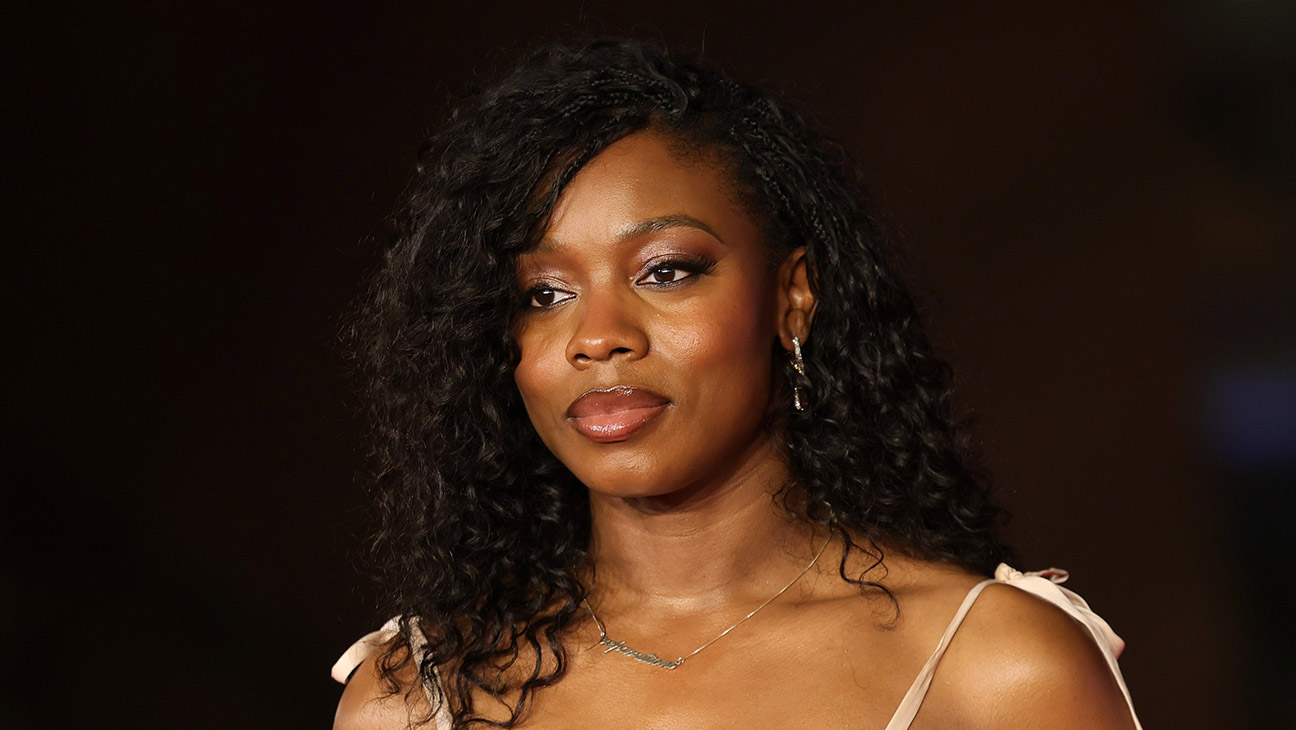
Nia DaCosta is well aware of the narrative that’s forming around her back-to-back critical darlings of 28 Years Later: The Bone Temple and Hedda. But she can only laugh at the notion that the critical and commercial underperformance of 2023’s The Marvels fueled her to silence any persisting naysayers. DaCosta has previously admitted that her threefold MCU sequel to Captain Marvel, WandaVision and Ms. Marvel evolved beyond what she originally pitched and filmed, so she readied herself for what was to come during the November 2023 release.
“It does seem like I reacted very strongly to the response of The Marvels. But it was really interesting because I was prepared for what The Marvels would be in terms of its release. So I guess therapy has worked on me because I felt quite okay about it,” DaCosta tells The Hollywood Reporter. “Obviously, you want your films to be received well. This is an audience-driven medium. So when 28 came around, I definitely was like, ‘Oh, I want to show what I can do.’ It was important that the movie be great and that I love it.”
DaCosta accomplished her very mission as The Bone Temple — the Alex Garland-penned follow-up to his and director Danny Boyle’s 2025 franchise relaunch, 28 Years Later — is now her most well-received film among both critics and audiences. DaCosta’s installment offers a number of major developments that Boyle’s trilogy capper will resolve at some point in the near future. (Spoilers ahead …)
For starters, Ralph Fiennes’ Dr. Ian Kelson achieved a major breakthrough in terms of finding a cure for the Infected. His treatment of Samson (Chi Lewis-Parry) with a morphine cocktail and anti-psychotic medication dampened the infected Alpha’s aggression and psychosis, returning him to a more lucid, human-like state in which he can communicate and recall memories from his childhood. DaCosta hesitates to say that Dr. Kelson has definitively found a cure, but Samson is no longer the infected Alpha he was at the start of this trilogy.
“I was talking to Alex about it last night. I think I’m good to say that [Samson is] not fully cured, and the level that he is healed is permanent,” DaCosta shares. “He’s not what he was [at the start of the movie], but is he one of us? I don’t know. But he’s not what he was.”
The film ends with a coda that reintroduces Cillian Murphy’s Jim, the star of Boyle and Garland’s 2002 franchise launcher. He’s still living at the same cottage in Cumbria that the audience last visited over two decades ago. The dynamic is noticeably different, though, as Naomie Harris’ Selena and Megan Burns’ Hannah are nowhere to be found. Instead, he’s teaching his young daughter, Sam, about World War I and II when the now-former Jimmies, Spike (Alfie Williams) and Kelly (Erin Kellyman), near the property with Infected hot on their trail. Naturally, Jim and Sam decide to help, just as Selena had done for Jim all those years ago.
So where are Selena and Hannah? DaCosta can’t say.
“[Jim] is definitely a father to a girl named Sam, and all those other questions will be answered in the next film,” DaCosta says. “I know things. I literally cornered Alex last night at the premiere. I was like, ‘So what’s going on?’ But I’m really excited about it. That’s all I can say.”
Below, during a spoiler conversation with THR, DaCosta also discusses her showstopping Iron Maiden sequence, before revealing which recent collaborator she considered casting until she remembered they were already a part of the 28 franchise.
***
When 28 Years Later: The Bone Temple came your way, you weren’t too far removed from Candyman and The Marvels, both of which were sequels to other people’s movies (as well as two TV series in the latter’s case). Thus, I can’t imagine you were itching to direct another sequel so soon after that. But was it one of those scenarios where you have to pursue an opportunity that involves Danny Boyle and Alex Garland?
It was absolutely like that. But it’s funny because Candyman and The Marvels were similar. I was like, “I can’t not do these movies if they come across my desk.” So this just felt like the right thing to do given that it’s a weird and different kind of franchise.
Hedda and now The Bone Temple are both critically acclaimed. Were you extra motivated coming out of your Marvels experience? Did you have a chip on your shoulder and use all of that bulletin board material as fuel?
It does seem like I reacted very strongly to the response of The Marvels. (Laughs.) But it was really interesting because I was prepared for what The Marvels would be in terms of its release. I had a really good team, and I was already off making Hedda. So I guess therapy has worked on me because I felt quite okay about it. Obviously, you want your films to be received well. This is an audience-driven medium. So when 28 came around, I definitely was like, “Oh, I want to show what I can do.” I love playing in other people’s worlds, and it was important that the movie be great and that I love it. That was the biggest thing for me.
I’m not sure if your deal was done yet, but did you and Imogen Poots talk about the 28 franchise during Hedda? Did she ask you to put in a good word for her 28 Weeks Later character?
No, I was in post on Hedda when 28 came around, but I’m pretty sure her character is super dead.
Really!? You don’t think her character is living in Paris with her brother?
I think Paris is nuked.
28 Years Later said that the virus was “driven back from continental Europe.”
Yeah, I think the driving was atomic.
That’s quite the euphemism.
(Laughs.) Yeah. I actually was annoyed because I really wanted to work with Imogen again. I was like, “Ooh, Imogen would be … Oh no, she’s already been taken by the franchise.”
The introduction of the Jimmies in 28 Years Later was such a fascinating tonal swerve from the rest of the film. Were you able to see those specific dailies before you started filming?
Yeah, I had access to the dailies for all of Danny’s shoot. He was so generous and so open with me. I remember seeing slow-motion shots of [the Jimmies’] backflips, and I was like, “I don’t even need to worry about what this means because I won’t be doing any of this in my film.” But it was cool — less as the person doing the sequel and more as a filmmaking nerd who grew up loving Danny’s work — to see that scene in particular come together.
So you knew right away what to do with them and how you would deploy them?
Yeah, I knew right away. When I read the script for the first time, I really was taken by the contrast between their crazy, erratic, violent, dark world and Kelson’s bright, peaceful, hopeful world. That contrast really helped me figure out how to visually represent both.
You had Alex’s two scripts and all of Danny’s dailies, but you didn’t get to watch the finished 28 Years Later before you started filming. In hindsight, are you glad it worked out this way?
I’m so glad. Part of the reason why I felt that I could step in and direct The Bone Temple was because they were so different. If they were really similar films, I would’ve felt a bit like, “Let’s just make Danny do it. Why bring in another voice?” But I felt a lot of freedom because they were different. So I don’t think seeing the finished product first would’ve changed anything that I did.
The thing with directing is that it’s just so filtered through your own instincts, and to try to guess what Danny would’ve done would’ve been crazy for me. And I said that to him. I was like, “Bro, you have too many setups. I don’t know how you get through a shoot day. I couldn’t do that, and I don’t want to do that. I want to watch it, but I don’t want to try to copy it.”
His editing style also seems impossible to emulate.
He’s a great editor. He’s brilliant. Now that I know more about how his mind works, I can see why his movies are the way they are, and I can see why my movies are the way they are. It’s because we’re just different kinds of creatures.
There’s a compelling juxtaposition happening with Dr. Ian Kelson (Ralph Fiennes) and Sir Lord Jimmy Crystal (Jack O’Connell). Dr. Kelson hasn’t given up on humanity and that includes the charitable treatment he gives the infected Alpha named Samson (Chi Lewis-Parry). Meanwhile, Jimmy offers humanity a very different kind of charity in the form of ritualistic mutilation. Are they both trying to find meaning in this post-apocalyptic world in their unique ways?
Yeah, I completely agree with that, and I really appreciate your wordsmithing there. There’s a very charitable spirit in Kelson, and then there’s the “charity” with the Jimmies, which couldn’t be further from charitable. That’s what I love so much about the film. It’s asking this question of all of us: How do we create meaning in a meaningless universe? How do we assign a sense of purpose in a world that’s dead, chaotic, scary and terrifying? That’s something we all think about because the world can be really terrifying and scary.
You have one person in Kelson who’s a humanist. He’s like, “There’s no God, there’s no devil, but there’s hope because there’s us. There’s humanity.” Then you have Sir Lord Jimmy Crystal who has to construct a dogma to get through it all, and his dogma happens to be sadistic and terrible. So The Bone Temple is definitely two characters who are on the same journey, but they’re choosing very different ways of trying to find meaning.
Kelson is so charitable that he only jokes about charging Samson for his medical treatment. To him, as a former NHS (National Health Service) doctor, the idea of billing a patient in need is preposterous.
It is crazy being here in London because you can go to the NHS and not have to worry about whether or not your job provides healthcare or not. There are things about it that can be improved, but the NHS is amazing. I know we’ve been talking about this in the States for so long, and it’s so weird to have to think, “Oh, I might lose my insurance because of X, Y, Z.”
Dr. Kelson is then forced to entertain Sir Jimmy’s delusions that he has a father-son relationship with Satan. He puts on this dog-and-pony show so Jimmy can tighten his grip on his followers. When you first read this showstopping moment involving Iron Maiden’s “The Number of the Beast,” did you immediately know how you were going to proceed with it?
I had no fucking idea at all. But with this being my fifth film, I’ve gotten to the point now where I know my amazing team and I will figure it out. My production designers, Carson McColl and Gareth Pugh, come from live events, performance and fashion, so I knew they’d be able to help me figure that out. My choreographer and movement director, Shelley Maxwell, was also amazing, as was special effects.
The Jimmies had to not only feel like they were meeting the devil, but as kids who were going to be hearing projected music for the first time, it also had to feel like their first punk concert. I wanted them to be moshing, basically. They had to have this ecstatic experience, and what can Kelson do as an individual to make them feel that way? So we just kept putting the pieces together, and then we eventually had enough to go, “Ah, this is it.”
If the watching of it was insane, the filming of it must have been …
Insane. (Laughs.) It was so insane and so crazy. We shot it in the middle of the night, and we were in the middle of nowhere in North Yorkshire. I’m so glad the locals liked us because we were blasting Iron Maiden into a valley for hours, and Ralph Fiennes, this legendary British national treasure, was shirtless and screaming into the ether. It was amazing, and we never once got tired of it.
The Bone Temple started screening before the tragic deaths of Rob and Michelle Reiner, so I have to imagine that Kelson’s Spinal Tap reference has evolved into a more poignant moment in recent screenings.
Oh man. I feel like there’s always a really warm chuckle when it comes up now. Everyone loves that line, and Rob Reiner gave all of us so much joy. Multiple generations can look at his films and feel comfort in them. So the fact that we can eulogize this man with joy because of the work he gave us is really special. It’s just awful what happened to him and his wife and that they’re not here anymore. But Rob Reiner’s legacy is so full of love and light.
Samson returns to the Bone Temple after all the Jimmy-related bloodshed, and he seems to be recovered. He thanks Kelson before Kelson succumbs to the stab wound that Sir Jimmy inflicted. Is this lucid state only temporary based on the recent anti-psychotic meds he was given by Kelson? Or is it something more permanent?
This is so interesting because there’s going to be a third movie. (Laughs.) I was talking to Alex about it last night, and I don’t want to say anything that might need to be retconned because I have strong opinions about how I approached it for this movie. But I think I’m good to say that he’s not fully cured, and the level that he is healed is permanent. He’s not what he was [at the start of the movie], but is he one of us? I don’t know. But he’s not what he was.
Something in between.
Yeah.
Similarly, when Jimmy says he can no longer hear the voice of Old Nick, is it more than just a byproduct of what Kelson drugged him with during the Iron Maiden performance?
There could be any number of reasons why the voices aren’t there anymore. But in that moment, he thinks he’s been abandoned by his father. That’s what he’s speaking to. I see Sir Lord Jimmy as a Waluigi Joan of Arc. (Laughs.) He’s hearing voices that are telling him to do things. But when you look back on Joan of Arc, does it matter if she really heard the voices? She did what she did, and people believed in it. So that’s how I feel about that moment with Sir Lord Jimmy. Does it matter whether he really heard them or not? To him, they’re real enough that the moment is terrifying and lonely.
From Jimmy to Jim, the epilogue brings back Cillian Murphy at long lost. How did this go down?
Oh man, it was great. I remember my jaw dropping so many times while reading the script and flipping through each page. And then getting to the end and seeing Jim’s name, it was really powerful. 28 Days Later is so important to me, and it is so important if you’re a horror fan and a zombie film fan. It’s also the movie where a lot of us discovered Cillian Murphy. So to have my latest film end with him is amazing. He had also just won an Oscar for Oppenheimer, so I was just like, “What is my life? Ralph Fiennes, Jack O’Connell and Cillian Murphy?” It’s pretty epic and special.
Yeah, considering he just played Oppenheimer, I love that he’s teaching World War II history to his daughter, Sam. Jim then says something along the lines of how fascism, nationalism and populism never returned again. He really sounds like someone whose world ended in 2002, doesn’t he?
Yeah, it’s crazy how he’s speaking like someone who has no idea what we know now.
It’s hard not to envy the history he’s teaching.
I know. I’m like, “Can I go there?” (Laughs.) This is so silly to say because I made this movie, but in my headcanon, [28 Days Later] actually happened pre-9/11. The rage virus technically started in the summer of 2002; that’s when everything went to shit. But pre-9/11 makes slightly more sense just because the world was so different after that. Again, that’s me making fan fiction, which is weird to say as someone who just made this [sequel to 28 Days Later]. [Writer’s Note: The filming of 28 Days Later overlapped with 9/11, and Boyle has stated several times over the years that they wouldn’t have been able to capture the opening’s empty London streets post-9/11. That stretch of the shoot was accomplished over four days in July 2001.]
As mentioned, Jim appears to be a single father at the same Cumbria cottage we saw at the end of 28 Days Later. Does this arrangement spell doom for Naomie Harris’ Selena and Megan Burns’ Hannah?
He is definitely a father to a girl named Sam, and all those other questions will be answered in the next film.
Upon noticing that the Infected are in pursuit of two strangers we know to be Spike and Kelly, I love how Jim doesn’t question the idea of helping them. He hasn’t forgotten that the only reason he’s still alive is because two strangers saved his life twice. Do you actually know the particulars of what comes next?
I know things. I literally cornered Alex last night at the premiere. I was like, “So what’s going on? But I’m really excited about it. That’s all I can say.
Is the scene you filmed fairly close to the scene you first read?
It got shorter. We cut some of the history lesson. I love the scene because I love that Alex chose to reintroduce Cillian’s character as a dad teaching his daughter about history. And he’s giving her tea and toast, as opposed to him machine-gunning down zombies. I thought, “Oh, this is what this franchise is doing. Let me honor that.” That’s why I basically shot it like a drama. So, yeah, the scene is more or less the same from the script.
Where did it fall on the schedule?
It was right in the middle. We did all of the Bone Temple stuff first, and then we ended with all of the stuff with Cathy’s family and the Jimmies: the barn, the house, the lunch.
Did Danny show up given how special it was to recreate the 28 Days set with Cillian?
No, he’s seen enough of that guy. (Laughs.)
Sam Raimi has Bruce Campbell; you have Tessa Thompson. Did you ever ponder the possibility of inserting her into the background or anything like that?
(Laughs.) No, I only ever call on Tessa when I know it’s going to be worth her time. It really has to be something that she can sink her teeth into. I did have her come play Valkyrie for one day on The Marvels, so stuff like that is really fun when it happens. But the next thing we do together will be another lead performance for her.
Decades from now, when you look back on your Bone Temple experience, what day will you likely recall first?
Ooh, that’s a great question, and no one has ever asked me that about anything. It would probably be the last day of the shoot. We more or less had the whole cast there because we had all the Jimmies. We didn’t have Ralph and Chi, but Chi was there that day in the morning. It was just such an electric scene because it was raining at night, and we had to collapse the fucking barn, which was dangerous. But it was the best of every department, and the actors were so great. Then it ended, and we were all just so in love with each other after a really hard day. We were just like, “Wow, we had such fun, and we did such a great job.” The last day on set is always so wonderful because you get to run around and acknowledge everyone before you go. I gave everyone champagne, or non-alcoholic cider, and a little thank-you note.
***
28 Years Later: The Bone Temple is now playing in movie theaters.
Read the full article here