

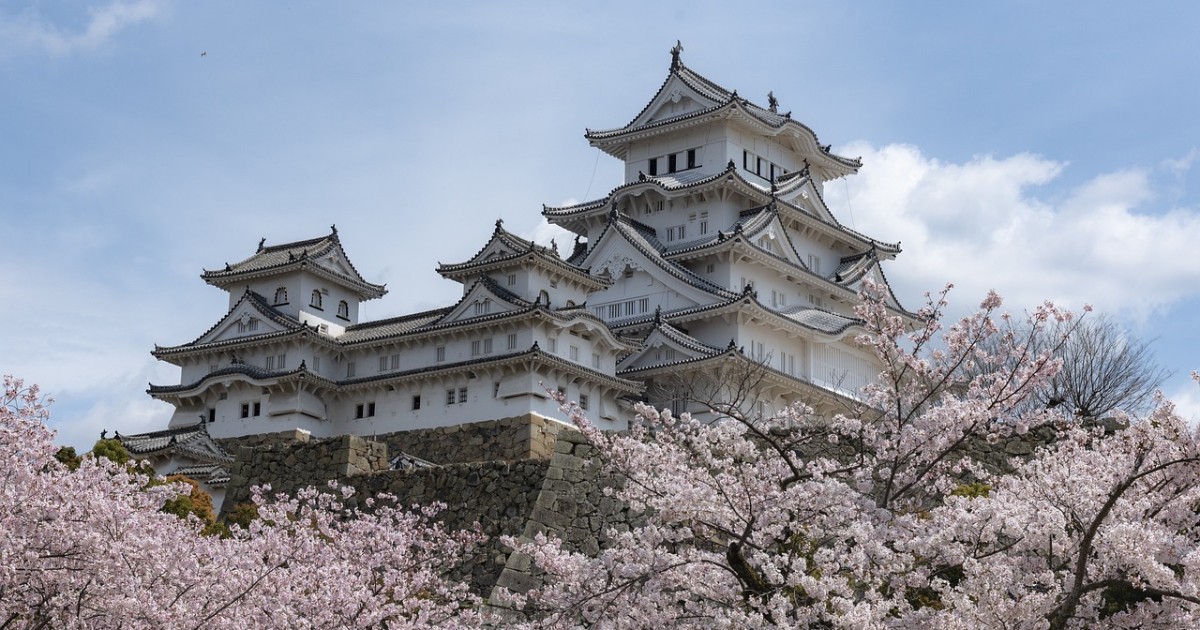

SINGAPORE – Travellers eyeing Japan for its famed cherry blossom season may be in for one of the most affordable sakura trips in recent years.
Prices for flights, hotels and tours in 2026 have been trending 10 to 20 per cent lower than in 2025, with the steepest declines seen in popular cities such as Kyoto and Osaka, says Mr Ben Julius, founder of travel company Tourist Japan.
The lower prices are widely expected to persist into March and April, which coincide with peak cherry blossom season.
“It’s not just that prices have gone down, but also that the value you get for those prices has gone up because you’re able to book better hotels for less. And there’s the currency effect, where the Japanese yen is at a historic low,” he says.
As at Jan 19, the exchange rate stood at $1 to 122.56 yen.
According to Mr Julius, one of the main drivers behind the price drops is the decline in Chinese visitors to Japan since mid-November.
In November 2025, Japanese Prime Minister Sanae Takaichi made remarks describing a potential military conflict over Taiwan as a “survival-threatening situation” for the country.
China also ordered its airlines to scale back flights to Japan until March. Air China, for example, cut 23 flights between Shanghai and Osaka, and 14 flights between Chongqing and Tokyo (Narita) from its December 2025 schedule, according to flight data from aviation analytics firm Cirium.
Between January and November 2025, China was Japan’s largest foreign visitor market, with 8,765,800 arrivals, based on statistics from the Japan National Tourism Organization (JNTO).
The combined effect of travel advisories and reduced air capacity had a definite impact.
https://www.instagram.com/visitjapanjp/p/DITOvtXNeDN/?hl=en
Business operators in major tourist hubs such as Tokyo, Osaka and Kyoto have reported cancellations and revenue losses, contributing to a softer demand environment ahead of one of the country’s busiest travel periods.
For travellers, however, the lack of Chinese travellers has translated into more competitive prices.
Tour packages, for instance, are seeing significant price reductions. A 16-day tour conducted by Tourist Japan during peak cherry blossom season in 2025 cost around US$4,850 (S$6,240) a person. In 2026, the same itinerary – with the same hotels, tours and transfers – starting on March 17 is priced at US$3,783 – about 22 per cent cheaper.
On Jan 8, the Japan Meteorological Corporation released its forecast, predicting warmer temperatures and earlier blooms. Tokyo’s flowering date is expected to fall on March 20, while Osaka’s is March 24.
“Aside from the decrease in prices, we’ve also seen that there’s availability to book hotels during the cherry blossom season. Over the last couple of years, by this time, certain popular hotels would already be fully booked or have limited availability,” says Mr Julius.
Singapore travellers are also increasingly booking outside peak periods to avoid the crowds and heat, says Ms Jasmine Seah, Singapore country manager of major Japanese online travel booking platform Rakuten Travel.
She notes that from May to June, the top destinations based on bookings include Yamanashi – which is located west of Tokyo – as well as Fukuoka and Kumamoto in central Kyushu.
Travellers are also booking alternative destinations in Japan to enjoy the cherry blossom season.
https://www.instagram.com/visitjapanjp/p/DH8DlcdMM52/?hl=en
Rakuten Travel saw a 500 per cent surge in demand for Okinawa, which has an earlier blooming period from January to February, while bookings for Hokkaido – which has a later blooming period from April to May – have increased by 200 per cent in 2026 compared with 2025.
The shift in pricing and availability is already being felt on the ground.
Mr Leslie Koh, 39, a full-time Japan travel content creator who visited the country eight times in 2025, has noticed a marked difference during his recent trips.
For an 11-day trip to Japan in January, he managed to secure a room at his preferred hotel in Ueno, Tokyo, for around $100 a night – despite booking just two weeks before departure. On previous trips, he would have needed to book at least one to two months in advance to secure a similar rate.
Beyond pricing, he has also observed a change in the overall travel experience. Compared with his trips in 2025, Mr Koh says the number of Chinese tourists in major cities looks to have declined significantly, making it easier to navigate popular attractions such as the Buddhist temple Sensoji and the Meiji Jingu shrine.
“Early in the year, many people visit Sensoji to offer New Year prayers, but even with the crowd of locals and foreigners, the queues moved fast and it was easy to navigate the grounds,” he says.
He adds that the drop in large, guided tour groups is especially noticeable, with far fewer guides using the flags or extended markers – sometimes topped with plush toys – that are commonly used to keep groups together at busy attractions.
“So, it’s still crowded and you can definitely feel that tourists are around, but exploring Japan now feels more manageable.”
[[nid:622562]]
This article was first published in The Straits Times. Permission required for reproduction.
Read the full article here