




Blockbuster animation drove a major recovery at China‘s theatrical box office in 2025, as ticket revenue surged 20 percent year-over-year to $7.41 billion (51.83 billion RMB) in annual sales. The results represented a strong rebound from 2024, when China’s box office plummeted 23 percent to $5.8 billion.
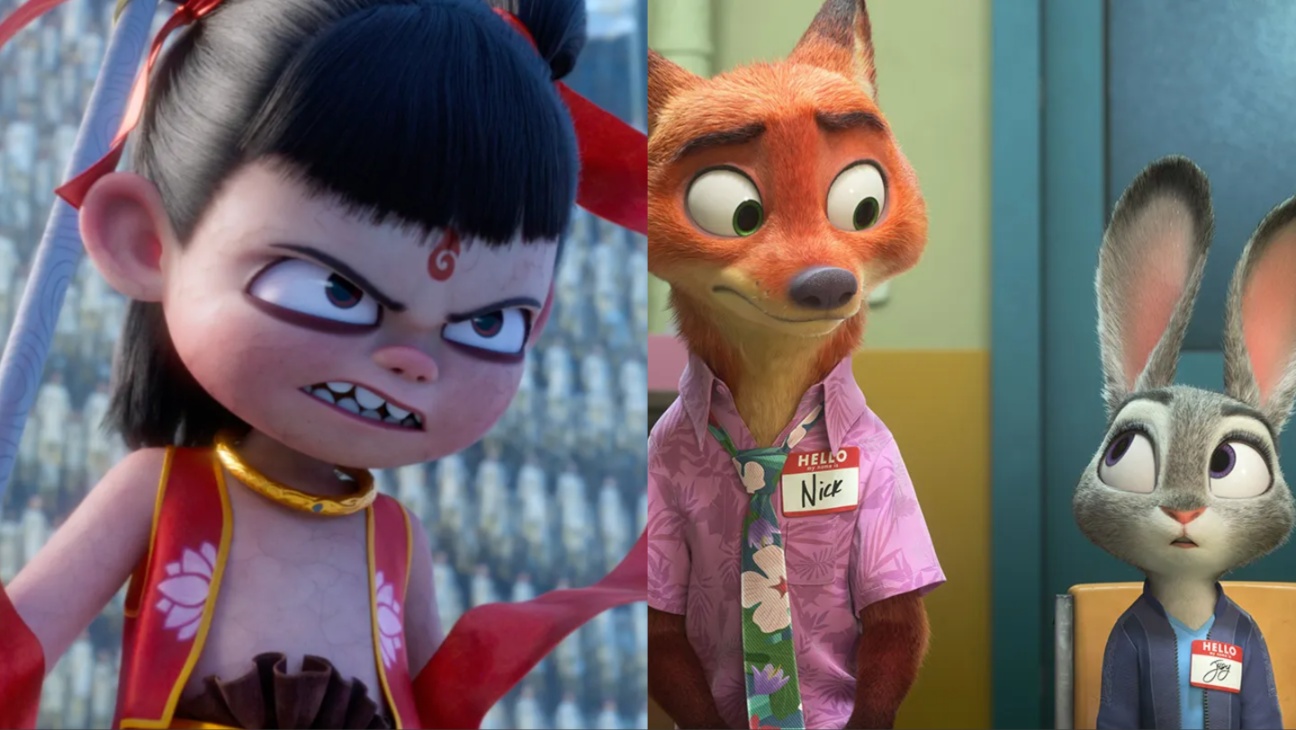
The outsized impact of animation was unmistakable in 2025’s results, with 57 animated features generating $3.57 billion (25 billion RMB) in revenue — nearly half the year’s sales — according to data from Maoyan Entertainment’s research division. The biggest domestic Chinese hit and Hollywood import were both massive animated blockbusters: Ne Zha 2 earned a record-smashing $2.13 billion during China’s Lunar New Year in January, and Disney’s Zootopia 2 closed out the year in December with $558.3 million. Both blockbusters benefited from strong fan engagement and higher-than-average repeat viewing rates, according to Maoyan. Other animated standouts included local hit Nobody — about 1.76 billion RMB ($245 million) — and anime sensation Demon Slayer: Infinity Castle, which brought in 675 million RMB ($95.6 million) before disappearing from theaters early amid geopolitical tensions between China and Japan.
Local Chinese films continued their strength in the home market, taking 79.67 percent of the total pie in 2025 — about one percentage point higher than a year earlier — while Hollywood titles and Japanese anime represented the bulk of the remaining roughly 20 percent.
Overall attendance improved alongside revenue. Total moviegoing admissions rose to 1.24 billion, representing growth of more than 20 percent year-over-year. The expansion was strongest in China’s third- and fourth-tier cities — the country’s vast and still-maturing suburban and regional markets — which have now posted three consecutive years of rising box office share. The proportion of first-time and infrequent patrons also increased, widening the base of occasional theatergoers and contributing meaningfully to national totals. That expansion allowed a handful of breakouts to vault past forecasts and carry entire holiday corridors.
But the market was also more worryingly top-heavy than ever. According to Maoyan, four films cleared the symbolic 3 billion-yuan threshold ($425 million) and eight topped 1 billion yuan ($142 million). Beneath those towering releases, however, the middle hollowed out further. The number of titles earning in the 100 million–500 million yuan range — historically the proving ground for rising filmmakers and sleeper hits — shrank for another year.
Hollywood films delivered mixed results. Disney’s Zootopia 2 performed strongly, as did Avatar: Fire and Ash to a lesser degree (currently at $136 million). But superhero franchises continued to slow, reinforcing signs that legacy comic-book properties require a new approach to sustain appeal among Chinese audiences, according to Maoyan’s analysts. MCU releases performed meekly — Captain America: Brave New World ($14.4 million), Thunderbolts ($16 million), The Fantastic Four: First Steps ($5.6 million) — and even DC’s marquee hit of the year, Superman, brought in just $8.9 million.
Universal’s strongest performer in China last year was Jurassic World: Rebirth, which grossed about $79 million, while Warner Bros.’ best outing was F1: The Movie at roughly $59.2 million. Paramount’s top title was Mission: Impossible — The Final Reckoning, earning $64.5 million, and Sony Pictures showed some success with offbeat superhero fare with Venom: The Last Dance, which finished with more than $84.3 million in China.
On the domestic side, filmmakers moved away from spectacle toward grounded stories reflecting everyday life, while employing varied visual styles and genres. War hits like Dead to Rights and Evil Unbound, which earned $431 million (3.1 billion RMB) and $270 million (1.94 billion RMB), respectively, won over audiences with more intimate, human-scale narratives rather than sweeping, heroic sagas.
According to Maoyan’s estimate, China contributed just under 24 percent of the 2025 global box office total, trailing only North America, which accounted for about 29 percent.
Read the full article here