



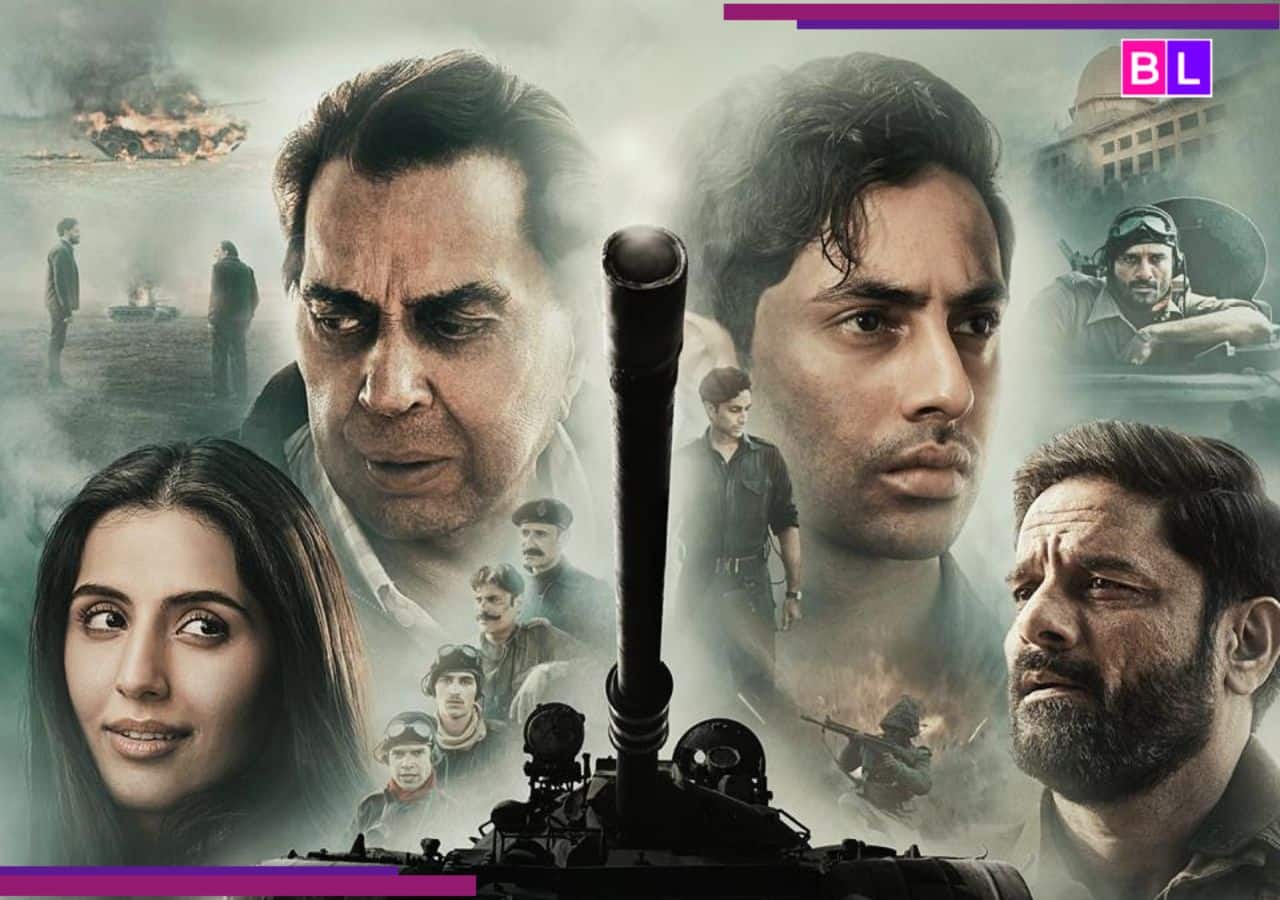

Ikkis is a biographical war drama inspired by the life of Second Lieutenant Arun Khetarpal, who was posthumously awarded the Param Vir Chakra for his heroic actions during the Battle of Basantar in the 1971 Indo-Pak war.
Director: Sriram Raghavan
Cast: Agastya Nanda, Dharmendra, Jaideep Ahlawat, Simar Bhatia
Writers: Sriram Raghavan, Arijit Biswas, Pooja Ladha Surti
Duration: 143 Minutes
Rating: 4 Stars
Despite being a war drama, Ikkis is more than just explosion and dialogue-baazi, it is our introduction to the man, who sacrificed his life at a tender age 21, it’s about his aspirations, dreams, heart, courage and martyrdom. The film chronicles the life the youngest recipient of Param Vir Chakra, Second Lieutenant Arun Khetarpal, and helmed by Sriram Raghavan, this war drama deals with themes like courage, loss, and the emotional aftermath of war.
The film offers an emotional goodbye from Dharmendra, a stellar debut from Agastya Nansa, a power-packer performance from Jaideep Ahlawat, a larger than life story of real people, narrated in the most realistic manner, making it the one of its kind war movie in Indian cinema.
Sriram Raghavan, consciously avoid familiar war tropes and treat the narrative with dignified and thoughtful manner, rather than relying too much of war thematic, he offers a more introspective angle about fighters but the survivors. Hence he opted for two different timelines narrative, which seems a unusual choice for war drama, but it works magically.
The first timeline introduces audience to Arun Khetarpal, the Battle of Basantar in December 1971, who leads the charge in his tank through the deadly landmine laden hostile territory, where one wrong move could possibly blow the tank to pieces. The intense and chaotic war background is nerve-wracking and believable, and what is shown is not Arun’s mental and emotional state through dramatic war spectacle but rather through his tense and troubled psychology.
Debutante Agastya Nanda delivers a performance which is worthy of applause and speaks volumes about his craft. He plays Arun with honesty and intensity. His courage feels organic, emerging naturally from his choices rather than forced dramatics. Arun’s refusal to leave his burning tank, even after being ordered to retreat, is portrayed as inevitable, reflecting his sense of duty and
valor. Nanda’s performance balances youthful overzealousness with sincerity, making Arun’s sacrifice emotionally impactful.
The second timeline, set in 2001, forms the emotional backbone of the film. Dharmendra plays Brigadier M. L. Khetarpal, Arun’s father, still carrying the weight of decades-long grief. His interactions with Brigadier Khwaja Mohammad Nasir, portrayed by Jaideep Ahlawat, focus on reflection and shared understanding rather than political or historical debates. These moments explore how soldiers live with the consequences of war long after the battles have ended.
Jaideep Ahlawat delivers a nuanced performance as Brigadier Nasir. His calm dignity and awareness of war’s toll make his interactions with Dharmendra deeply moving. Their shared moments—walking through old neighborhoods, revisiting battle memories, and standing at the site of the Battle of Basantar—serve as the emotional heart of Ikkis.
Dharmendra’s performance is quietly powerful. Through gestures, pauses, and expressions, he conveys a lifetime of grief, pride, and nostalgia. Knowing this is his final film role adds another layer of poignancy. Scenes between Dharmendra and Ahlawat are among the most sensitive depictions of post-war reconciliation in Indian cinema, earned through subtlety and emotional authenticity.
The VFX is used sparingly and effectively, enhancing the realism of tank warfare without distracting from the story. The sequences feel immersive and claustrophobic, capturing the weight, danger, and chaos of combat through the soldiers’ perspective rather than relying on spectacle.
The background score complements the film without overwhelming it. During battles, it remains minimal, letting the sounds of tanks, commands, and explosions carry the tension. In quieter, reflective moments, the music becomes sparse and introspective. Dialogue is similarly restrained—measured, honest, and impactful, lingering in the mind because of authenticity rather than melodrama.
Raghavan’s direction demonstrates confidence and restraint. He trusts both his actors and the audience, allowing silences and pauses to communicate as much as dialogue. The screenplay, co-written with Arijit Biswas and Pooja Ladha Surti, balances the two timelines seamlessly. Debutante Simar Bhatia as
Kiran, Arun’s love interest, brings warmth and sincerity, providing a glimpse into the life Arun could have had without detracting from the larger narrative.
From a production perspective, Maddock Films deserves credit for backing a film that prioritizes emotional truth over commercial formula. The attention to historical detail, the sensitivity in storytelling, and the focus on nuanced human emotion reflect a production house willing to take risks with meaningful cinema.
Ikkis is ultimately a meditation on bravery, grief, and humanity. It honors sacrifice without glorifying violence and respects history without weaponizing it. By choosing empathy, reflection, and memory over spectacle or patriotism, the film achieves a rare balance, reminding us that true heroism is not only about battlefield feats but also about the choices, memories, and legacies left behind
Read the full article here