






The last several weeks have been like few others in American broadcast journalism.
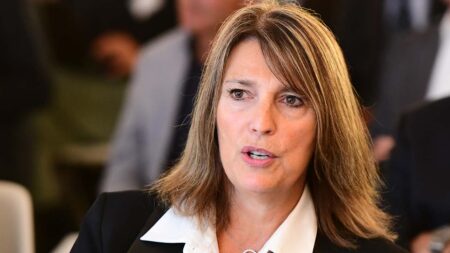
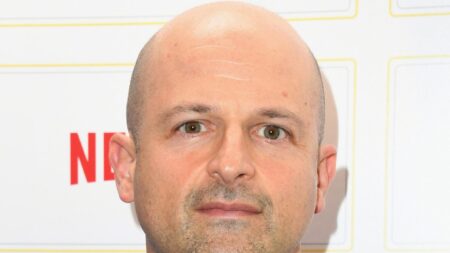
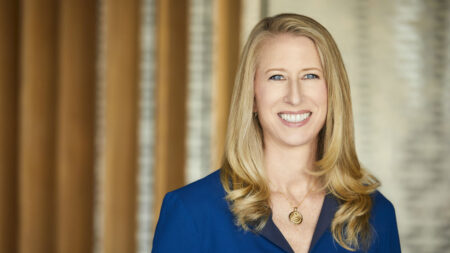
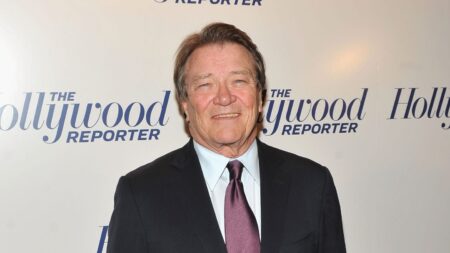
At 60 Minutes, the most popular TV news show of the era, Taylor Sheridan-level drama has set in. Nine or ten million weekly viewers on the linear network alone, yet executive producer Tanya Simon was fired. Correspondents Cecilia Vega and Sharyn Alfonsi were fired. And just when it seemed like new EP Nick Bilton — a magazine and documentary journalist brought in by newish CBS News editor-in-chief Bari Weiss to replace Simon — might quiet the waters at an introductory staff meeting Monday, he faced a major public undressing from correspondent Scott Pelley. (The word “murder” — of the show — was invoked.) Two days later, Pelley was fired. That prompted a CBS News anchor to pay tribute to him on the air Wednesday, like a fallen solider.
What to make of the chaos? What game are Weiss and Bilton playing? Was Pelley going for martyrdom or just angry? And what will the deep-dive newsmagazine look like when it comes back in the fall? The Hollywood Reporter senior editors Alex Weprin and Steven Zeitchik came together to shed some light on the mega-murk.
Steven Zeitchik: Just a quiet few days in David Ellison’s kingdom, nothing to see here.
Alex Weprin: It’s really kind of crazy.
SZ: Let’s start with Bari’s decision to bring in Bilton. It was certainly a surprise to those of us who know him as a print journalist from The New York Times and Vanity Fair — not a guy you think of as running a major broadcast-TV operation.
AW: I think Bari wants to shake up the show, and she views being an outsider as an advantage. Especially if she wants to expand its digital presence. I get it in that sense. Still, it was a perplexing choice, if only because 60 Minutes is the most watched news program on television and doesn’t really need fixing, at least on the TV front. This is a huge swing.
SZ: And it’s worth noting that the show does have four million subscribers on YouTube; it’s not like 60 Minutes is invisible on the Internet. But the digital transformation is the generous read. The less generous read is she wants to pivot the show away from liberal-minded journalism, maybe even away from Trump-accountability journalism, and she saw the Simon regime as making the administration too uncomfortable. Where do you fall?
AW: You’re right the outcome may be what the Trump administration would like, which is a weakened CBS News, given that morale so low. But I also think Bari is sincere when she says she wants to move the show into the future and turn it into television for the 21st century. So while it’s not obvious to me it’s about politics, you can’t ignore the elephant in the room.
SZ: And of course both things can be true — the goal is digital, the side benefit is less pushback from Trump. But I’m not even sure it has to be about Trump’s reaction. It could just be about Bari herself wanting more centrism, which was her whole mantra at The Free Press.
AW: Definitely possible too.
SZ: Let’s talk about Bilton. How has his first week (why does it seem like longer) gone in your view?
AW: Anytime you’re coming in after high-profile people like Tanya Simon have been let go you have to work to win over the staff. You need to have tact when you, say, let go of veterans like Cecilia Vega and Sharyn Alfonsi, as Bari did. And I’m not sure Nick and Bari had that or were successful in persuading the staff that everything has been on the up -and-up.
SZ: We’ve both worked at enough media outlets to know how impossible the new-boss role is. So I have some sympathy for Bilton. On the other hand, you’d think he would know what does and doesn’t work in that role given his own decades under exactly those bosses.
AW: I think he probably does but he’s just not been on the management side before, at least not at this scale. And don’t forget, the structure of 60 Minutes is so different from the structure of a newspaper or magazine — just how they construct their story pitches or how each correspondent has a team of producers. You have to recognize what isn’t the same and how much people are willing to play ball and adapt, and I’m not sure Nick has done that yet. But as you said, it has only been a week. Or a year, I can’t be sure.
SZ: Let’s also not forget who he’s working with too. 60 Minutes correspondents are very good, but they also know they’re very good.
AW: There’s no shortage of people who work in TV news who are extremely self-confident. So definitely, but it’s not unique to 60 Minutes. A lot of people in the industry think they’re untouchable. That said, 60 Minutes has always operated a little differently even for a TV news show. They’re looked at differently within CBS because they’re so successful; they hadn’t been in the same offices as the rest of the news division for most of their history.
SZ: On an island, you could say.
AW: Absolutely.
SZ: You know there’s a cynical view that Bari and Bilton wanted to provoke a reaction — that they want to blow up the show and so they just laid some dynamite for the staff to trip on.
AW: If you really want to blow it up you could fire everybody right away. But bringing in Bilton — I think it’s a sincere effort to redefine it. I think she wants to do that and he wants to do that. It’s definitely true that they’re coming with authority and saying anyone who doesn’t like what we’re doing is free to leave. But while some multi-millionaire correspondents can afford to do that, the staff — the producers and people who make the show run — need jobs. And Bari and Bilton need them. So if that was the approach then I think it’s the wrong one.
SZ: You have a lot of sources in that building. How alienated is that production staff right now — what are you hearing?
AW: I think pretty demoralized. This is something they believed in for a long time and it seems like its being slowly being taken away. But again, a lot of them can’t afford to walk out the door in protest, at least not until they have something else lined up.
SZ: It’s not like CNN is hiring.
AW: Journalism jobs are hard to come by these days.
SZ: What about Pelley himself? What was his endgame with this wild meeting confrontation. Like did he know it would end badly and wanted to go down in a blaze of glory, JetBlue flight attendant style, or at least go down getting his message out? Or was it just anger that got away from him?
AW: Without knowing what’s in his head or heart I think he was genuinely angry. You could hear it in his voice. But he obviously planned to do this — I don’t think it was spur of the moment, but I also don’t think it was performative as Bilton said. It’s another one of those “multiple things can be true” situations — I think he knew exactly what he was doing and planned to say some version of what he did, like a kamikaze mission where he was willing to accept the cost for the benefit. I don’t know if he thought about what would happen after.
SZ: On the subject of benefit, he did make some pointed comments about being asked with recent stories to alter details in a story for Trump’s benefit and also criticized Weiss for allowing subjects to reporter-shop, as we say, which is an allusion to an incident several weeks ago in which Israeli prime minister Benjamin Netanyahu allegedly helped choose his interviewer, non-60 Minutes correspondent Major Garrett, though we should note there is no hard evidence of this. What did you make of those charges? Did they land?
AW: It was a little mysterious. The second thing did seem to be Netanyahu but it’s not clear what the first was. I’d love to know the circumstances, I think the details could illuminate things here, it really depends on the specific asks.
SZ: You do get the sense that Pelley’s reaction Monday’s meeting was the culmination of a very long series of frustrations, which is why Bilton may have been a little taken aback with Pelley’s “remarkable incivility and contempt,” as he put it. Bilton was bearing the brunt of a list of Pelley grievances that long predated his hiring.
AW: Totally. This was building up and the layoffs [of Simon and others] is just what sparked it.
SZ: So what now? Bari and Bilton are disassembling 60 Minutes but do they have a blueprint for building it back up? It is still a massively successful show. and Bilton does talk admiringly of the three “mini-documentaries” on every week.
AW: I think they find a way not just to put the show on more digital platforms but to produce segments that have the look and feel of 60 Minutes, though I think an early tell will be how hard-hitting they are. Jon Wertheim, who specializes in sports, is there and he could do more pieces. Norah O’Donnell I suspect will do more. They will use other CBS News talent like Matt Gutman and Tony Dokoupil if they need to. And they’ll make hires.
SZ: Not traditional broadcast journalists though.
AW: I think they will have some traditional broadcast journalists, but I have a hunch there may be some from the creator and podcast space too.
SZ: Alex Cooper, 60 Minutes correspondent.
AW: It’s not crazy.
SZ: She’s very good at what she does but does that lend itself to an investigative newsmagazine?
AW: I can see putting her on more on digital platforms but also occasionally on the network.
SZ: That wouldn’t be disruptive to the legacy audience that tunes in?
AW: Well there’s a theory from other network TV executives — maybe it’s a little bit of jealousy — that the lead-in from the NFL games helps so much on CBS you can put pretty much anything there and be guaranteed a big audience. So it may not be such a risk. But you could also see it more mixed in. They’ve had this digital experiment before, as you and I have talked about, with their 60 in 6 program on Quibi that then went to Paramount+ when Quibi folded. It wasn’t bad but it didn’t really work because they had a whole separate set of correspondents, the way magazines in the early days of the Internet had print writers and Web writers and they never crossed. You can’t really run things that way.
SZ: And now that it will be more like every magazine, where people create for both.
AW: Exactly.
SZ: When you frame it that way it doesn’t seem like as big a shift as Pelley makes it out to be. I mean, even the most august legacy print product has to play the digital game now; it can’t stay above that fray. That doesn’t mean the original is being “murdered.”
AW: I think it’s a question of how they do it. If the show still has some of those deep investigations then bringing in creators to do — hopefully well-done and polished — softer pieces could be OK. If it’s more of a takeover without any of the hard-hitting stuff then I think it’s a different story. But I don’t think it’s a crazy idea to take digital talent and put it in the 60 Minutes format and try to merge those two worlds.
SZ: I am just trying to imagine what that would look like.
AW: 60 Minutes does rigorous journalism and the senior producers have that experience, and you put it with the audience sensibilities of digital creators in ways that make sense. It’s a bit of a weird marriage but I can see it working.
SZ: Give me your prediction for how this will go — if you had to put money on Kalshi right now. What will 60 Minutes look like in the fall? And what about in the fall of 2027?
AW: If they can get the show back for the fall, and I worry that a staff exodus would hinder that — they’ll still do a lot of the same stories maybe with some flashy hires. In the fall of 2027, I think you will see more of the other non-traditional types, doing the kind of thing that plays well online — still good, but softer. But I also think in the next year we’re going to see at least a few very hard-hitting pieces.
SZ: Focusing on Trump or?
AW: I think the Trump administration. Bari and Bilton have something to prove.
SZ: That should make for some interesting phone calls with Ellison. And what about viewers — will there be more or fewer for 60 Minutes by the fall or 2027?
AW: Probably about the same. This is a hard show to take down. Though maybe there will be an audience revolt. Will be very intriguing to see.
Read the full article here