




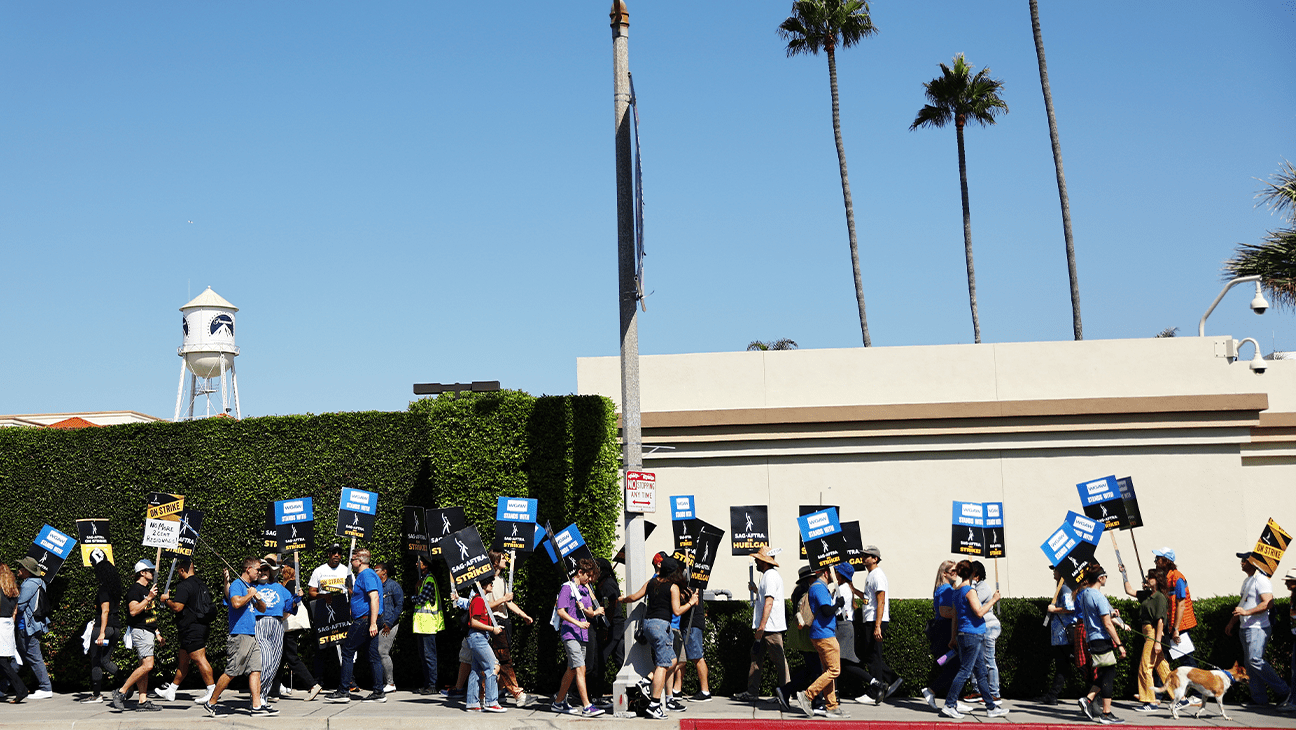


It’s a triennial tradition in Hollywood: The industry’s top unions and studios and streamers come together to hammer out new labor deals. Each side has its own priorities and aggressively asserts them. Cue the rattling of sabers and gnashing of teeth — until a deal is done that pleases (and displeases) both parties.
But now, the Alliance of Motion Picture and Television Producers, which negotiates on behalf of industry employers, is mulling the proposal of a longer-term deal, sources tell The Hollywood Reporter. Five-year deals instead of three-year contracts are under consideration in the wake of the 2023 strikes, which for months crippled top companies in the entertainment industry.
To be clear, formal contract proposals haven’t been exchanged yet. Typically in entertainment labor negotiations, management and labor have some informal conversations in the months before bargaining begins to get a sense of where the other side is sitting.
The WGA, DGA and SAG-AFTRA will all return to the bargaining table with the AMPTP in 2026, with SAG-AFTRA kicking off the negotiations cycle on Feb. 9. The unions’ deals expire in the spring and summer of 2026.
Still, it’s notable that a major change to the industry’s typical bargaining schedule is even being contemplated. Since at least the 1940s, three-year deals have generally been the norm for entertainment unions, says Georgia State University associate professor Kate Fortmueller, who studies Hollywood labor.
“This would be a significant change to the cycles,” she adds. “I would also say this might make things more fraught; if you’re only doing this every five years, there’s a lot more weighing on every five years.”
The AMPTP did not respond to a request for comment for this story.
A major unanswered question is how the unions would react to such a proposal if it materializes next year. The current three-year schedule comes with some perks for labor groups: With a more frequent schedule of sit-downs with employers, they can more quickly respond to industry trends and have more opportunities to modify the terms of their members’ work.
That clip of dealmaking may be especially consequential in the generative AI era. The Writers Guild of America, Directors Guild of America and SAG-AFTRA first tackled the then-burgeoning technology in their 2023 negotiations, but in the years since then, AI tools — and the way industry companies use them — have rapidly evolved. Anticipating this, the three unions negotiated semi-annual sitdowns with employers for the purpose of discussing AI in their 2023 deals. AI is again expected to be a top issue for labor groups in 2026.
In other words, there might have to be significant sweeteners attached for major unions to seriously contemplate the idea. The WGA and SAG-AFTRA declined comment. The DGA did not respond to a request for comment.
Helming negotiations for the studios and streamers for the first time next year will be Gregory Hessinger, who took over from former AMPTP president Carol Lombardini earlier this year. Hessinger, a longtime employer-side labor lawyer, also has experience across the aisle: In the 2000s, he served as both the national executive director for the Screen Actors Guild and the American Federation of Television and Radio Artists, before they merged in 2012.
Could Hessinger’s AMPTP shake up the typical clip for union negotiations? That will be up to his labor partners. Says Fortmueller, “It seems like things are changing really rapidly and the face of the industry is changing in pretty radical ways. This would be a major change for labor. It’s a question of, do they see it to their advantage?”
Read the full article here