




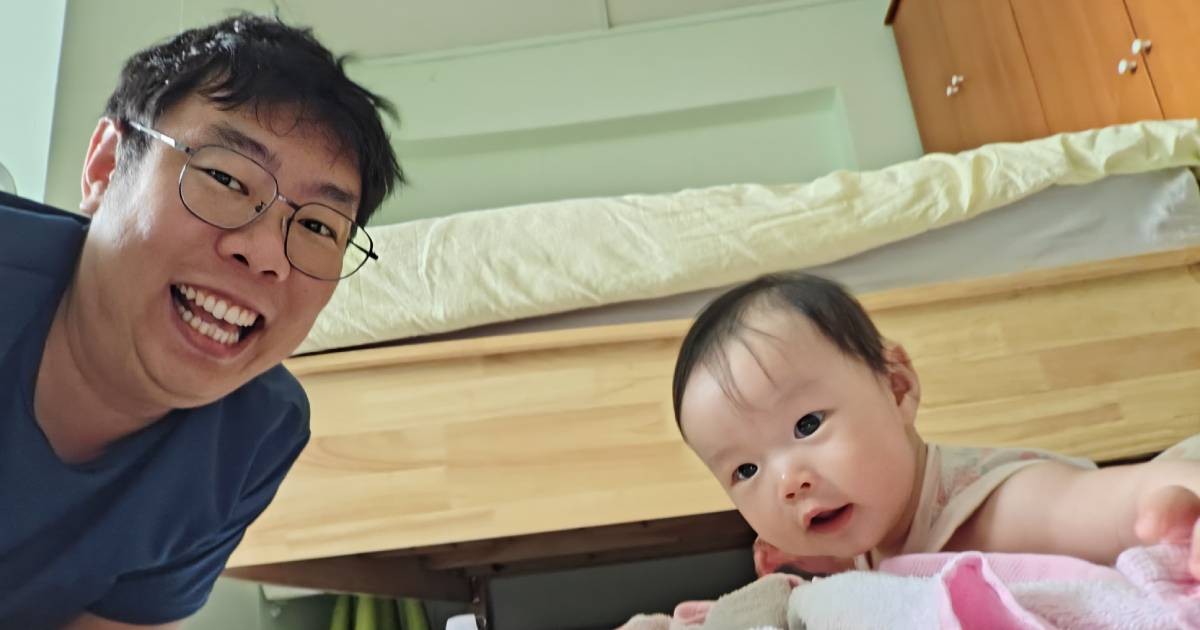


Like many fathers, tying his daughter’s hair is a “rather alien” activity for Andre Yong, admits the 38-year-old.
Yet that hasn’t stopped him from learning to do so. For the full-time stay-home dad, this softer side to caring for his daughter is a highly meaningful one, he tells AsiaOne in an interview.
He was one of many fathers sprucing up their daughters’ hairdos at dads-only event Papas & Ponytails, aimed at encouraging fathers to play a more active role in their children’s early years.
The event, organised by Star Learners Child Care, was held on June 7 as a Father’s Day initiative. Father’s Day falls on Sunday (June 21) this year.
During the session, Andre took part in a hands-on hair-tying workshop and in a simple parent-child massage activity.
“I wanted to learn how to tie my daughter’s hair better,” he says, adding that it was nice to be in the company of kindred spirits — fellow fathers who take on active roles in caring for their daughters.
The bonding session was memorable for his 16-month-old daughter too. “The day after the event, she seemed to have picked up on one part of it and briefly mimicked a back-rubbing motion on me,” he recalls.
Formerly a regular in the Singapore Armed Forces, Andre now spends his days manoeuvring a constantly evolving parenting routine.
On days his wife goes to the office, it starts in the morning with a quick walk downstairs after his daughter says goodbye to mummy. Between meals and nap time, he focuses on giving his daughter opportunities for independent play and exploration.
He makes it a point to talk about and narrate their activities as well, believing that it is important for her cognitive growth and emotional connection.
Andre enjoys the routine, calling it a “nice little ritual” for him and his daughter. Still, a little dad’s guilt manages to creep in.
“I sometimes feel guilty about keeping her at home for most of the day. I would love to take her out more often to parks, beaches and other outdoor spaces, but I have some concerns about handling everything on my own,” he explains.
“As a result, I tend to stay within environments that I am more familiar and comfortable with.”
Fathers unite
Andre is not alone in feeling this way.
For 36-year-old Ingo Wey, who actively takes care of his daughter while running an e-commerce business, thoughts about being “good enough” and “present enough” for his six-month-old weighs on him, he reveals.
“You worry about how to build long-term financial stability, now that there’s another member of the family. You worry about how to develop yourself as a person outside of family, whether in personal interests, career or business. You worry if you’re keeping fit and healthy enough,” he adds.
“There’s a lot to juggle because modern life demands that we pay attention to all of these priorities, and it is difficult to ‘switch off’.”
For the Taiwan native, who grew up in Germany and the UK and is now a Singapore permanent resident — he relocated here in 2016 — there are also feelings of isolation due to the drastic change in life priorities after becoming a father.
His social circles and usual conversations also saw huge shifts.
This was most apparent in the first few months after becoming a father, when he felt “overwhelmed” in trying to figure everything out.
In an attempt to address these concerns, Ingo sent out a call to fellow dads in Singapore, hoping to connect with others who are going through the same stage in life.
He did so through Facebook community groups, inviting them to have a walk together, all while pushing their kids along in a stroller.
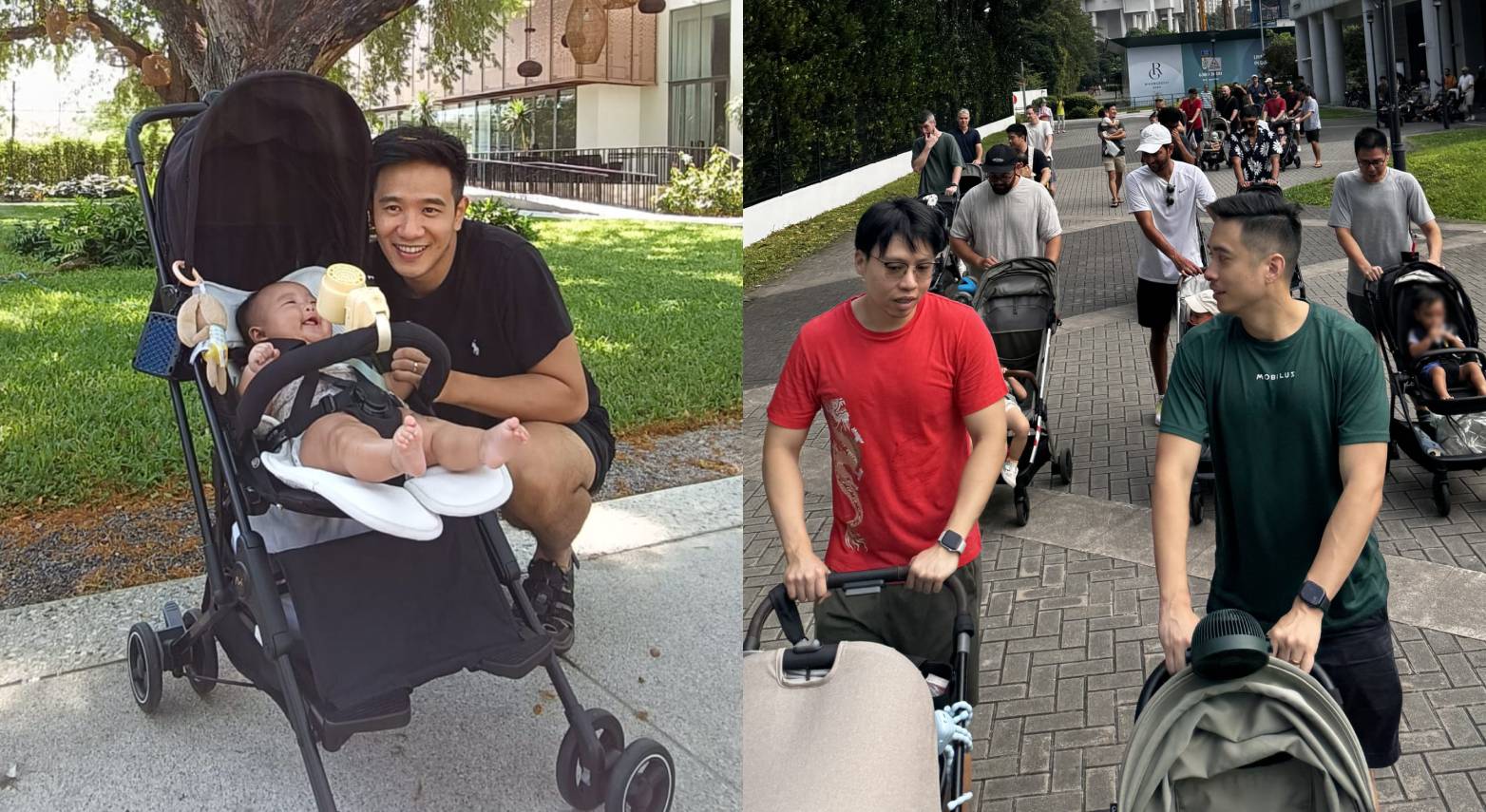

The intention was to do something accessible and familiar — he had realised that he would take his daughter on morning walks in a stroller, and that many other dads were doing it as well.
“It’s something I was doing alone anyway,” he tells us.
During the first outing which took place on March 29, Ingo was surprised at how overwhelming the response was. This led him to realise that he’s not alone in feeling this way, and that many dads out there resonated with him.
“This grew from a small group of about eight dads to most recently 35 dads in a single morning, and it is always oversubscribed,” he adds. “It seemed clear as day to me there was a dad-sized gap in the parenting world.”
Strolls have so far taken place along the Singapore River, near Great World and at New Bahru. Plans to take it to other areas are in the works.
The gathering, which he calls Stroller Sundays, is quite a sight and has been “getting heads turning”, says Ingo. Just imagine a convoy of dads with their stroller babies and toddlers trotting down a walkway.
These dads now go beyond weekend walks, banding together as Dad Life Club members. They not only meet for in-person events but also have an active WhatsApp community where they chat, connect and share tips about parenting — whether that be about sleep training, weaning or playground recommendations.
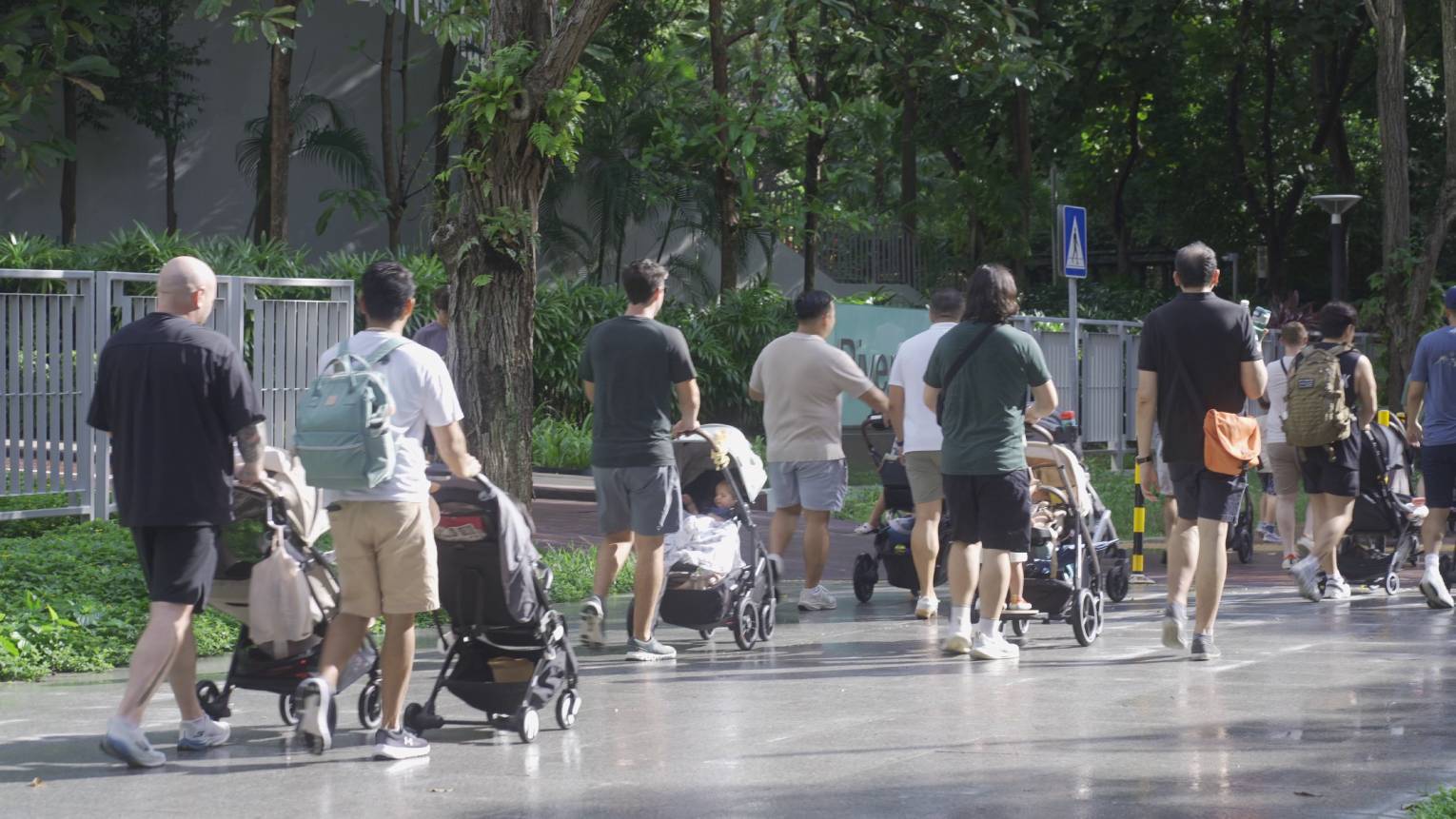

“This community helps dads connect, find support and have a sense of belonging, which makes the journey of fatherhood that little bit lighter and more sociable,” said Ingo.
“Connecting with peers in this same position can be really meaningful and liberating.”
He believes that the speed and scale in which the community has grown is a reflection of modern-day fathers as a movement.
“We represent dads who strive to be fully present and engaged in the parenting journey, embrace roles and spaces perhaps considered typically feminine, and enjoy fatherhood as a shared experience,” he proclaims.
“We are resetting the standard of what it means to be a dad in today’s world.”
The changing definition of fatherhood
Andre tying his daughter’s tresses and Ingo gathering dads for stroller walks speak to a new generation of fathers who are stepping up in ways that go beyond their traditional role as providers.
Ingo’s own dad, and the fathers around him when he was growing up, had fit into that “provider” stereotype, he reveals.
While his dad did spend time with him as a child, it was mostly only for play time, saying goodnight or showing up for special occasions.
“However, as far as possible, I think it is important for dads to be there even in the more routine parts of childcare, like the diaper changing, feeding and settling crying,” he says.
“All of this strengthens the bond between dad and child, and builds emotional connection and trust.”
Meanwhile, Andre thinks that modern-day dads get praised for such hands-on acts of childcare, unlike previous generations, due to changes in societal norms.
Asked how different he is compared to his own dad when he was growing up, he remarked: “I am definitely more domestic facing than my father was.”
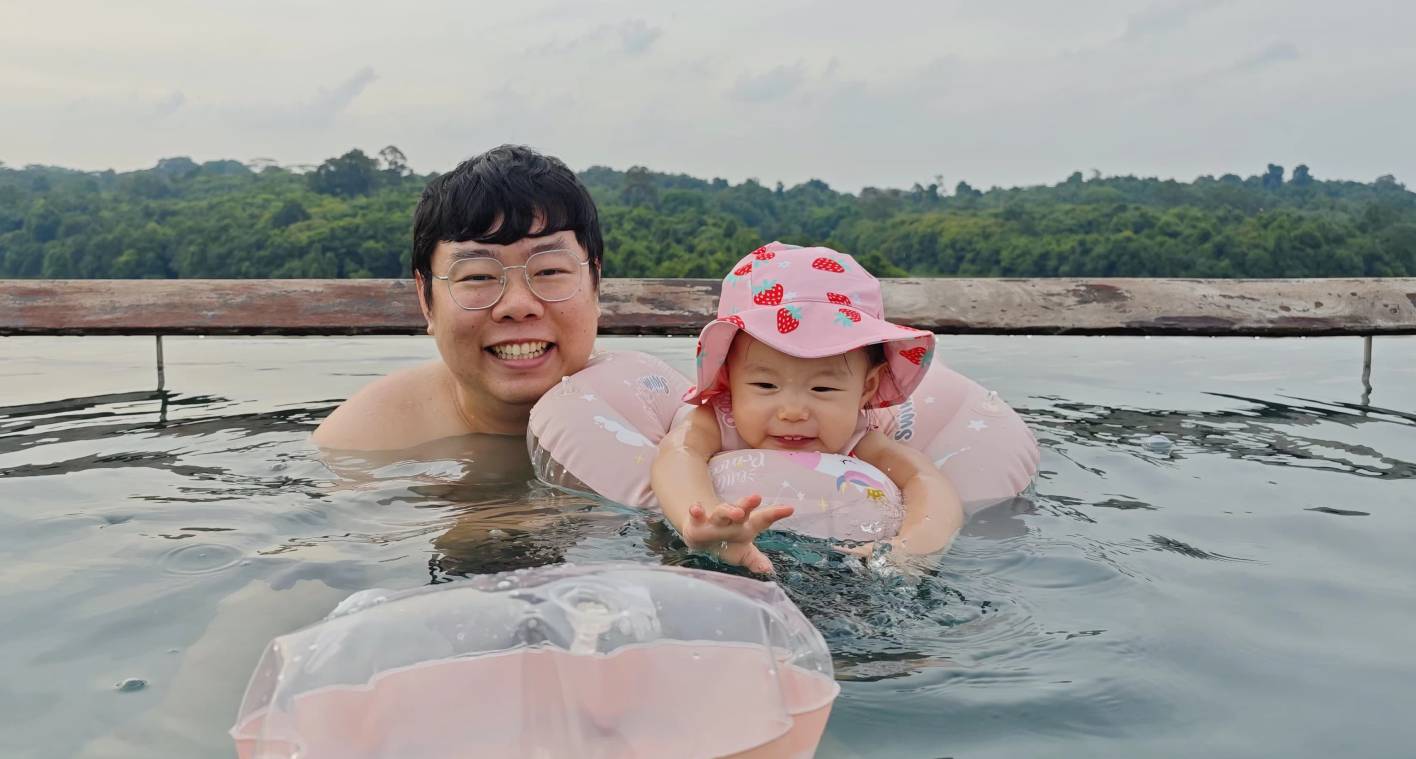

He believes that underpinning this is a shift in the idea of masculinity. Having a softer side is now considered desirable, all while still maintaining an image of strength.
Ingo thinks so too. “Millennial dads like me have grown up with the image of the man who is strong, aggressive and self-sufficient,” he says.
“However, especially in raising children, you realise that these archetypes are largely unhelpful and outdated.”
Rather, he finds that there’s a lot of value in being a man who is “comfortable and unapologetic about being emotionally available, vulnerable and nurturing”, adding that these are what’s important when it comes to raising children that can feel safe, secure and emotionally mature.
This shift, he believes, is another piece to the parenting puzzle affecting Singapore’s Total Fertility Rate (TFR).
“So much of it comes down to culture and support,” he thinks. “It works alongside changing social norms which genuinely value fathers as hands-on parents, not just providers.”
[[nid:689078]]
Andre’s take is that it requires a whole-of-society shift in defining what success means in order for the TFR needle to move.
“For as long as we see that success means strong careers and large incomes, having children would naturally be seen as an obstacle,” he shares.
“Encouraging birth should not be the end goal, it is only the first step. Having more post-infant support till the child is past being a teenager is a lot more important and convincing in encouraging married men to become fathers.”
To that end, Andre leads by example, measuring success through tiny wins each day.
He and his wife are expecting a second child, due in November, which he is also focusing on.
His decision to give up his career, at least for now, means he is able to be “present and involved” in his daughter’s everyday life, as well as for his upcoming newborn.
It’s a luxury not every parent in Singapore enjoys.
“Some parents only get to see their child grow ‘horizontally’,” he quips. “Your child is asleep when you leave for work early in the morning and asleep again when you return home late at night. I am really grateful and blessed to be able to see my child’s growth so intimately.”
[[nid:735309]]
dannon.har@asiaone.com
No part of this article can be reproduced without permission from AsiaOne.
Read the full article here