







Inflammatory bowel diseases (IBDs) such as ulcerative colitis and Crohn’s disease affect around 3,000 people in Singapore and 10 million people worldwide.
These diseases cause symptoms such as diarrhoea, blood in stool and abdominal pain, and have no cure.
This means that patients with IBDs have to live with their disease and often only focus on symptom control.
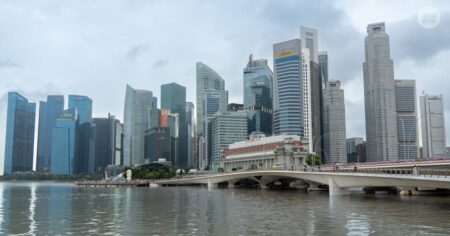
To educate the public on IBD, pharmaceutical giant Johnson & Johnson has launched a ‘Gut Tunnel’ experience in Shenton Way, it said in a media release on Monday (May 18).
The installation at Asia Square 2 will run from Monday to Thursday — in line with World IBD Day, which falls on May 19.
It turns complex clinical information into a tangible experience to educate the public on IBD and raise awareness about endoscopic remission, said the media release.
Endoscopic remission refers to an absence of active disease seen during a colonoscopy. It is one of multiple forms of remission, which include clinical (symptom control) and histologic remission — when no active inflammation is seen at the tissue level.
New data presented at Digestive Disease Week 2026 has reinforced endoscopic remission as being associated with long-term patient outcomes. However, over 60 per cent of people with IBD have not heard of this key treatment goal.


Many patients with IBD also experience invisible inflammation in the gut, which can continue even when symptoms appear controlled.
The Gut Tunnel experience is part of Johnson & Johnson’s Dual Control campaign.
Launched in 2025, this campaign aims to bridge gaps in IBD care by shifting its focus from short-term symptom relief to long-term disease control.
It also hopes to empower people living with IBD to take control of the disease and their life aspirations.
Consultant Gastroenterologist at Acorn Gastroenterology, Dr Shim Hang Hock, said that this Gut Tunnel experience “makes invisible disease activity visible and understandable”.
This helps patients who have IBDs recognise the importance of deeper treatment goals such as endoscopic remission.
“Symptom improvement does not necessarily indicate that inflammation has resolved,” he said.
[[nid:720013]]
bhavya.rawat@asiaone.com
Read the full article here