





In Singapore, the idea of heritage is often tied to places like Little India, Chinatown and Joo Chiat.
But beyond these familiar spots are lesser-known districts similarly brimming with history.
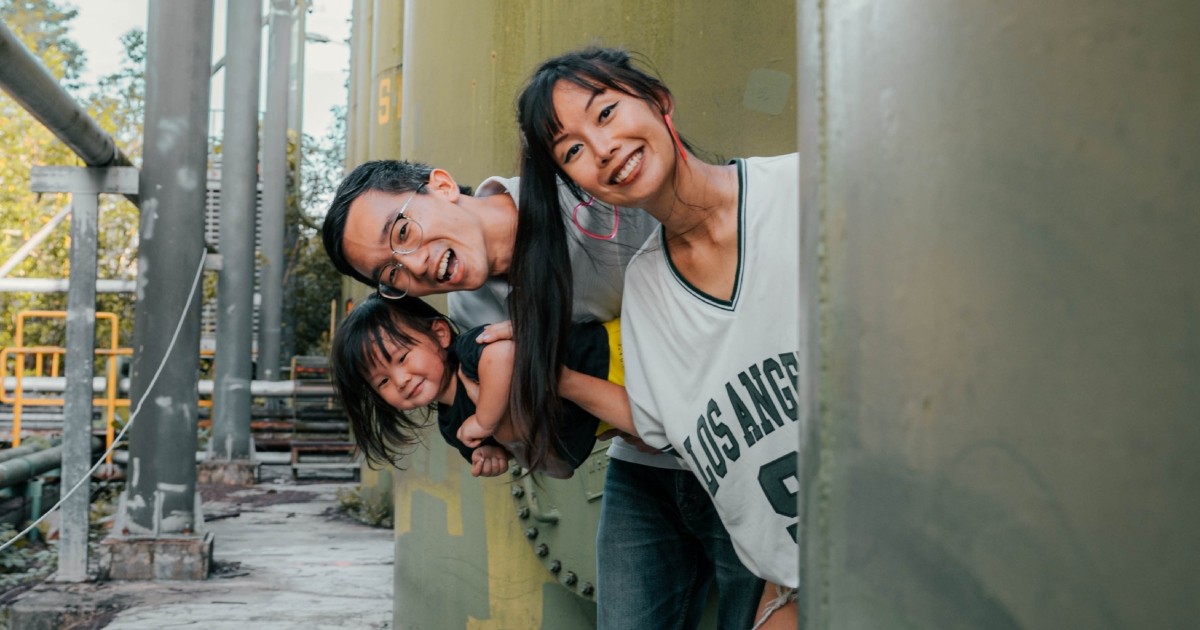
Shining a light on this is a couple in Singapore who decided to curate a series of heritage tours exploring atypical places.
We went on one such tour — Don’t Call Us Poor: Hidden Lives of Lavender — which took place on a Saturday (April 11) morning.
The two-hour excursion covered the Lavender and Jalan Besar areas, and is one of Hidden Heritage Tours’ anchor tours.
“We like places that are typically overlooked,” Stanley Cheah, the company’s co-founder told AsiaOne during the tour.
His passion for uncovering hidden stories and places began when he found out that a supermarket he frequented was formerly the country’s first-ever ice-skating rink.
“It’s interesting to uncover forgotten history like that,” the 27-year-old said.
Stanley runs Hidden Heritage Tours alongside his wife, Amanda Cheong, 38.
The pair previously worked in finance — Amanda for 13 years and Stanley for two — and met through their shared hobby of exploring abandoned places in Singapore.
[[nid:624916]]
In August 2024, they left their corporate jobs to focus on the tour business full-time after the birth of their son Theodore in November 2023.
“We wanted to spend more time with him and pursue our passions a little more,” said Stanley.
Prior to starting the business, Stanley and Amanda ran Abandoned Singapore, an Instagram page exploring abandoned and unlikely places around the island.
From there, they received requests for curated tours from fans, and started conducting unofficial tours on weekends.
Don’t Call Us Poor: Hidden Lives of Lavender
On why they chose a place like Lavender for their tours, Amanda explained: “The more touristy or spotlighted places are already very well-covered.”
With that, we set off for our first stop — Crawford Bridge along North Bridge Road. Here, we learnt about the history of one of the oldest roads in Singapore. Our attentions were also brought to the colonial-era emblems on the bridge.
The second place we visited was the North Bridge Road Tua Pek Kong Temple. It’s a small shrine located in an open-air carpark next to the North Bridge Road Market and Food Centre.
According to Amanda and Stanley, the temple was funded and built by the market vendors to accumulate good karma and as a way to give back.
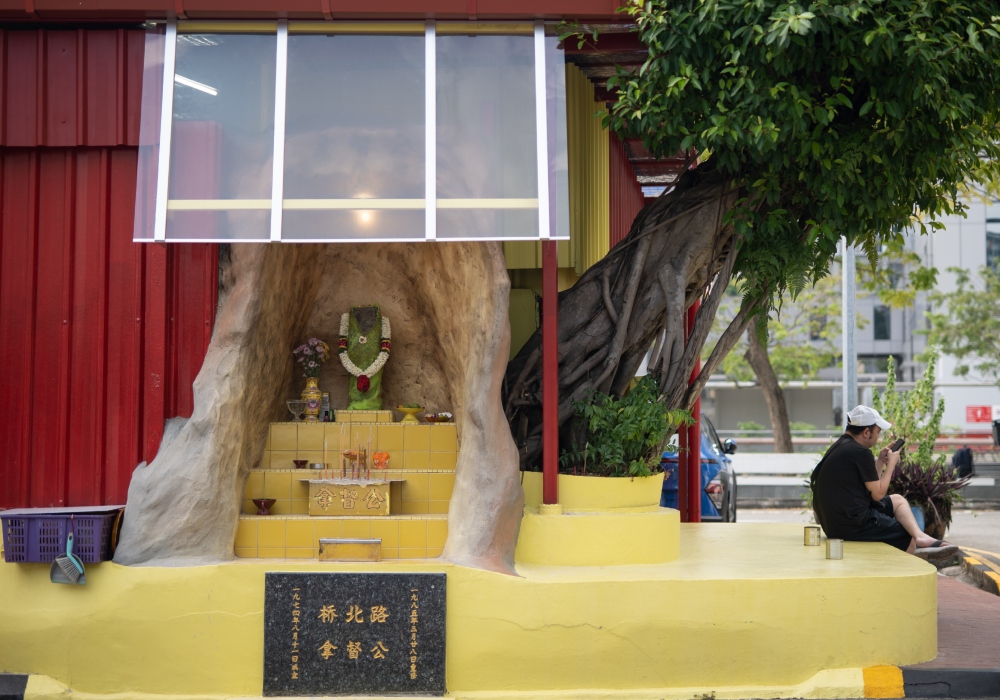

They thought this was necessary as many of their livelihoods depended on the killing and serving of animals such as fish.
There, we also learnt about the various deities the temple housed, including one in the form of a rock.
From there, we set off on a short walk to Heap Seng Leong coffee shop, an old-school eatery selling traditional Nanyang coffee, kaya toast, as well as puffs and pastries.


In contrast to the trendy cafes and eateries just a stone’s throw away in Jalan Besar, the space feels like it’s frozen in time. We were heartened to see it remains a popular spot bustling with customers.
During the tour, we also explored the old one-room rental flats in the area and learnt more about the history of public housing in Singapore.

One interesting fact that impressed us was the thought that went into the planning of the estate.
For example, some blocks in the area have a “mezzanine” level on the second floor. This was to prevent pedestrians getting hurt from high-rise litter, as many residents tend to toss things out of their windows here.
We even got to look at old HDB documents dated as far back as the 1970s.
As we toured the area, the couple shared that a tailor shop owner once warned them not to linger past 7pm, as it “could be dangerous”.
According to the tailor, who used to specialise in making bell-bottom jeans, the estate was notorious for vices such as illegal gambling dens and the peddling of contraband cigarettes.
Continuing the tour, we stopped by several long-standing heritage businesses.
This includes a TCM shop displaying the head of a saiga antelope and selling “clean” cockroaches used for traditional remedies.
More our speed was Sembawang Confectionary, where we got to try nostalgic cream cakes and bakes.


One highlight from this part of the tour was Sze Thye Cake Shop, a traditional Chinese pastry shop that has been operating for over 70 years.

Founded in 1950, the shop is apparently the last in Singapore still making Teochew sugar lions — an intricate figure made with sugar and often used as temple offerings.

The tour ended with a visit to a one-room rental flat occupied by a man known only as Uncle Chow — a former secret society member, turned contractor, turned craftsman — who has transformed his home into a sanctuary for art and expression.

The 73-year-old has been living there since he was 16.
As we walked through the narrow corridors of the rental block, Uncle Chow’s home stood out — decorated with hanging greenery and colourful mosaic art. It carried a charm almost akin to a Studio Ghibli film.

Stepping inside, we were first greeted by a pebbled entryway. It’s an unexpected detail for such a small space.
The rest of the flat was filled with artworks, particularly mosaic art, all made by Uncle Chow.

Perhaps the most interesting part about his flat was his kitchen and bathroom. Both are shrouded in greenery. The floor was also laid out with real soil.

Despite its size, the one-room flat felt far from small, as every detail and piece of art carried decades of stories, which Uncle Chow would happily share as we looked around.
Some of the artworks were also available for purchase, including a customisable unit number plate made using Italian mosaic tiles.
According to Amanda and Stanley, the reason why Uncle Chow wanted to sell his pieces is because he needed more space to continue making art.
“Uncle Chow said that creativity courses through his veins,” shared Amanda.
Speaking to AsiaOne, Uncle Chow expressed that he welcomes people to tour his home.

“I feel honoured and grateful to Amanda and Stanley,” said Uncle Chow. “Sharing joy is better than enjoying it alone. It feels good.”
Don’t Call Us Poor: Hidden Lives of Lavender is one out of 20 tours offered by Hidden Heritage Tours and costs $68 per person. It can be paid using SG Culture Pass credits.
Other tours available include Fishy Business: Jurong Fishery Port Tour, Battleships and Bunkers: Sembawang Heritage Tour and Secrets of the Streets: Jalan Besar Heritage Tour, and more.
[[nid:731762]]
No part of this article can be reproduced without permission from AsiaOne.
carol.ong@asiaone.com
Read the full article here