






[The following story contains spoilers from The Pitt, season 2, episode 11, “5:00 p.m.”]
Once again, HBO Max’s The Pitt mirrored reality: Thursday night’s 11th episode of season 2 featured an ICE storyline eerily similar to what is going on in the U.S.
The show, starring Noah Wyle as Dr. Michael “Robby” Robinavitch, who leads an understaffed, underfunded emergency room set in Pittsburgh, has had its fair share of episodes that closely resemble what is happening in the real world, with Wyle, Gemmill and executive producer John Wells all often talking about their consultations with experts to most accurately reflect the real-life issues facing health care workers.
Last season, a measles outbreak episode aired the same week cases started accelerating in the U.S.
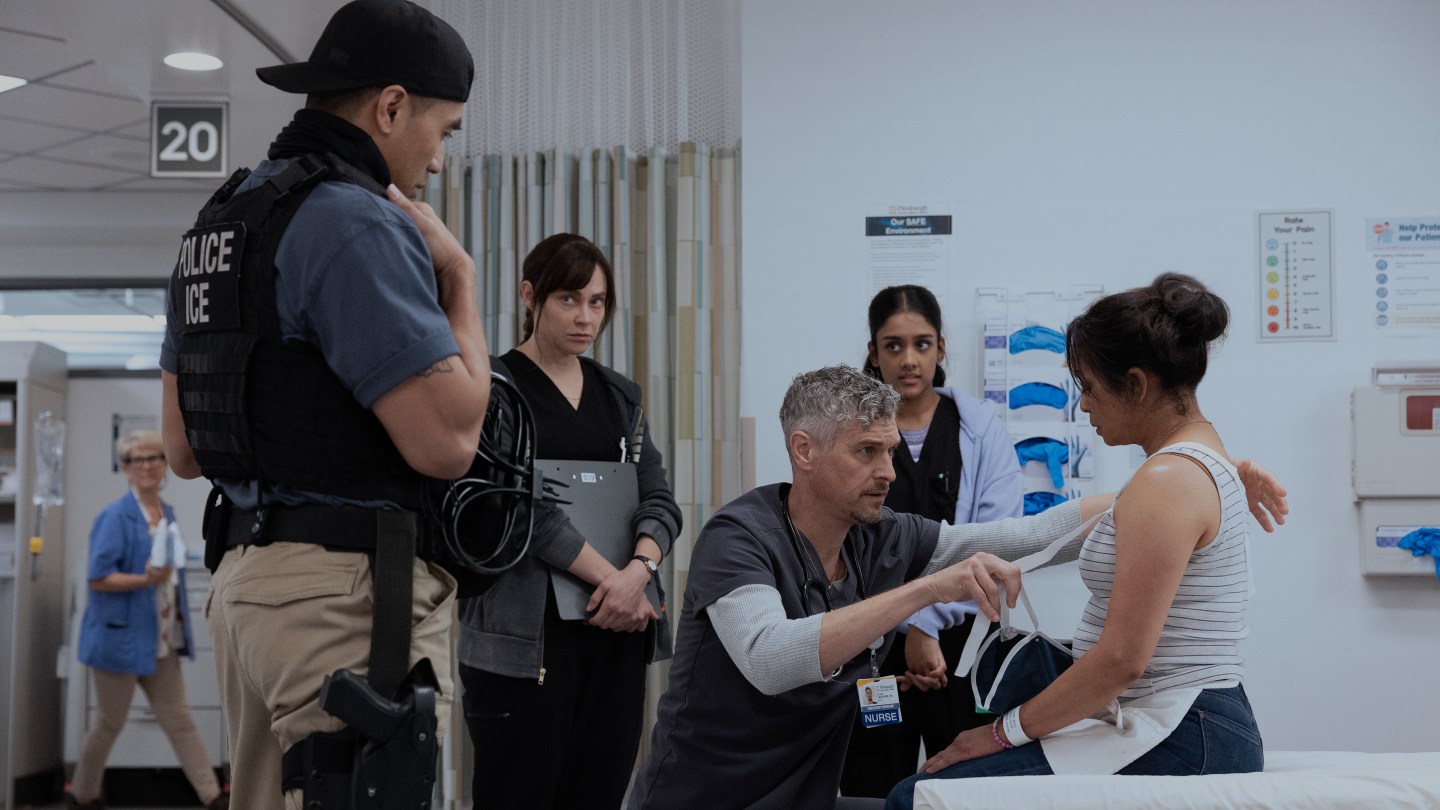
In this week’s episode, Immigration and Customs Enforcement agents bring a detainee to the ER, not giving medical staff much information about the injury of the patient other than that she fell. The agents’ presence makes everyone uneasy, prompting many patients and staffers to leave. At one point, Robby stands up to one of the agents, and at the end of the episode, nurse Jesse (Ned Brower) gets detained for stepping in to protect the patient when the ICE agents get too aggressive.
ICE, which enforces immigration laws, has been under scrutiny since the beginning of President Trump’s second term. The agency has made thousands of arrests, led mass deportations of immigrants and clashed with protestors, leading to deaths of people including Renee Good and Alex Pretti.
Fans watching Thursday’s episode may have felt whiplash watching things unfold on The Pitt in such a close echo of the news even though creator R. Scott Gemmill told The Hollywood Reporter that this episode was written more than a year ago. In their research process for the show, producers speak with nurses and doctors to see what’s going on in the medical industry, and as early as February last year, ICE began infiltrating hospitals, Gemmill says. Of course, things have escalated beyond what they could’ve imagined, with things rapidly changing every day.
Below, Gemmill talks about how the storyline came together and what was challenging about this particular episode.
There’s an uncanny timeliness with your show with last season’s measles outbreak episode, references to Medicare and Medicaid cuts, and now here we are again with an extremely timely episode. How did the idea to feature an ICE storyline start?
The episode was written quite a while ago, before things got as escalated as they have. Last night, we actually had what we call nurses night, where we had 12 nurses come in from [Los Angeles] County General [hospital] and just let us sort of pick their brains about what’s going on. [Asking them], what are we doing right? What are we doing wrong? We do that every year, and sometimes more than once a year. And we’ll do residents night next week, and we just talk about what’s going on in medicine. And one of the things that was obvious back then was the very beginning of ICE being in the hospitals. We just wanted to tell that story as part of what’s going on in medicine.
When was the episode written?
It would have been last summer, or could have been even last February when we started in the room. We usually start the room right after we finish filming [a season], and we don’t have much time off. We looked at what’s going on, and we don’t try to prophesize; we just naturally extrapolate what could happen. And that happened with the measles case. It happened with the cyberattack, and it’s happened with ICE. Things unfortunately have gotten much more severe with that than what we had ever imagined.
What made you think this issue would still be pertinent by the time the episode aired over a year later?
Pessimism, maybe. (Laughs.) No, that is something we had to think about: What happens if this is all gone? That’s a situation where it would be bad for the show because we would have to scramble, but it’d be good for the nation. What are those things where it was a win-win for us? If the ICE infiltrations went away, then that’s good for everyone. If they didn’t, then our stories remain relevant.
You mentioned this spawned from a conversation with nurses a year ago. How much research goes into an episode like this, especially about a situation that is constantly evolving?
Once we start shooting — and I guess we’re good up until we shoot that scene — I suppose you have a little leeway in editing where you can adjust after the fact. I would say, sometimes we get lucky, but you don’t have to be Nostradamus to see certain things coming and just the way things tend to work out. It takes a while for these things to get into motion. A lot of time, it takes a while for them to recede. We were hopeful that things would get better, but until there’s some real changes at a much higher level, things aren’t going to improve.
Was there anyone that was like, let’s not touch this given the current political climate?
We sometimes think about that with, I think, any topical storyline we think about. But I don’t think so, no, because then that would be shying away from things that are really going on, and that’s not truthful.
And that’s the core of the show, to show what’s really going on in these underfunded, understaffed emergency rooms. Was there ever a fear of retaliation?
We’re a courageous bunch. I think the truth will always find its way.
What would you say was the biggest challenge of this episode, whether it was writing or filming it?
If you’re speaking specifically about the ICE storyline, I think that the tricky thing is to sort of portray it somewhat neutrally, in terms of portraying what’s happening, trying not to proselytize in the process and just present it as is and let the audience decide what they take from it. That’s how we tell every story.
Dr. Robby standing up to the ICE agent seemed like a bold move for the character, right? It could have gone sideways in the end. What was behind that choice?
Robby sort of embodies the medical professionals who are being forced to deal with this and without really great guidelines. It gets convoluted which agency you’re talking about, and now some of these ICE agents are subcontractors, so you don’t know who’s really in charge. I think what Robby’s doing comes out of frustration, it comes out of fear, comes out of anger, but it also comes out of wanting to protect his patients more than anything. And you know, he’s the captain of the ship, and this is his ship, and he doesn’t appreciate anyone coming in and upsetting things unnecessarily.
And what about Nurse Jesse’s arrest?
That’s just part and parcel of showing different sides of the same story.
And we don’t know where he’s going to be held, and that is, again, very timely. Did that come from your research as well?
Yeah, and putting ourselves in the shoes of the patient, the ICE agents and the doctors. It’s a complicated issue, and it’s not black and white. Our show is mostly told from the doctors’ and the nurses’ point of view, that we don’t really go into those patients’ point of view. But, you know, I think the fact that some patients left and even some some staff shows you the impact that it has, and that basically their actions speak for what they’re thinking.
Read the full article here