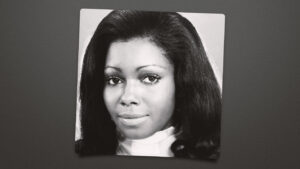







Contrary to the interpretation you may have read in some outlets, the Red Hot Chili Peppers haven’t really distanced themselves from or disavowed the upcoming Netflix documentary, The Rise of the Red Hot Chili Peppers: Our Brother, Hillel.
What the band said, in a statement on Instagram, was that they participated in a documentary about original co-founding member Hillel Slovak and it’s now being presented as a documentary about the Red Hot Chili Peppers — which, they insist, was never how they saw it.
The Rise of the Red Hot Chili Peppers: Our Brother Hillel
The Bottom Line
Satisfying, though questionably focused.
Venue: SXSW Film Festival (24 Beats Per Second)
Airdate: Friday, March 20 (Netflix)
Director: Ben Feldman
1 hour 33 minutes
Based on the cumbersome title and, honestly, a lot of Ben Feldman’s film, it’s easy to see the source of their concern.
From title to execution, The Rise of the Red Hot Chili Peppers: Our Brother, Hillel feels like the first installment of a two-part Red Hot Chili Peppers documentary, one that pays ample and justifiable tribute to Hillel Slovak, but one in which Slovak’s triumphant and then tragic story is treated, at most, as first among equal narratives.
As is, The Rise of the Red Hot Chili Peppers: Our Brother, Hillel is highly entertaining, full of ridiculously fun early footage of the band and its predecessors, and deeply emotional, with Flea succeeding in making me tear up on multiple occasions.
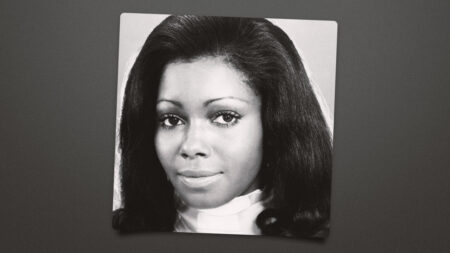
As a film about Hillel Slovak, it’s a bit less successful. It’s a more-than-adequate basic tribute to the guitarist, who died of an overdose in 1988 at the age of 26. For casual fans who jumped on the Blood Sugar Sex Magik bandwagon and know only the John Frusciante years, it thrusts Slovak back into the middle of the story. But any deeper personal understanding of Slovak remains just beyond reach.
Realistically, it was inevitable that once Feldman (Bug Out) got the deeply candid participation of Anthony Kiedis and Flea, it was always going to be about, well, the rise of the Red Hot Chili Peppers. They’ve always been the figures in the band who the camera gravitated toward, and the ones who gravitated toward cameras; that’s more gravitational pull than any director could resist.
Kiedis and Flea trace their own journeys as outcasts and Los Angeles transplants to Fairfax High School and their initial meeting with Slovak, who was far cooler and more confident than either of them. They bonded through a shared love of music, comedy and recreational drugs, and together they became the family that they each lacked. And then they became a band — well, actually two bands: Red Hot Chili Peppers and What Is This (formerly Anthym).
My favorite part of the documentary is the first half, which really feels more sincerely like Our Brother, Hillel. Though Kiedis is lively and colorful, it’s Flea who adds almost all of the substance — to which many a Chili Peppers fan responds, “Same as it ever was” — getting choked up as he recalls Hillel asking him to learn the bass to join Anthym, even though he’d never touched the instrument before.
“I was like, ‘Wow! You want me?’ No one wanted me. I was a weirdo. I wasn’t cool,” Flea says in the doc.
SNIFFLE.
In addition to Flea and Kiedis, the documentary boasts interviews of varying levels of substance with Jack Irons and Alain Johannes, giving an intriguing breakdown of the Petri dish in which the Chili Peppers and What Is This formed, broke up and achieved success.
Feldman has accumulated a treasure trove of old pictures — funny and, in a bigger sense, heartbreaking — of innocent, pre-fame Kiedis, Flea and Slovak goofing off and hanging out. He fills in the gaps in available footage with a fun and trippy collage animation that captures the medley of influences coming together in Los Angeles in the early ’80s.
Once the Chili Peppers are formed and achieve their first successes on the club scene, Our Brother, Hillel really becomes The Rise of the Red Hot Chili Peppers — and while Feldman works with fantastic early performance footage and demo songs, the arc of the documentary becomes a very straightforward Behind the Music-style saga of drug abuse, phantom recovery and relapse. The documentary pretty much uses “drugs” as synecdoche for all manner of misbehavior. While Kiedis and Flea have both talked amply in the past about sexual hijinks and other improprieties, for Slovak, success brought one primary demon.
It’s in this half of the documentary that it becomes clear that most of what we learn about Slovak relates to his musical genius and his generosity toward Kiedis and Flea. Beyond that, Feldman can only take us so far. Hillel’s brother James provides a few family details, while longtime girlfriend Addie Brik discusses how he wooed her (hint: it involves stalking). But a barrier remains. We get lots of Slovak’s art and hear his writing read by an AI simulation of his voice, a device that has replaced “excessive drone usage” as my current documentary bête noire, one that I’m sure a person as creative as Hillel Slovak would have detested.
I would have traded three to five minutes of Kiedis discussing his drug use for three to five minutes more on Slovak’s mother, apparently a formative and formidable person, his Jewishness and, honestly, anything that would have left The Rise of the Red Hot Chili Peppers: Our Brother, Hillel just a hair more like Our Brother, Hillel and less like The Rise of the Red Hot Chili Peppers.
Read the full article here