

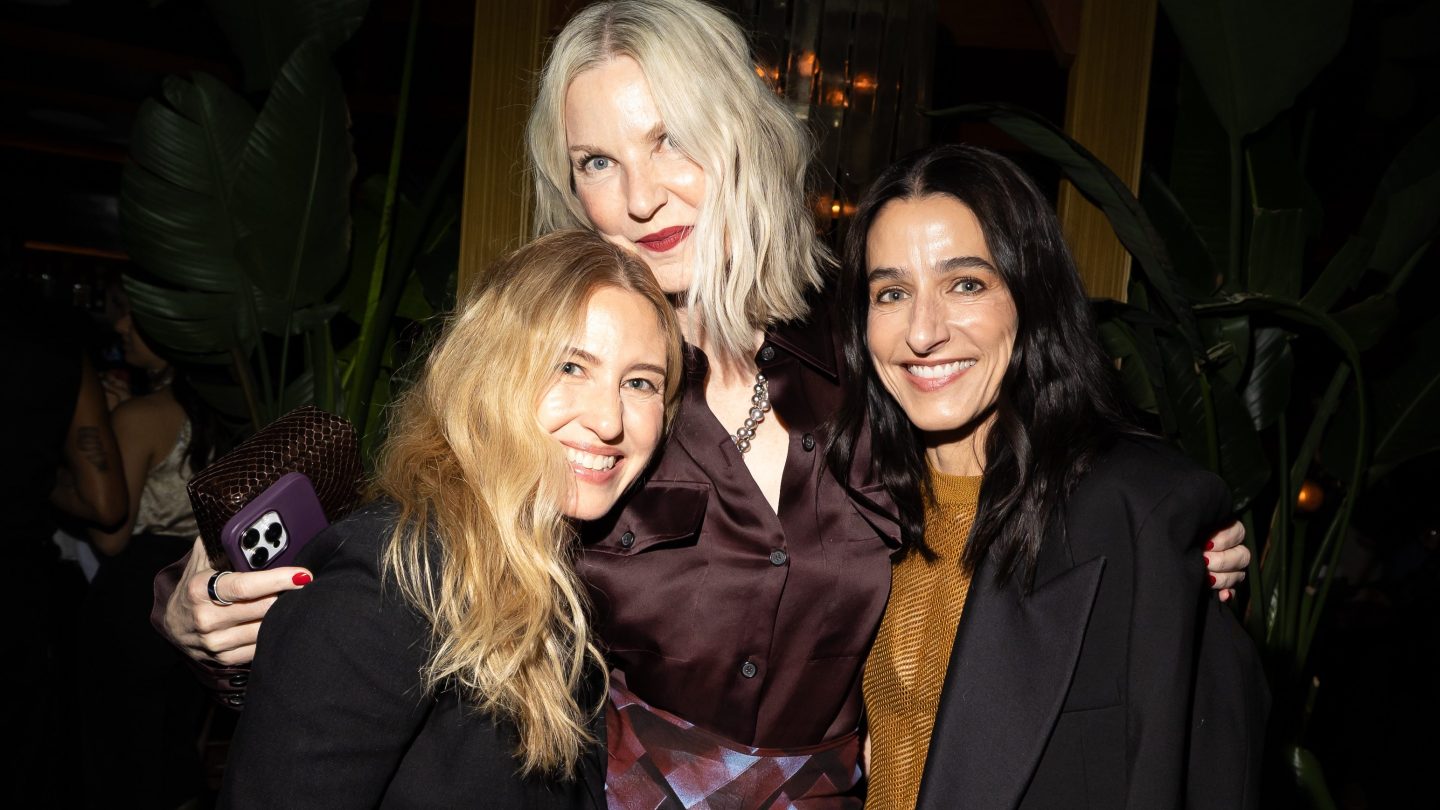


Many of the people responsible for making Hollywood look like Hollywood were gathered in one dark, flattering room on a Wednesday night in March, just days before the Oscars. The occasion was the 25th anniversary of The Wall Group, Brooke Wall’s styling agency, and Delilah — all low lights, curved leather banquettes and old-school supper-club mood — was full of hair stylists, makeup artists and wardrobe pros temporarily off the clock, though hardly off-brand.
Oscar weekend is the busiest stretch of the year for this corner of the business, and the party offered a snapshot of how much it has changed since Wall started the agency in 2000. Back then, stylists had lower profiles, fewer clients and far less leverage. There was no Instagram, no Netflix or Apple TV+, fewer red carpets, fewer photographers and fewer luxury brands fighting to dominate them. Stylists competed for dresses; stars were more likely to wear looks straight off the runway; and a surprising number of actresses still bought their own gowns — and were even proud of it.
Wall was making an early bet on a business that had not yet become the power center it is now. Over the past quarter-century, celebrity styling has grown from a support service into a much bigger business, with stylists becoming more central not just to red carpets, but to magazine covers, ad campaigns, brand deals, social media and the nearly year-round parade of public appearances. As fashion became more central to celebrity culture, stylists became more visible, more influential — and their business far more lucrative.
Luxury houses began investing more aggressively in red-carpet dressing as the exposure value became impossible to ignore. Designers started creating custom looks for stars instead of simply sending samples. Men, once largely confined to safe tuxedos, began loosening up. Stylists got managers, bigger agents and mainstream brand collaborations. Then social media blew the whole thing open: suddenly a look didn’t live for one night on Getty. It lived forever, and everywhere. Stars needed more fittings, more day looks, more campaign looks, more travel looks. The result is a more polished, more strategic, more tightly branded world, dominated by the major luxury houses that can keep up with the pace.
That evolution is one reason The Wall Group has endured. The agency, which Wall sold to WME in 2015, represents many of the biggest names in hair, makeup and styling, and its agents are now involved in far more than simple bookings, helping broker brand deals and ad-campaign work as well as pairing artists with clients. Wall was there greeting artists she had signed and helped build into businesses. “One of Brooke’s many talents — her greatest talent,” said New York co-head Ali Bird, “is her eye for talent.”
Wall came to agency work after working for top hair talent in New York, including Oribe and John Frieda. “One day,” she recalled, “John Frieda told me he was going to give me the money to open an agency. It seemed to come out of nowhere. He saw something in me I hadn’t seen in myself.”
Her longtime deputies, now co-heads Ali Bird in New York and Kate Stirling in Los Angeles, described a business that was still relatively undefined when they joined. “When started at The Wall Group twenty three years ago, I had no idea what a hair and makeup agency was,” Stirling said. “I’d been working as Ashton Kutcher’s assistant. Brooke and I had a mutual friend. She said, ‘I’ll teach you the ropes.’ The timing was really right: celebrities were starting to take over magazine covers and ad campaigns from models.”
Bird, The Wall Group’s first employee in 2001, said Wall understood early that Los Angeles, not just New York or Paris, would become central to the future of the business.
The room at Delilah reflected that long arc. Veterans like Jeanne Yang and Danilo mixed with younger stylists still working their way up. Clients and executives stopped by. There was plenty of cheek-kissing, and probably a little air-kissing too — nobody wants to smear lipstick in that crowd. Unlike some jaded Hollywood affairs, the mood seemed genuinely warm, even among people who in other settings might qualify as frenemy competition.
What hasn’t gotten easier is the job itself. One Wall Group agent pointed out that Oscar week now includes not just the ceremony but the dense circuit of before-parties and after-parties surrounding it. A star may need one look for the ceremony, another for Vanity Fair, another for Guy Oseary and Madonna’s party, another for whatever comes after that. “Think twenty looks at least,” the agent said.
And that outfit swapping does not happen in some magically appearing fashion salon. “Either in the Kodak Theater bathroom or the back of the car,” Jeanne Yang said. “And no. I’m not kidding.”
“The business has really changed,” said Danilo, who has spent more than 20 years creating hair looks for Gwen Stefani and other stars. “Money often comes from business deals rather than clients. But I still love doing hair — I wake up in the morning and love what I do: travel the world, constantly meet new people; I get to be creative every day.”
Read the full article here