




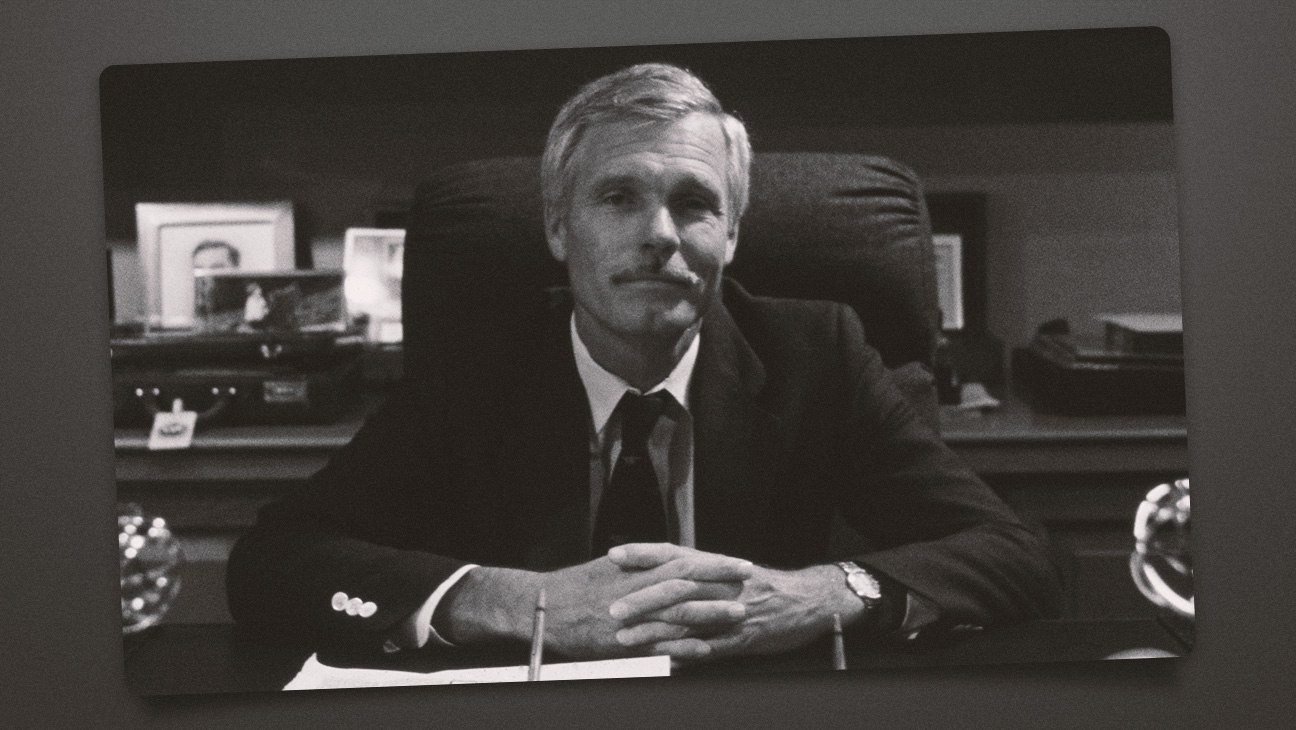


Ted Turner, the media visionary who forever altered the news business by founding CNN and helped introduce Americans to pay TV by creating cable channels like TNT, Turner Classic Movies and Cartoon Network, has died. He was 87.
Turner, who later turned his attention to saving the planet and pushing progressive political causes, died Wednesday, according to a statement from the family released by Turner Enterprises. Turner died peacefully surrounded by his family. He battled Lewy body dementia in recent years.
Turner wrote his own version of the Ten Commandments he called “11 Voluntary Initiatives,” a copy of which he carried on a printed card kept in his wallet; famously donated $1 billion to the United Nations; and spent several years as the largest shareholder of Time Warner, where he was nevertheless fired as vice chairman shortly after the conglomerate’s ill-fated merger with AOL.
He also was married to two-time Oscar-winning actress Jane Fonda for a decade.
A former owner of baseball’s Atlanta Braves and an expert yachtsman in his younger days, Turner won the America’s Cup in 1977, then appeared drunk at the resulting news conference, an embarrassing moment that caused him to cut back on his alcohol consumption before he quit entirely in 2011.
He told Stephen Galloway of The Hollywood Reporter a year later that he was rarely depressed, even though he had contemplated suicide and was once wrongly diagnosed as a manic depressive. He did suffer from “a mild to moderate case of anxiety” but boasted of an IQ of 128 — “in the 97th percentile,” he noted.
During the same interview, Turner said he was no longer interested in the media business but was passionate about his 2 million acres of property. The environmentalist, in fact, was racking up hundreds of thousands of miles a year on his private jet, visiting his 14 ranches that were home to 55,000 bison.
The charismatic Turner was the nation’s second biggest land owner after Liberty Media chairman John Malone, and his fortune was estimated at $2 billion, down from a high of about $11 billion at the height of the Internet bubble, when AOL used its overpriced stock to acquire Time Warner at the turn of the century.
He said at the time that the merger that created the now-defunct AOL Time Warner was “better than sex,” words he’d soon regret.
Often described as a loose cannon, Turner was nicknamed “Mouth of the South” and “Captain Outrageous” as he often courted controversy, once comparing fellow media mogul Rupert Murdoch to Adolf Hitler and challenging him to a pay-per-view boxing match.
On another occasion, shortly after hijackers brought down the Twin Towers, Turner described the terrorists as “brave” men whose actions were motivated by world poverty, and he accused Israel of terror against Palestinians. Afterward, he explained both of those comments by telling The Guardian: “Look, I’m a very good thinker, but I sometimes grab the wrong word … You know, I wing it.”
Brash even as a young man, Turner attended Brown University but didn’t graduate because he was kicked out after he was caught with a woman in his private quarters. He did, however, eventually amass 46 honorary degrees.
Robert Edward “Ted” Turner III was born in Cincinnati on Nov. 19, 1938, to Florence and Robert Edward Turner II. His father, a billboard magnate, was a stern man who would whip his son with a razor strap for stepping out of line, but the youngster refused to capitulate to his dad’s authority.
When Turner was 24, his father, battling depression and under the influence of alcohol and pills, shot himself dead, leaving the advertising business to his son. (Turner’s younger sister, Mary Jean, had already died from lupus at age 17.)
Turner’s earliest — and in hindsight, brilliant — moves as the newly minted owner of a small media business were to threaten lawsuits to regain control of assets his father had agreed to sell before dying. He then acquired some local radio stations before diving into TV with the purchase of a UHF station in 1970 and changing its call letters to WTCG — for “Watch This Channel Grow.”
It did, of course, first by running reruns of Bugs Bunny cartoons and shows like Gilligan’s Island, Star Trek and I Love Lucy before acquiring the rights to Braves games in 1973. Three years later, he boldly used satellites to turn WTCG into what he called a “superstation” to compete with HBO by broadcasting old movies and TV shows, along with sports, to a national audience.
WTCG became WTBS after he purchased that call sign from a radio station for $50,000 with the idea of branding his burgeoning media conglomerate as Turner Broadcasting System. His purchase of the Braves, as well as the NBA’s Atlanta Hawks and his creation of the Olympic-style Goodwill Games in 1986, were partially motivated by a desire to sew up sports rights for TBS.
A bold risk-taker who never seemed to mind stretching his finances to the limit, Turner had been nursing an idea of a round-the-clock news channel for nearly a decade before he purchased an old mansion in Atlanta, supplied it with television equipment and hired a dozen anchors.
He sunk $21 million into the venture and launched CNN on June 1, 1980, only for skeptics to deride it as the “Chicken Noodle Network.” He hired talent like Lou Dobbs, Wolf Blitzer and Bernard Shaw and kept the money-losing channel afloat with profits from WTBS, but CNN went from red ink to black in 1985 and became a household name with its unmatched coverage of the Persian Gulf War. (Months earlier, after Saddam Hussein invaded Kuwait, Turner quickly spent $35 million to establish facilities in the Gulf region.)
“Hostilities began on the evening of Jan. 16, 1991,” Turner reminisced in his 2008 autobiography, Call Me Ted Turner. “I was in Los Angeles watching CNN at Jane Fonda’s house and I’ll never forget it. Bernie, Peter Arnett and John Holliman delivered gripping coverage as the bombs began to fall. For the first time in history, a war was being televised live from behind the scenes.
“I grabbed the remote. While CNN’s team provided riveting coverage and our lead anchor compared being in Baghdad to experiencing ‘the center of hell,’ CBS’ Dan Rather was sitting at his desk in New York talking about the attack. When I flipped to ABC, Peter Jennings was also behind a desk, talking. NBC and Tom Brokaw? Same thing. Turning back to our live coverage, I smiled. CNN scored the journalistic scoop of the century.”
Time magazine made Turner its “Man of the Year,” and the success of CNN has spawned such notable competitors as MSNBC and the Fox News Channel.
In 1986, Turner paid more than $1 billion for the film library of MGM/United Artists, which also included Warner Bros. movies and Looney Tunes cartoons, and used his windfall of classic films to launch TNT and TCM.
Five years later, he paid $320 million for Hanna-Barbera — home of The Flintstones, Yogi Bear, The Jetsons and Scooby-Doo — and those characters, along with Bugs, Porky Pig, Daffy Duck and the Road Runner, became the core of Cartoon Network, which bowed in 1992.
Turner sold his media empire to Time Warner in 1995 for $6.5 billion and joined the conglomerate as its vice chair and president of Turner Broadcasting. Shortly after AOL purchased Time Warner, Turner’s friend Gerald Levin, the CEO of the merged company at the time, forced him out.
“It’s pretty hard to love someone who fired you, particularly from a job you really liked,” Turner told THR in the 2012 story. “But I don’t hate Jerry.”
Turner’s personal life seemed almost as frenetic as his professional one. In the 1980s, some saw him as a modern-day Rhett Butler, and he never discouraged the comparison. He even played a Confederate officer in Gods and Generals, a Civil War movie he produced in 2003.
By 2012, he had been married and divorced three times and was shuffling four girlfriends simultaneously, an arrangement he acknowledged was not ideal. But he was never under the microscope more than when he was married to Fonda.
Turner met the actress while she was still married to Tom Hayden and was smitten, so he phoned her after she divorced the liberal politician. She thought it was too soon to date and told him to call her again in six months, and so he did, to the day. They married in 1991 and divorced 10 years later.
It was widely reported at the time that Fonda’s decision to leave him was fueled by her becoming a Christian, though in his autobiography he refutes the reporting, and Fonda told THR she divorced Turner because she was tired of “being defined as so-and-so’s wife.”
“She’s as opinionated as me, if not more,” Turner said. “What am I supposed to do, sit down and cry? I did for six months … after that, you gotta go on.”
The graduate of a Christian, military prep school (where he was a debate champion), Turner considered himself politically conservative for many years before becoming staunchly liberal. A trip to Cuba in 1982 to meet then-dictator Fidel Castro and a friendship with President Jimmy Carter nudged him leftward, and striking up a relatiohship with Jacques Cousteau helped him to define his environmentalism, he said in his autobiography.
In 1999, Turner toyed with the idea of running for president against George W. Bush either as a Democrat or Independent.
On his list of “11 Voluntary Initiatives” that he carried in his wallet was the vow, “I promise to care for Planet Earth and all living things thereon, especially my fellow beings.”
The outspoken father of five predicted that overpopulation would cause food shortages and that global warming would lead to cannibalism, and he put his money where his mouth was in order to avoid such calamities. He founded the Turner Foundation in 1990 to raise money for environmental causes, and he had given an estimated $200 million to charity in addition to the $1 billion he gifted to the U.N. in 1997, which came at the rate of $100 million annually and was earmarked for initiatives involving population control and the environment.
At one time, Turner owned as much as 5 percent of the land in New Mexico, though several years before his death he began to periodically give large chunks to Native Americans.
In his autobiography, Turner mused of his own death, writing: “I’ve often considered and joked about what I might want written on my tombstone. At one point, when I felt like I couldn’t get out of the way of the press, ‘You Can’t Interview Me Here’ was a leading candidate. In the middle of my career I considered, ‘Here Lies Ted Turner. He Never Owned a Broadcast Network.’ These days, I’m leaning toward, ‘I Have Nothing More to Say.’”
Read the full article here