






For Anna, the 30-something woman at the center of Take Me Home, the smallest change in her routine can set her off. As the movie opens upon her circumscribed suburban life, Anna, who has a cognitive disability and lives with her aging parents, is about to hit an inflection point of monumental proportions.
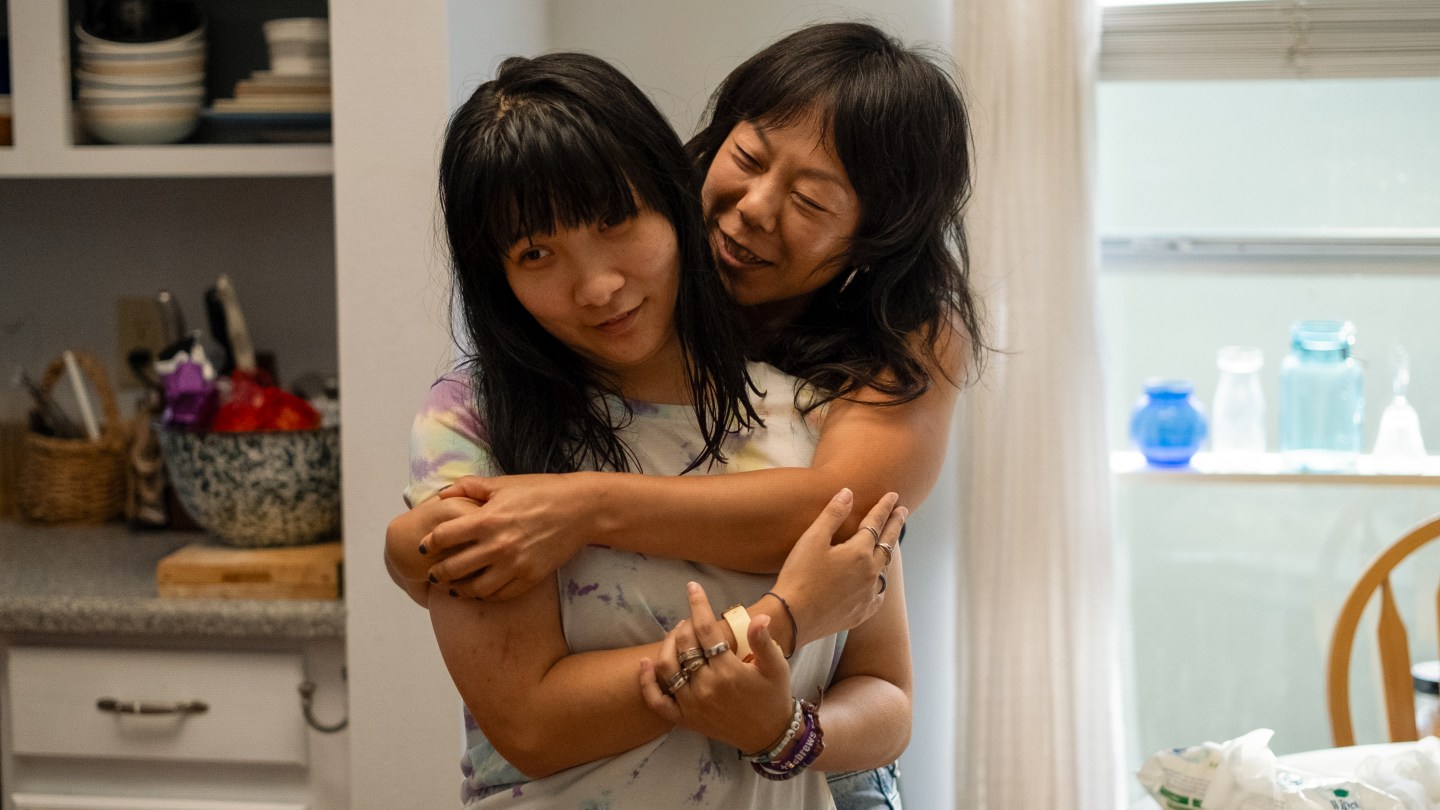
The feature debut of writer-director Liz Sargent doesn’t shy away from grim realities, but at its heart is the feistiness of its protagonist, inspired and played by the filmmaker’s sister. Like the character she portrays, Anna Sargent is a Korean adoptee with cognitive disabilities. She’s also a disability advocate, an athlete and an engaging performer who conveys Anna’s occasional childish peevishness as well as her spirited, childlike openness and sensitivity. The movie is an expansion of a 2023 short of the same name, which won the top prize at the American Cinematheque’s Proof of Concept Film Festival.
Take Me Home
The Bottom Line
Fresh and unpredictable.
Venue: Sundance Film Festival (U.S. Dramatic Competition)
Cast: Anna Sargent, Victor Slezak, Ali Ahn, Marceline Hugot, Shane Harper
Director-screenwriter: Liz Sargent
1 hour 31 minutes
Liz Sargent takes narrative chances in Take Me Home that seemingly intend to pull the viewer out of the story, at least momentarily, but the interactions among the strong cast strike a winning balance. There isn’t a predictable or hackneyed exchange in the drama, which understands not just the immense challenges its characters face but also the throwaway humor that can be essential to a family’s connective tissue.
In their Orlando home, Anna and her retired parents (Victor Slezak and Marceline Hugot) live a life of quiet routine, juggling bills and insurance red tape. Against the day-to-day backdrop of lawn upkeep, Florida humidity and power outages, there are drives to the port to watch cruise ships pass by, their pristine hulks enormous and surreal. Back at the family’s kitchen table, they pray together before meals. Anna’s mother bathes her, and she and her husband endure their daughter’s occasional tantrums. But as needy and demanding as Anna can be, she’s also a perceptive caregiver in her own right, attentive to her mother’s physical ailments and her father’s growing cognitive struggles.
Anna’s sister, Emily (Ali Ahn, of The Diplomat), who’s also a Korean adoptee, lives in New York, and the movie’s first, long-distance glances of her in video chats with Anna set us up for a hissable, self-absorbed career woman. But when she arrives in Orlando, after Joan has died, it’s clear that she’s a reasonably self-absorbed and understandably stressed-out working person who’s doing everything she can to help her family. Emily’s compassion and concern go beyond the writing of checks. Ahn is extraordinary, breathing vibrancy as well as deeply conflicted emotions into an arty Brooklynite who uses words like “enable” and “anxiety” and notes that “my therapist says I need to breathe more.” She’s no cliché, but a complex character facing a tough predicament, feeling the weight of responsibility and the pain of being limited in what she can do.
On Emily’s first time home in a couple of years, her father’s increasing lapses become as obvious to her as they are to Anna. Broaching the hard truth, the need to figure out a more structured caregiving plan for her father and sister, Emily meets resistance from them both. But after she leaves, Anna, in a moment of weighty stillness, feels the uncertainty of what lies ahead. Slezak is superb at conveying Bob’s growing frustration: all lost in the supermarket, placing paper towels in the fridge, staring uncomprehending at a wall calendar. There’s a sweet camaraderie between him and Anna as they negotiate what to watch on TV, and undeniable comedy, edged with a sense of peril, when they join forces to navigate the kitchen and the matter of cooking. The ways they look out for each other make his increasing bursts of anger all the more distressing.
“It’s made to be complicated,” a care facility manager (April Matthis) tells Bob regarding the convoluted gaps and restrictions of Medicare and Medicaid. Through the harsh realities facing a middle-class family, Sargent’s screenplay is a damning indictment of the American health care system. But it’s no screed, and at its center is a charismatic character whose declarations of independence are small but stupendous, whether she’s shooting hoops with her neighbor (Shane Harper) or swiping a package of yearned-for ice pops from the market.
The helmer and production designer Andrew White infuse the movie, especially in the early going, with a nuclear family’s emotional claustrophobia and also its comforting familiarity. Sargent uses occasional ellipses to propel the story, notably in the disorienting break between the film’s bleakest moment and what you might call a dreamscape, a utopian vision, or a proposal. Changing gears from the understated domestic palette, cinematographer Farhad Ahmed Dehlvi captures a place where everything seems to glow as if lit from within. When we first see Anna in Take Me Home, she’s wearing earbuds and singing along softly to a song no one else can hear. Where the story takes her is a place of deep engagement with a kind and caring world. The music is shared, and dancing is encouraged.
Read the full article here