




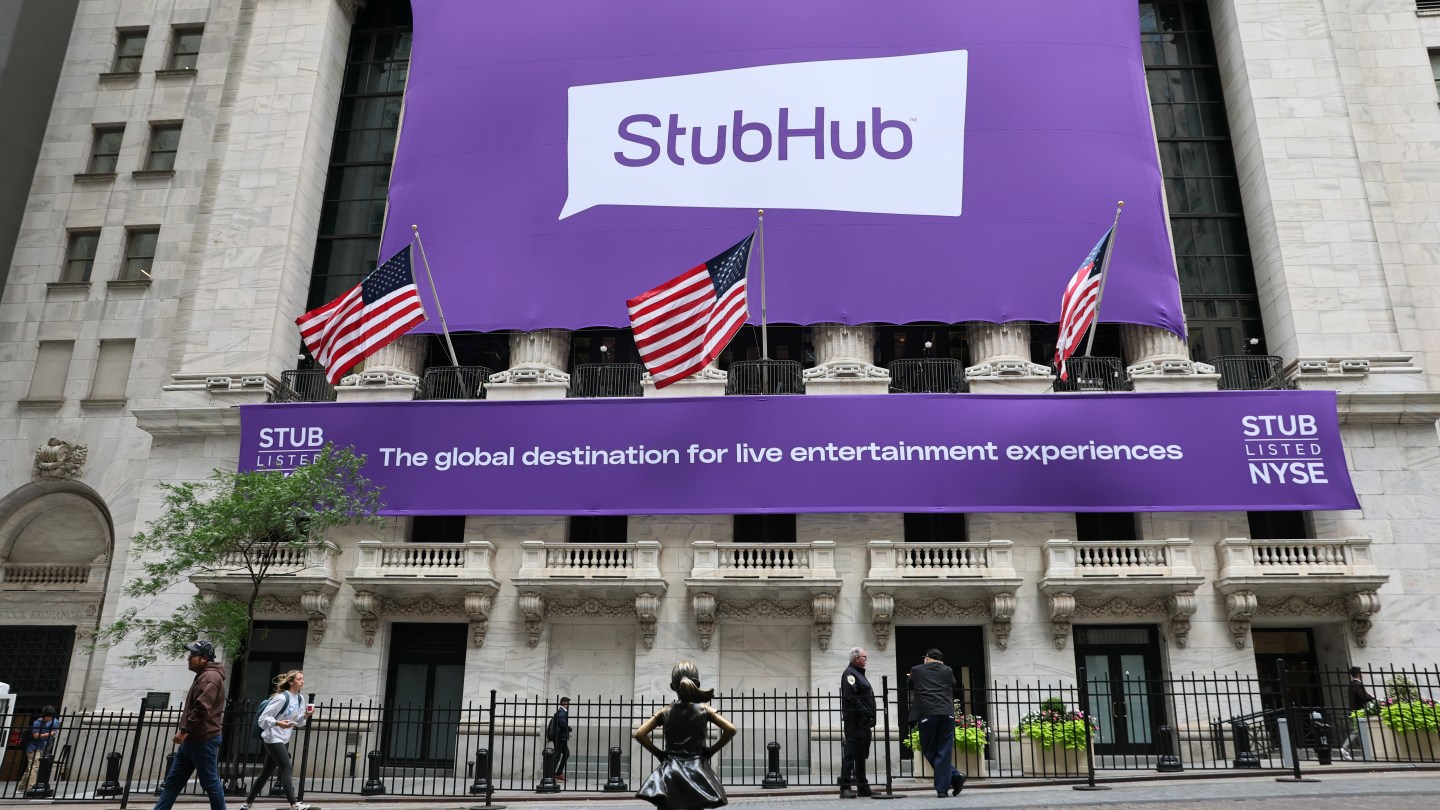


StubHub’s lobbying expenses have reached an all-time high in California, as the ticket resale platform has spent millions of dollars over the past few months looking to stop a bill that seeks to place limits on how much concert tickets are allowed to sell for on resale services in the Golden State.
The company reported nearly $2.6 million in lobbying expenses in California from April to June, per filings reviewed by The Hollywood Reporter. According to the Capitol Morning Report, that makes StubHub the second-largest lobbying spender in the state for the quarter, behind only Pacific Gas & Electric and ahead of the likes of Chevron, Verizon, AT&T and OpenAI, among others. It’s the most StubHub has ever spent on lobbying in any quarter in California, per publicly available documents. Overall, StubHub has spent $3.4 million this calendar year.
The company’s record spending follows AB 1720, a bill from state assembly member Matt Haney introduced in February that, if passed, would limit concert ticket resale prices to no more than 10 percent higher than a ticket’s original price. Since its introduction, the bill already has been abated with an amendment limiting the law only to smaller 3,000-capacity venues or lower, removing most of the major amphitheater, arena and stadium dates that usually draw much of the activity on secondary ticketing sites.
When asked for comment, StubHub said the platform “exists to give fans access to live events on their own terms through a secure, verified marketplace — including fans who couldn’t get tickets during the original on-sale, or who want the option of grabbing a great deal as prices shift closer to the event.”
“We believe that more choice, flexibility, and access put fans first and help everyone get into the events they love,” StubHub said.
AB 1720 received support from groups representing artists and indie venues including the National Independent Venue Association, the Future of Music Coalition and the Music Artist Coalition. It’s also drawn support from live music giant Live Nation Entertainment, owner of the eponymous concert promoter and the oft-bemoaned Ticketmaster, the primary ticketing provider for most of the major concert venues in the U.S.
Proponents for price caps argue adding a hard limit on secondary ticketing would be a major step in ending ticket scalping, as brokers would no longer be allowed to list tickets at extreme markups, and thus their profit motive would be taken away. Price cap bills have begun picking up steam over the past several years, particularly as long-held fan outrage over concert ticket prices has grown louder in the 2020s.
California isn’t the only state that’s considered price caps this year. Maine, Vermont and Washington, D.C. all passed price cap laws in recent months, and Massachusetts governor Maura Healey announced in July that she was placing a price cap law for review in the state’s supplemental spending bill. Noah Kahan was one of dozens of New England acts who voiced his support for the Massachusetts bill, and he appeared over video during Healey’s press conference announcing the law. He also helped get a price cap bill passed in his home state of Vermont.
“The artist community and fans greatly benefit from limiting ticket scalping,” Kahan said last month. “I love my fans and I want to protect them however I can. Artists alone could not tackle the market manipulation of secondary resellers.”
During a press conference on Tuesday, Haney, the state assemblymember who introduced AB 1720, said that “right now, fans are getting ripped off.”
“Today, professional scalpers have turned it into a massive multi-billion-dollar business,” Haney said. “They buy up tickets as soon as they go on sale, not because they want to go to the show, but because they know you want to go to the show. Then they charge you two, three, four, sometimes five times’ what they paid for. Then regular fans are left with a choice: pay hundreds of dollars more to go, or don’t go at all.”
Price caps overall, though, have received significant pushback from ticket brokers and resale platforms like StubHub, SeatGeek and Vivid Seats. (SeatGeek and Vivid Seats both reported significantly smaller lobbying expenses, as SeatGeek has spent about $40,000 this year, while Vivid Seats reported $500). Financially, caps represent a potential hurdle for their revenue streams, as their business models are built on collecting fees attached to ticket sales, and those fee amounts depend on a ticket’s sales price. Both StubHub and Vivid Seats mention price caps in their risk factors to their businesses in their most recent 10-K reports.
Stephen Parker, the executive director of the National Independent Venue Association, a supporter of 1720, called StubHub’s lobbying spending on the bill an act of “desperation.”
“They are staring into a future that does not allow them to make millions across the entire sector by price gouging consumers across the country,” Parker says. “California is one of the biggest concert markets in the country. If California goes in terms of consumer protections around ticketing, we think the rest of the nation will soon follow.”
Parker also turned attention toward StubHub CEO Eric Baker, who’d drawn backlash last month over revelations that he also runs Andro Capital, a hedge fund that funds ticket brokers who sell tickets on the platform. House Democrats announced a probe into StubHub in July, and both Baker and the company were hit with a class action suit over claims of fraudulent misrepresentation and violation of state consumer protection statutes. (In a statement on the matter, a StubHub rep said that Baker’s affiliation with the fund was listed publicly, and that “This relationship with Andro Capital makes up only a small fraction of StubHub’s total revenue.”)
“Their CEO is not just a platform operator, he’s also funding scalpers,” Parker says. “They have a lot to lose.”
Much of StubHub’s lobbying expenses this quarter has gone to the Ticket Policy Forum, a coalition that represents StubHub and other resale platforms including SeatGeek, Vivid Seats and TickPick. StubHub paid Ticket Policy Forum over $1 million this quarter, and the organization’s work has included mail ads calling for voters to tell their representatives to vote no 1720, describing the bill as a Live Nation-Ticketmaster initiative to exact more control over the market.
In an email, Ticket Policy Forum executive director Brian Berry further stated that the bill only further empowers Ticketmaster because it places caps only on resale and doesn’t address rising ticket prices on the primary side as well.
“Exempting Ticketmaster from price controls will not result in lower ticket prices since the illegal monopoly often secretly holds back ticket inventory to create artificial scarcity to support higher prices, and uses dynamic and platinum pricing to arbitrarily raise ticket prices while tickets are on sale,” Berry said. “Capping only resale does nothing to address this source of rising ticket prices. AB 1720 would let the Live Nation-Ticketmaster monopoly keep raising costs unchecked while jeopardizing the benefits fans stand to gain as remedies are decided in the ongoing Live Nation-Ticketmaster antitrust case. Legislation that fosters open, fair and safe competition, improves transparency and fights fraud and deception is more effective and should be made a priority.”
As Berry says, scalpers on the secondary market aren’t the only problem in the concert business. Prices continue to grow higher on the primary side as well, and dynamic pricing and higher fees are two of concertgoers’ most frequent complaints about purchasing tickets. Fans have hated Ticketmaster for years, and back in April, Live Nation lost its antitrust lawsuit, with a jury determining the company operates as a monopoly.
Live Nation-Ticketmaster’s support has led to skepticism toward the bill — the company has reported about $91,000 in lobbying in 2026 in California — though 1720 has also drawn support from groups that have been particularly vocal in advocating for a Live Nation breakup, such as NIVA and the Future of Music Coalition.
Kevin Erickson, the Future of Music Coalition’s executive director, calls framing price caps as a Ticketmaster-friendly measure “dishonest,” adding that a better ecosystem requires reform on both the primary and secondary marketplaces, and that they aren’t mutually exclusive.
“The behaviors [secondary platforms] have been engaging in and the practices that have become core to their business model are indefensible,” Erickson says. “The point isn’t to get rid of the secondary market but to create a system that aligns with the needs of fans, ticket buyers as well as artists and presenters. What we’re advocating for is the ability for artists to charge less than what the market could theoretically bear, and they can’t control that when scalpers use that dynamic to profit. Why accept this impoverished version of the music business where it’s just a cash grab above everything else? When we accept that level of cynicism, we’ve lost a whole lot of what makes live music special.”
Read the full article here