


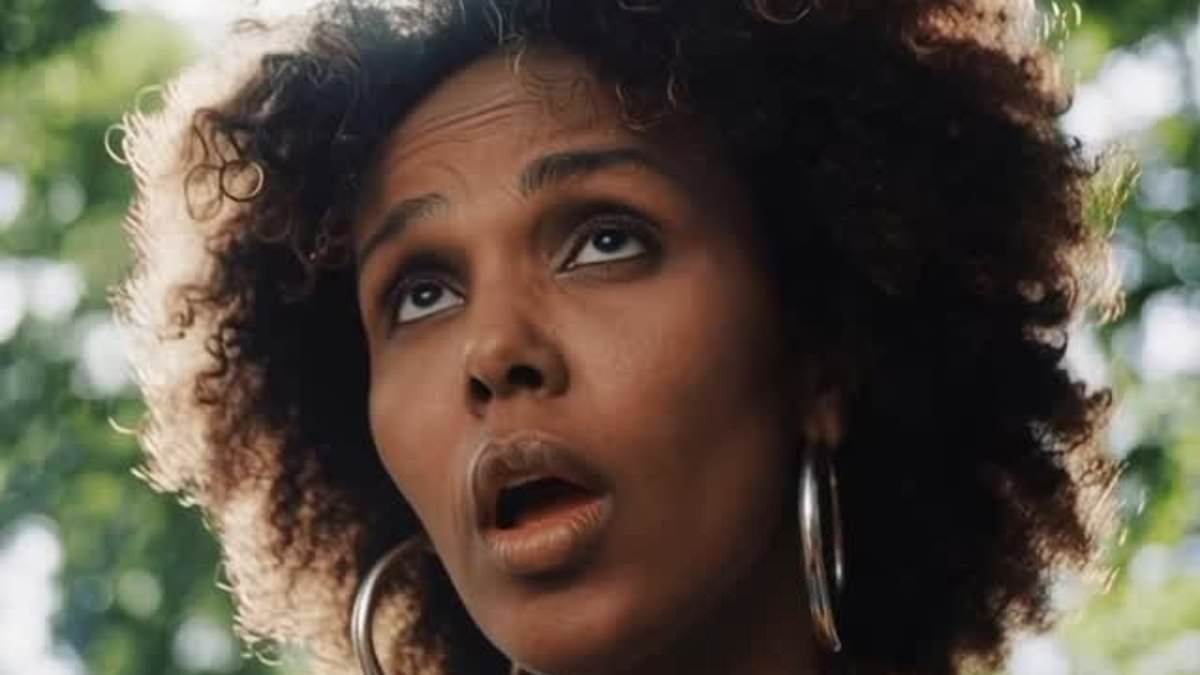


One of Spotify’s most listened-to artists has been revealed to be nothing more than AI, despite earning £2,000 a day through their streams.
Soul singer Sienna Rose took the music world by storm with her sultry hits, leaving fans praising her ‘beautiful’ and ‘captivating’ voice.
But despite earning comparisons to English hitmaker Olivia Dean, it’s now been revealed that Sienna’s voice, image and songs are all fake.
Despite this, Spotify have continued to let listeners stream Sienna’s music, without any disclaimer or warning that she isn’t real, with it now being claimed that she is the creation of the same figure who created a similarly successful AI reggae act.
Regardless, Sienna’s voice has proven to be fruitful, as her streams are equating to around £2,000 a day.
Sienna released a six-track EP in September, titled Velvet Embrace, followed by an eight-track project the following month, and a nine-track EP called The Shape of Tenderness, in November.
Sienna Rose, one of Spotify’s most listened-to artists, has been revealed to be nothing more than AI, despite earning £2,000 a day through their streams
Soul singer Sienna Rose took the music world by storm with her sultry hits, leaving fans praising her ‘beautiful’ and ‘captivating’ voice
She then went onto ‘release’ a ten-track ‘debut album’ Honey On The Moon in December.
The synopsis read: ‘Inspired by the analogue textures of 1960s soul yet rooted in today’s sound, Sienna’s music feels cinematic and deeply personal.
‘Every note she sings carries a sense of truth and beauty, making Sienna Rose not just a performer, but a storyteller of the heart.’
The Sun are reporting that Sienna Rose has been created by the same person who made an AI reggae act called Let Babylon Burn, which has 756,000 monthly listeners.
It’s thought the man in question is Robert Lancaster, though little is know about who he is.
Spotify also told the publication that a wide range of acts use AI to make music, meaning policing its use and labelling their content can prove difficult.
In contrast, music platform Bandcamp announced this week that ‘music generated wholly or in substantial part by AI is not permitted.’
A spokesperson from Spotify told The Daily Mail: ‘AI is a fast-moving shift for the entire music industry, and it’s not always possible to draw a simple line between ‘AI’ and ‘non-AI’ music.
‘Spotify is focused on actions that guard against harmful AI use cases, including removing spam and deceptive content, strengthening enforcement against impersonation and unauthorized voice cloning, and supporting industry-standard AI disclosures in music credits.
‘Spotify does not create or own any music, and does not promote or penalize tracks created using AI tools.’
It’s thought that Sienna Rose has been created by the same person who made an AI reggae act called Let Babylon Burn, which has 756,000 monthly listeners
Spotify has recently hardened its position on using AI to impersonate other artists.
The platform recently confirmed that it will ‘remove music that impersonates another artist’s voice without their permission — whether that’s using AI voice cloning or any other method.’
This includes music which does not name the impersonated artist but uses vocals that are ‘clearly recognisable’.
In the 12 months leading up to September, Spotify removed 75 million AI-generated tracks and has implemented new tools making it harder to upload AI spam.
In May, Paul McCartney and Elton John were among 400 creatives urging the UK government to force AI firms to reveal the copyrighted works used to train their models.
In their open letter addressed to Prime Minister Keir Starmer, they called creative copyright ‘the lifeblood of the creative industries’.
Under the Labour government’s proposals, AI would be allowed to train their models with copyrighted work without permission unless the owner opts out
‘We will lose an immense growth opportunity if we give our work away at the behest of a handful of powerful overseas tech companies and with it our future income,’ it read.
‘We urge His Majesty’s Government to accept the Lords Amendments in the name of Baroness Kidron that put transparency at the heart of the copyright regime.’
In February, Kate Bush and Damon Albarn were among the musicians credited for ‘Is This What We Want?’, a 47-minute album consisting of silence in protest at the use of of unlicensed copyrighted work to train AI.
Read the full article here