






Asia’s premier aviation event is poised to showcase planes, parts and weapons as the industry juggles growing demand for air travel with geopolitical challenges and chronic supply constraints.
Next week’s biennial Singapore Airshow comes as the Southeast Asian city-state and neighbouring countries ponder China’s continued arms build-up in the region while looking over their shoulder at an increasingly isolationist United States.
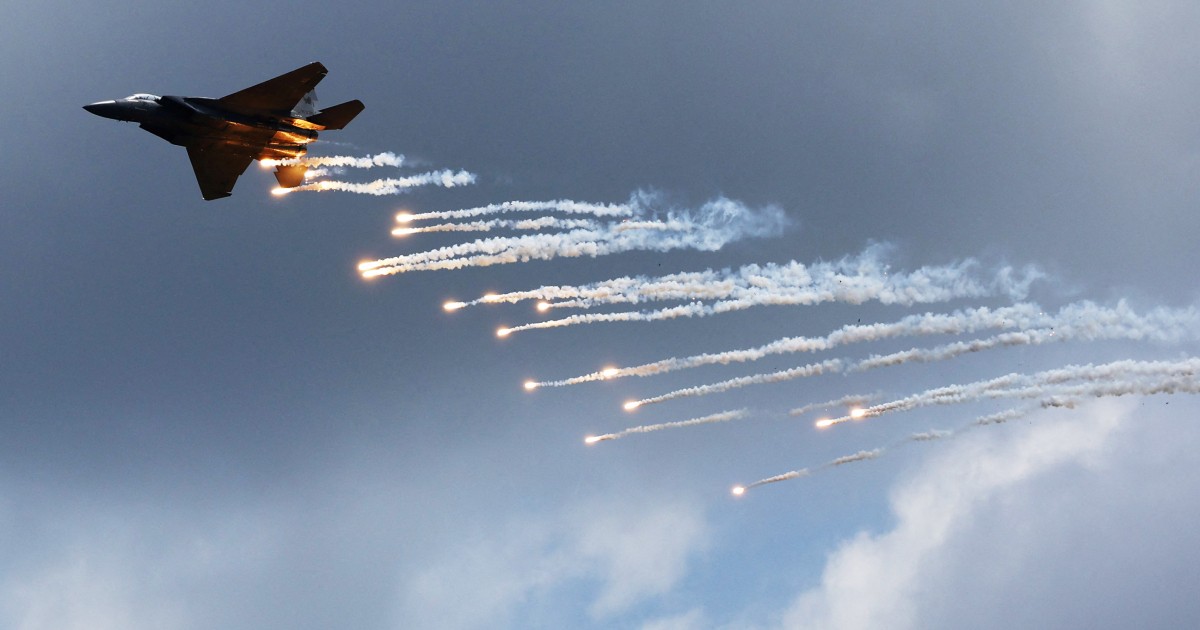
US-built Lockheed Martin F-35 fighter jets from the Royal Australian Air Force will mark their debut at the show as Singapore’s military awaits its first deliveries of the type, though some analysts wonder how much the alliances underpinning such programmes have been damaged.
“The main question is how will Asian countries assess what the US defence commitment is to the region,” said Byron Callan, managing partner at research firm Capital Alpha Partners in Washington.
The Feb 3-8 event, Asia’s largest air show, is expected to attract more than 1,000 companies including aircraft manufacturers, airlines, arms firms and military delegations from around the world.
Its defence segment is expected to garner significant interest, with rising military budgets across the Asia-Pacific region spurred by intensifying geopolitical tensions, according to security analysts and industry executives.
Governments and defence contractors are expected to pursue investments in a broad range of technologies, from helicopters and missile defence systems to drones and counter‑drone capabilities, as countries seek stronger defences along with enhanced intelligence, surveillance and early warning solutions.
Airline fleets expanding
The show also comes at a pivotal moment for the global civil aviation sector. Airlines are working to solidify their post-pandemic recoveries and expanding fleets while manufacturers continue to grapple with lingering supply chain bottlenecks and trade restrictions.
Fleet expansion across the Asia-Pacific region is expected to remain “robust subject to supply chain bottlenecks,” said Subhas Menon, head of the Association of Asia Pacific Airlines (AAPA).
Southeast Asia and India are set to lead growth, although he cautioned that “protectionism and trade friction mean no easy solutions in sight” for longstanding supply challenges.
Although it is not usually a big event for commercial aircraft orders, Airbus and Boeing head to the show with challenges mounting to their longstanding duopoly.
China’s COMAC is vying for attention with its homegrown C919 passenger jet, which will make a second appearance this year after dominating headlines two years ago.
“People will obviously watch COMAC with interest,” said Adam Cowburn, managing director at Alton Aviation Consultancy.
“Their early success outside of China has been largely a Southeast Asian story. It’ll be interesting to see if that story evolves further either at the airshow or in the coming year.”
While COMAC is seeking to establish itself as a viable alternative to the Airbus-Boeing duopoly, it remains heavily reliant on domestic airlines and smaller carriers in Southeast Asia including in Cambodia, Brunei, Laos, Vietnam and Indonesia.
Its two existing models — the C919 narrow-body and smaller C909 regional jet — lack certifications from Western regulators, limiting their appeal beyond markets closely aligned with China.
Like other manufacturers, COMAC has also fallen short of its own delivery targets, primarily due to supply chain challenges.
“They are delivering far fewer airplanes in a year than either Boeing or Airbus delivers in a single month. The gap is substantial,” Cowburn said.
Even so, in a reminder of COMAC’s commercial ambitions just ahead of the Singapore show, the jetmaker rolled out the first major variant of its C919 jet, pictures on social media showed.
The shortened 140-seat variant, designed to operate in plateau areas such as the Tibetan capital of Lhasa, surfaced for the first time outside COMAC’s factory on Jan 21, industry publication the Air Current reported. COMAC also plans a larger stretched variant.
Brazil’s Embraer will also be touting its regional jets at the show, days after announcing a potential new assembly line in India, the world’s fastest-growing aviation market.
Sustainability will feature prominently at this year’s event, particularly developments in sustainable aviation fuel (SAF) and next-generation propulsion systems. However, the transition to cleaner energy remains fraught with challenges.
“SAF is also caught up with supply chain, protectionism, and trade barriers. Traditional fuel suppliers have not seriously joined the transition from fossil fuels,” AAPA’s Menon said, adding that ageing fleets continued to limit efficiency gains.
[[nid:728064]]
Read the full article here