



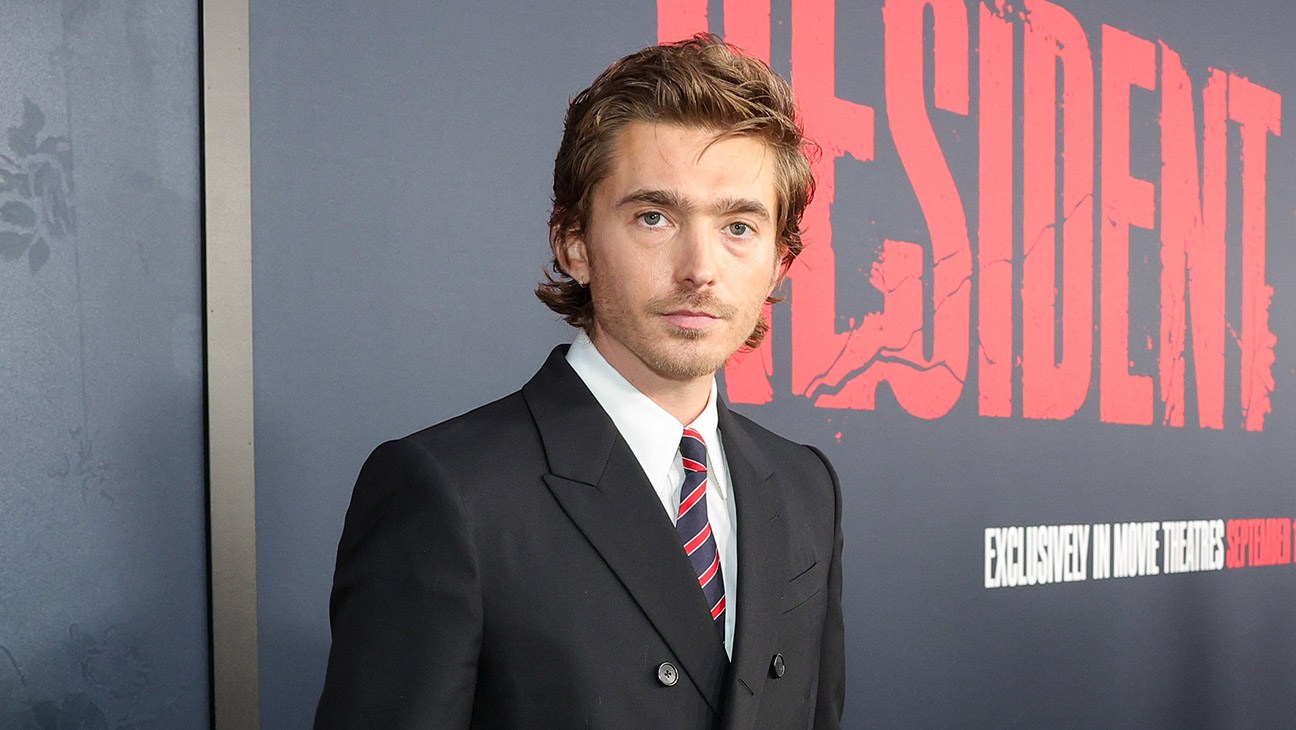


[This story contains major spoilers for Zach Cregger‘s Resident Evil.]
Austin Abrams and Zach Cregger keep knocking them dead.
In 2023, the actor stuck with the writer-director after he lost his initial Weapons cast amid strike-related scheduling chaos. Abrams had attractive opportunities he could have pursued, but he wanted to work with the filmmaker who famously cut, out of nowhere, to Justin Long singing his way down PCH to kick off the second act of Barbarian (2022), the horror film that launched Cregger’s ascent toward becoming the top genre filmmaker working today.
That instinct to see Weapons through paid off handsomely. Abrams delivered a standout performance as an unhoused junkie thief in the critical and commercial hit that would go on to win an Oscar (Amy Madigan as best supporting actress). Cregger then cast him as the lead of his Resident Evil reboot, which has now scored the franchise’s best reviews and highest-grossing opening weekend, taking in $60 million across its first three days.
If Cregger is the belle of the ball right now, then Abrams is the belle of the fall, with his survival thriller Whalefall — directed by Cregger collaborator and fellow genre specialist Brian Duffield — arriving Oct. 16. Between a courier caught in the middle of a zombie virus outbreak and a scuba diver swallowed whole by a sperm whale, both films put Abrams’ respective lead characters, Bryan and Jay, through uniquely harrowing one-man crucibles.
Having acted since he was 13, the 30-year-old Abrams is at a loss for words when describing what it means to lead back-to-back major studio movies. He’s equally reluctant to say which role put him through the wringer more.
“Honestly, in certain ways, they’re one and the same. Resident Evil generally had more laughs, just based on the nature of the comedy involved, so that helped lighten the load,” Abrams tells The Hollywood Reporter. “But I feel bad singling either one out as being harder to work on. They were both really challenging.”
(Spoilers ahead.) Cregger’s Resident Evil opens with Abrams’ medical courier juggling an organ delivery and a serious conversation with his girlfriend, Michelle, about her newly discovered pregnancy. He insists he’ll be home in 20 minutes so they can talk face to face, only to dodge the conversation by accepting a last-minute, faraway job that takes him to Raccoon City General Hospital.
While en route, Bryan and Michelle continue their phone call, but he doesn’t offer the most supportive response. Instead, he argues that they should preserve their current status quo. In other words, he’s afraid of the changes that come with growing up and becoming a father. Unsatisfied, Michelle tells him she’s going to stay with a friend and give him some time to reflect on the error of his ways.
Their talk is then interrupted by a bad signal and a woman in the road whom Bryan’s vehicle strikes. He helps the bloodied victim into his car, but a cop quickly pulls him over and takes responsibility for her. The officer’s SUV then flips over in front of Bryan, slowly confirming what viewers have likely already suspected about the sundress-wearing pedestrian. She is actually infected, and Bryan has become caught up in the franchise’s inciting t-virus outbreak.
After trying to offer aid to the now-deceased cop, Bryan uses the officer’s gun to shoot the rabid sundress woman and an infected guard dog at a nearby farm. He then makes his way inside the farmhouse to refuel, reload and call Michelle from the farmer’s landline now that he’s in jeopardy. When a concerned Michelle returns the call, he’s unable to answer because he just killed the infected farmer and blew the head clean off the reanimated pedestrian woman, who is widely believed to be the farmer’s wife. In a key moment, he witnesses their bodies fuse into one monstrous form that is unrelenting in its pursuit of him.
Bryan continues his journey on foot, making his way into a neighboring tunnel filled with abandoned vehicles. An RV blocks his path, so he climbs inside to make his way out through the back. There, he discovers a little girl and tries to help her, unaware that she’s already on the verge of transforming into a zombie. As her condition worsens, she turns on Bryan and sinks her teeth into his arm, forcing him to put her down. He soon crosses paths with two members of the Umbrella Corporation, who explain that a lab leak caused the outbreak. They also disclose that Bryan was tasked with delivering the “neutralizing base” to Umbrella scientists at Raccoon City General to complete an antidote.
After going through a series of even crazier near-death experiences, Bryan eventually arrives at the hospital, where he takes a moment in the parking garage to assess his rapidly spreading infection. Sensing he’s not going to make it, he tries to call Michelle once more, but is again greeted with no cell phone service. Thus, he records an audio message in which he expresses regret over his earlier response to the pregnancy news and that he’d love nothing more than to start a family together. He caps the recording in the most heart-wrenching way possible by saying, “I think you’d be an amazing mom.”
Bryan goes through even more insane scenarios before finally making it to the facility’s lab on the 28th floor. He delivers the key ingredient for the cure in the nick of time, but the bumbling Umbrella scientists fumble the ball on the one-yard line. They can’t finish the concoction before Bryan loses himself to the infection, and he ends up killing them one by one, becoming his own version of the amalgamation monster that has been stalking him since its inception at the farmhouse.
The movie closes with the realization that we’ve been watching an origin story for a Resident Evil monster, one that gamers typically mow down without a second thought to who they were before the outbreak. Thematically, Cregger reinforces the idea that change comes for us all, whether we’re ready for it or not.
“I thought it was crazy and shocking when I first read it. You follow this one guy the whole time, so hopefully you’re enjoying watching him and rooting for him,” Abrams says. “Then to have him not make it is really risky and gutsy, which is what I love about all of Zach’s work. So I was surprised by it, but I also loved that he would take that chance.”
In this age of unremitting test screenings and CinemaScore, downer endings typically score lower, so Abrams appreciates that Cregger and Sony weren’t afraid to figuratively twist the knife in the audience.
“With a lot of movies nowadays, they’re a little too afraid to do something like that — to kill off a character you really like. And if they do, the blow is softened in some way so it doesn’t hurt too much,” Abrams says. “Whereas a lot of older films don’t do that; they just rip your heart out. So I’m just appreciative that Zach is willing to take a risk like that.”
If you’re like me, then you might have expected the aforementioned cushion to be a final reveal in which Michelle receives Bryan’s voice memo. Perhaps an unseen moment gave him a bar of service and a long enough opportunity to press send. That potential concluding beat would’ve offered the viewer the comfort of knowing that this now-single mother at least knows Bryan really did love her and the idea of starting a family together. Alas, Bryan not only becomes a monster, but Michelle’s last memory of him is his rather monstrous response to the prospect of having a child together.
“That’s part of the tragedy of it all. It’s so damn sad when you really think about it. She thinks he doesn’t want to have this baby, when he actually does. He realizes, ‘No, I love her. Having a kid isn’t as scary as I thought, and I want to do it with her,’” Abrams says. “So the fact that she’ll never know that is pretty damn tragic. He changed and got better, but no one will ever know about it. There’s something really beautiful and tragic about that.”
Below, during a spoiler conversation with THR, Abrams also discusses the 150-pound blood bag that nearly crushed him during his sprint through snowy Raccoon City.
***
Congrats on the fall of Austin Abrams. The season, not the collapse.
(Laughs.) Thanks, pal.
I watched your A24 Podcast episode with Skyler Gisondo, and you talked about how, growing up, he and Tye Sheridan were your boogeymen at auditions. Well, now that you have two huge studio movies coming out within a month of each other, do you feel like the new boogeyman?
I definitely don’t feel that way. As you get older, you realize that boogeymen don’t really exist in that context. Maybe I’ve got a little bit more of a shot now, but those guys are still such great actors. Have you seen Primetime yet?
Not yet, unfortunately.
See fucking Skyler in Primetime, and then tell me what you think about that.
Mythological framing aside, you’ve been working for more than half your life, and now you’re atop the call sheet. Do you consider this is a new beginning for you as a leading man?
It’s definitely different than it was before, but I don’t feel differently inside. I still feel like I’m trying to push myself and make new things. It’s not some ego trip or something like that.
I last talked to you toward the tail end of Whalefall photography, so did you basically fly straight to Prague after that wrapped?
It was a really quick turnaround. We extended the Whalefall shoots a little bit, so the window for a break became non-existent. I got out to Prague earlier than I thought to do prep, so it was a very short window.
When Zach Cregger and I spoke, he was very interested in the answer to this question. Between him and Brian Duffield, whose movie made you suffer the most?
(Abrams laughs and squirms in his seat.) Oh, man. Honestly, in certain ways, they’re one and the same. With Whalefall, I don’t know if you’ve ever worn a wetsuit all day long, but the incessant tightening on your skin is somewhat uncomfortable. With Resident Evil, the amount of running, mixed with the exactness needed to get the shot right, and nightshoots — makes it a hard competition. They’re both also filled with a lot of joy. Resident Evil generally had more laughs, just based on the nature of the comedy involved, so that helped lighten the load. But I feel bad singling either one out as being harder to work on. They were both really challenging.
Zach and I also talked about the 150-pound blood bag that nearly crushed you during the “jumper street” sequence. Were you pretty rattled at the time?
I kind of didn’t notice. It just happened, and then it was done. Personally, I wanted it to be close because that’s better for what we’re trying to make. There were a lot of other takes where it wasn’t as close, or it happened too soon and you didn’t even see it. It wasn’t until doing press that I was like, “Whoa, was it that close? I didn’t realize that.” At the time, you’re just in it. So I’m stoked that it looks close. If anything, I’m excited by it. But I didn’t really feel rattled at the time.
I really love your choice to give your medical courier character, Bryan, a feminine scream at times because he generally reacts the way 99 percent of us would in a zombie apocalypse. It’s such a departure from the traditional action hero, who’s expected to not only stay cool under pressure but also look cool while doing it. So was it liberating to not have to be concerned with vanity?
Definitely. I wanted to look like the antithesis of the “cool action hero” as much as I possibly could because that feels the most interesting. I haven’t seen it done as much. Shaun of the Dead lives in that realm as well. There’s a joy in being able to see this guy react naturally to all this crazy shit, and it’s just really interesting to watch. I always thought, How would this dude actually react to this? I just wanted it to feel really real-world. Whereas, if you have someone more experienced, it’s going to be a little less interesting to watch.
One of the parts I really enjoyed is earlier on with the dog. How do you even process a moment like that? What would you think that is? There was a period of time when I was like, Is this an alien? Does he think that these are aliens? That would probably confuse or frustrate audiences if my character was thinking it was aliens [because many of them already know what it is from the games]. But thinking about what it could be was a fun rabbit hole to go down while playing it.
In the ’90s, politicians began blaming video games like Mortal Kombat and Doom for real-world violence, and shooter games have remained a recurring scapegoat ever since. But I wonder if Zach is making a counterargument with this movie. Near the end, when Bryan successfully fires his last bullet, he screams, “Video games!” as a way of crediting them for his survival to that point. Do you see that moment as a suggestion that generations of people have actually learned problem-solving, survival skills and vigilance from playing these games?
Maybe, yeah. Growing up, the general vibe in the air, at least from parents, is you’re wasting your time playing video games. So to have the character triumphantly proclaim how much video games have helped him in that make-or-break moment is pretty funny. You’d have to ask Zach if he’s trying to say something deeper there, but it’s a funny little thing.
Zach told me that he cut out as many jokes as possible because test audiences deemed the movie to be “too funny.” The movie is still a riot, but were you bummed to see any of those other comedic moments go?
There were a lot of [deleted] moments that cracked us up. There were also a lot of moments that we never filmed. We were like, “This is the SNL version of this movie. We can’t film that. That’s too ridiculous.” I don’t know if I can remember any of those scenarios off the top of my head, but there were moments. They weren’t jokes that I could tell you right now and you’d think they were funny. They were more situational.
The emotional message Bryan records for Michelle is your finest work in the film, and if that monologue wasn’t challenging enough, you then had to go straight into this deliberately embarrassing cry so that Cregger’s voice on the intercom could sell the situational humor. Was that dynamic shift difficult to pull off?
Not really. Zach and I both understood the needle we were trying to thread there. I also knew the edit would help with the comedic shift. When Zach goes out into the wide shot, that helps with the transition into the comedic aspect. So it didn’t feel too intimidating.
As far as Michelle goes, Zach’s wife, Sara Paxton, voiced the character. But I heard you suggested the photo to be used for her on Bryan’s iPhone. Is it safe to ask who that is?
She’s a friend. We wanted a photo of me and her to represent Bryan and Michelle more tangibly.
The partial look at someone in a red shirt is you?
Yeah, that’s me and my friend in the original photo. But then, on the day, someone cropped the photo on the phone to be just her. So the original plan went out the window.
I was not expecting the ending to go that way.
What were you thinking?
I figured Bryan wouldn’t make it out alive, but at the very least, I thought the lab would have some kind of cell signal booster so he could text his voice message to Michelle. If nothing else, I wanted her to know that the father of her baby was truly a good man. Anyway, what was your first reaction when you read that Bryan wouldn’t be cured and would instead become his own amalgamation of bodies?
I’ve been living with it for a while now, but I thought it was crazy and shocking when I first read it. I love that Zach takes those risks. You follow this one guy the whole time, so hopefully you’re enjoying watching him and rooting for him. Then to have him not make it is really risky and gutsy, which is what I love about all of Zach’s work. So I was surprised by it, but I also loved that he would take that chance.
With a lot of movies nowadays, they’re a little too afraid to do something like that — to kill off a character you really like. And if they do, the blow is softened in some way so it doesn’t hurt too much. Whereas a lot of older films don’t do that; they just rip your heart out. We’re here to feel, man. We’re here to go through something. So I’m just appreciative that Zach is willing to take a risk like that.
You used the phrase “soften the blow,” and that’s precisely what I was anticipating. I thought the movie would cut from Bryan’s snowball of body parts to Michelle’s phone, and she’d receive his voice message before the credits rolled. Do you remember if you expected some kind of button involving Michelle?
I don’t remember if I did, but who knows? Maybe he sent his voice memo while going up the staircase, and it’s just something we didn’t get to see.
One of my colleagues saw the ending as a kind of karmic consequence for Bryan not initially supporting his pregnant girlfriend. But along the way, he helps the sundress woman he hit with his car, rushes to aid the cop, tries to save the little girl in the RV and honors his commitment to get the package to Raccoon City General. So I see it less as Bryan deserving his fate and more as a reminder that a zombie outbreak is indiscriminate. How do you see it?
I wouldn’t say he deserved his fate, especially when you see him turn it around toward the end. That’s part of the tragedy of it all. It’s so damn sad when you really think about it. He leaves this voice note for his girlfriend, and maybe they’ll find his phone and somehow get it to her. But she thinks he doesn’t want to have this baby, when he actually does. He realizes, “No, I love her. Having a kid isn’t as scary as I thought, and I want to do it with her.” So the fact that she’ll never know that is pretty damn tragic. He changed and got better, but no one will ever know about it. There’s something really beautiful and tragic about that.
In Weapons, Alden Ehrenreich’s character told James to get out of town, and bad things happened when he didn’t listen. In Gangster Squad, Ryan Gosling told your shoeshiner to go home, and bad things happened when he didn’t listen. In Resident Evil, Michelle told Bryan to come home, and bad things happened when he didn’t listen. Nobody in The Line listened, and bad things happened to your fraternity pledge. Your characters need to start listening, don’t they?
(Laughs.) Yeah, you’re right. They’ve got a little bit too much lint in their ears. But if they listened, these movies would be a lot less interesting.
Touché. Just out of curiosity, have you read Zach’s script called The Flood?
No, I’m staying away from it because I want to be able to watch it without knowing anything.
From Wolfs and Weapons to Whalefall and Resident Evil, you’ve spent the last few years running for your life on screen. Looking ahead, have you asked your agent to find you something calm, soothing and relaxing?
(Laughs.) Yeah, I need a movie that’s like a lullaby — where the heart of it rocks you to sleep. Can we make a movie like that? But it all depends. A lot of it comes down to the filmmaker and what ends up coming my way. So I don’t want to talk too much about what might be next, but we’ll see.
***
Resident Evil is now playing in movie theaters nationwide.
Read the full article here