





In describing the free-for-all world of New York City’s Manhattan Cable Television, the official Sundance description of David Shadrack Smith’s Public Access uses the word “chaos.”
“Chaos” or “chaotic” are words used multiple times in the documentary by people who worked within this unprecedented media experiment forced on the cable company by the city.
Public Access
The Bottom Line
A chaotic formal approach sometimes upstages strong material.
Venue: Sundance Film Festival (U.S. Documentary Competition)
Director: David Shadrack Smith
1 hour 46 minutes
They’re also words that appear repeatedly in my notes on the 107-minute film.
Public Access is a chaotic film, which may actually be putting it generously. Putting it less generously would be to say that Public Access is a mess, a jumble of chronology, a hodge-podge of two-thirds developed ideas, a mish-mash of remarkable footage and worthy insights often upstaged by questionable aesthetic and storytelling strategies.
Of course, if Smith’s (Taste the Nation With Padma Lakshmi) goal was making a film that simulated the experience, and possibly the headache, of freebasing 50 years of public access programming with limited structure and negligible guidance, then Public Access actually succeeds entirely.
Public Access is an exclusively archival documentary, delivered with voiceover narration (no onscreen talking heads) courtesy of many of the staffers at Manhattan Cable Television, which launched in 1971 with the goal of nothing less than democratizing a medium that was still dominated primarily by three broadcast networks. (PBS formally debuted in 1970, taking over for various “educational” stations, but that’s a different documentary.)
Overseen by Charlotte Schiff-Jones, a Time Inc. executive and self-described “First Amendment lunatic,” public access was, for some at least, an opportunity to empower underrepresented communities and to expand the formal confines of television.
It was a high-minded endeavor — which you’ll know because all of the participating voices from the channel’s early days speak in cult-y jargon like they were, either now or at the time, fresh out of their first college media studies course, which they may well have been.
“The media was clearly part of the problem and there was no alternative to it. So the alternative was to take the power back and change that formula of the control of television,” says Steven Lawrence, whose job was to interface with the public.
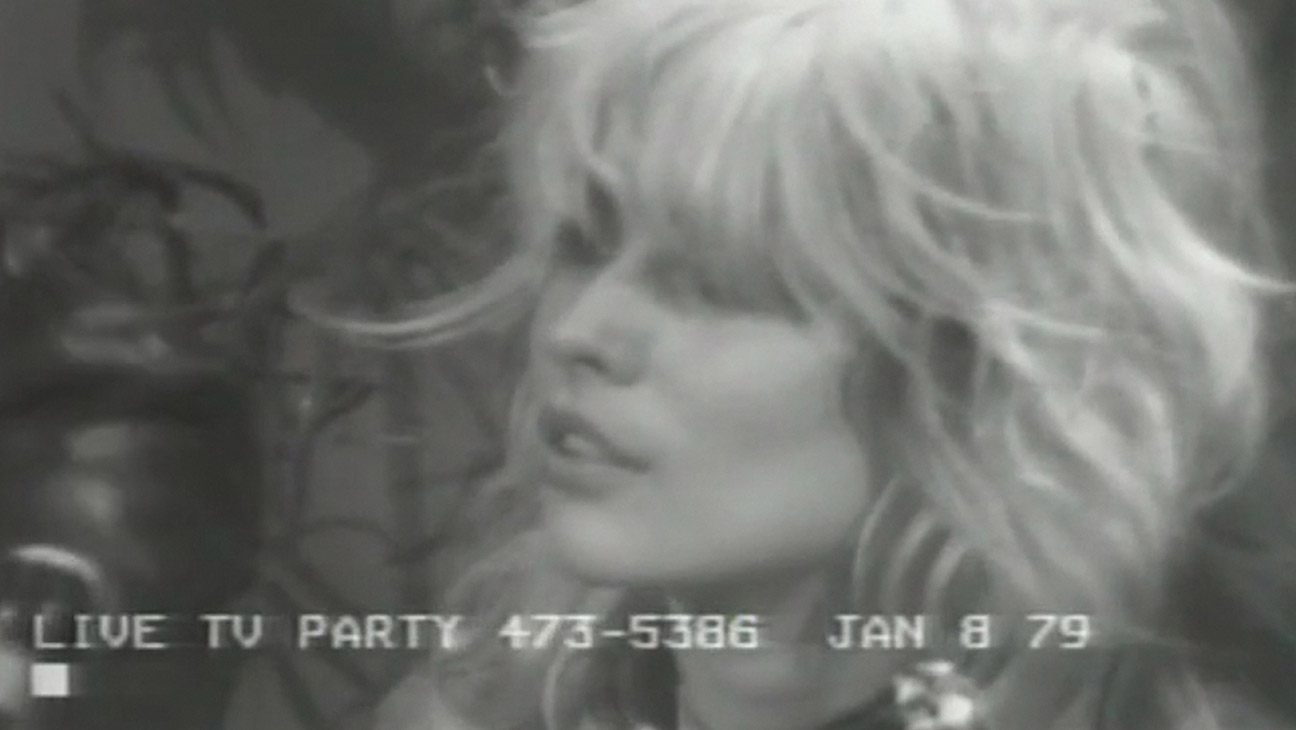
Speakers are introduced in freeze frames on a recreated TV screen and then only occasionally throughout, so that in the first 20 minutes, the documentary’s voice is an enthusiastic and passionate hive mind. Little bits of information are provided on the logistics of the channel — how people got shows, the technological leap that came when they realized they could broadcast live, the one show (Glenn O’Brien’s TV Party) on which Jean-Michel Basquiat would simply hang out and fiddle with the onscreen text.
“It made for this sorta clusterfuck of ideas,” says Debbie Harry, a regular guest on TV Party. And yes, “clusterfuck of ideas” would be another good description of Public Access.
There are early vignettes briefly focused on shows like TV Party and the free-form call-in show Grube Tube that illustrated some realization of the channel’s aspirations, but then the channel and the documentary get distracted by the shiny object that is porn. Longer vignettes discuss Midnight Blue and creator (and fellow First Amendment lunatic) Al Goldstein, with enough nudity and adult content that Public Access will only be limitedly useful as a teaching tool and with enough nudity and adult content that the show and its creator became a free speech crusader. Of more substance is the segment dedicated to Lou Maletta, his gay pornography-driven Men and Films program, and the way that public access’ Channel J was able to serve as a vital resource in the early days of the AIDS epidemic.
Occasionally there’s flow to the vignettes: One can question, for example, whether Goldstein and his version of free speech were a positive realization of public access’ aspirations, but if that led to Maletta and regular reporting from Richard Berkowitz on topics the mainstream media wouldn’t touch, then it was worth it.
Occasionally, the vignettes just pop up with nothing resembling internal logic or continuity. Did the filmmakers realize that the focus on programming was exclusively white, so why not dedicate five minutes to Earl Chin and the reggae-focused Rockers TV? That serves an an excuse, then, to talk about the rise of MTV, and, for far too long, Jake Fogelnest and Squirt TV, which should make most viewers immediately make the leap to YouTube and TikTok as a logical extension of public access’ populist smorgasbord.
In a way, this is where Public Access is most successful. Yes, the footage is wacky and wild — credit to archival producer Anne-Marcelle Ngabirano — but questionably edited leaps from archival footage that is, itself, already questionably edited only go so far. The documentary demands active participation from viewers able to see how what happened with public access — its journey from noble aspirations to more sordid reality — was mirrored later in the early days of cable and then the early days of the Internet and then the early days of social media.
Technological trends repeat themselves. Best laid plans oft go astray, causing noisy trash to frequently upstage noisy quality. There are good and righteous thoughts in Public Access and I think the points it wants to make get through if you work at it, but man the journey to get there is chaotic.
Read the full article here