


We were rooting for you, Reality Check, we were all rooting for you!
But alas, Netflix‘s documentary about the rise and fall of America’s Next Top Model is a rather grueling and self-serious affair which attempts to turn the reality hit that ran for 24 seasons into a cultural war crime.
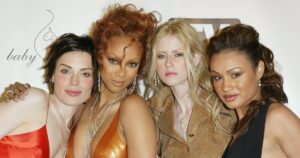
Across three episodes, Reality Check: Inside America’s Next Top Model presents many of the well-known controversies surrounding the reality hit and interviews the show’s oft-apologetic producers and coaches — including Tyra Banks.
As each “welp, that sure didn’t age well” moment is replayed, a Greek chorus of anonymous TikTokers is shown scolding from the sidelines trying to make the case that Top Model was really, really bad — lest viewers make up their own minds about any of it (one claims a single Top Model clip gave her an eating disorder which lasted decades).
That said, there’s plenty about the series — which ran from 2003 to 2018 — that is very cringeworthy, represents major lapses of judgment and would never make it on the air today. Banks herself also comes off rather poorly at the end of the documentary due to one anecdote which we’ll get to below.
Here are the seven most stand-out moments.
7. Tyra Banks Froze Out Jay Manuel After He Wanted to Leave Show. The show’s creative director says he sent Banks a polite email after the eighth season saying he was looking to move on from the series (“I didn’t like what the show was becoming,” Manuel explains in the documentary. “It was chipping away at my soul”). Three days went by and Banks sent a curt reply back reading, “I am disappointed.” After that, the network’s business affairs division pressured Manuel to stay on, but working with Banks became very difficult. “It was clear I was not allowed to speak with her outside [being on camera],” he said. “It was like psychological torture, I felt broken.” When asked on camera about the split, Banks refuses to comment.
6. The Fat Shaming Debate. The documentary dives into the show pressuring models to stay thin, while also acknowledging Banks’ oft-stated and sometimes successful efforts to try and bring more shapes, styles and ethnicities into mainstream modeling. “When we started filming I was a size 6, I was 5’10” and weighed 115 pounds I thought I looked good, but then you go on TV and you’re like, ‘Oh shit, maybe not,” says cycle 10 contestant Whitney Thompson. “It was a big juxtaposition to go into the fashion world where people are like, ‘You’re such a fat cow … it was just demeaning.’” Thompson also said the show refused to give her clothes for shoots that were in her size. But another model counters, “There was a lot of body shaming, but you have to remember it was 25 years ago and we were different back then.”
5. The Gap Controversy. Cycle 6 winner Dani Evans was heavily pressured by Banks and production to go to a dentist and get her tooth gap filled in or face elimination. Photographer Nigel Barker says now, I myself was like, ‘I don’t think that’s a good idea. I thought she looked great with the gap.’” Yet a few seasons later, Banks had another model surgically widen her gap. “I’ve actually apologized for the issue with Dani and it happened because there were agents that would tell me ‘she will not work with those teeth, it’s not going to happen,’” Banks says. Evans counters: “Bull-fucking-shit. Me getting my gap closed is not opening any doors for me. You were making good for TV at my expense.” Evans also says she learned some in the industry discriminated against models for being on the show. “Years later, Tyra [told me], ‘I knew there were certain doors you couldn’t even get into because you did Top Model and I did nothing about it.’”
4. Regretting Those Race Swapping, Crime Scene Shoots. The team expressed regret over some of the show’s most notorious model shoot concepts. It’s jaw-dropping that after doing a clearly ill-advised shoot where models used makeup to “change their race,” the show did it a second time a few cycles later. “This was my way of showing the world that brown and black was beautiful,” Banks explains. “Then we put it out there and the world is like, ‘Are you crazy? Have you lost your mind?’ Looking at the show now through a 20/20 lens, it’s an issue and I understand 100 percent why.” Another session, where models posed as murdered crime scene victims, has executive producer Ken Mok making a rare mea culpa: “I take full responsibility for that shoot. That was a mistake. I look back now and think it was a celebration of violence. It was crazy. That one, I look back and I’m like, ‘You were an idiot.’”
3. Models Weren’t Protected During Vulnerable Situations: The most serious allegations concern incidents where the production allegedly didn’t protect models during situations involving other on-camera male talent. In one incident during cycle 2, contestant Shandi Sullivan lost her virginity on camera while highly intoxicated and “blacked out.” She rightly points out, “I think [producers] should have been like, ‘All right this has gone too far, we got to pull her out of this’” (which is what was done in a somewhat similar situation on a recent season of Below Deck). Mok explains, “We treated Top Model as a documentary” — an answer that only a production’s lawyer could love. (During one archival interview clip from when Top Model was on the air, Mok rather brutally says, “The biggest disaster ever is always the best thing. People have 104-degree temperature. They’re throwing up. They need IVs. That’s the best news I could ever have.”)
In cycle four, Keenyah Hill was groped by a male model and voiced her discomfort in the moment, only to be told during judging that she handled the situation wrong by not acting more playful. “I say to Keenyah, boo-boo, I am so sorry,” Banks says now. “None of us knew [how to best handle that situation]. Network executives didn’t know, and I did the best that I could at the time. She deserved more.”
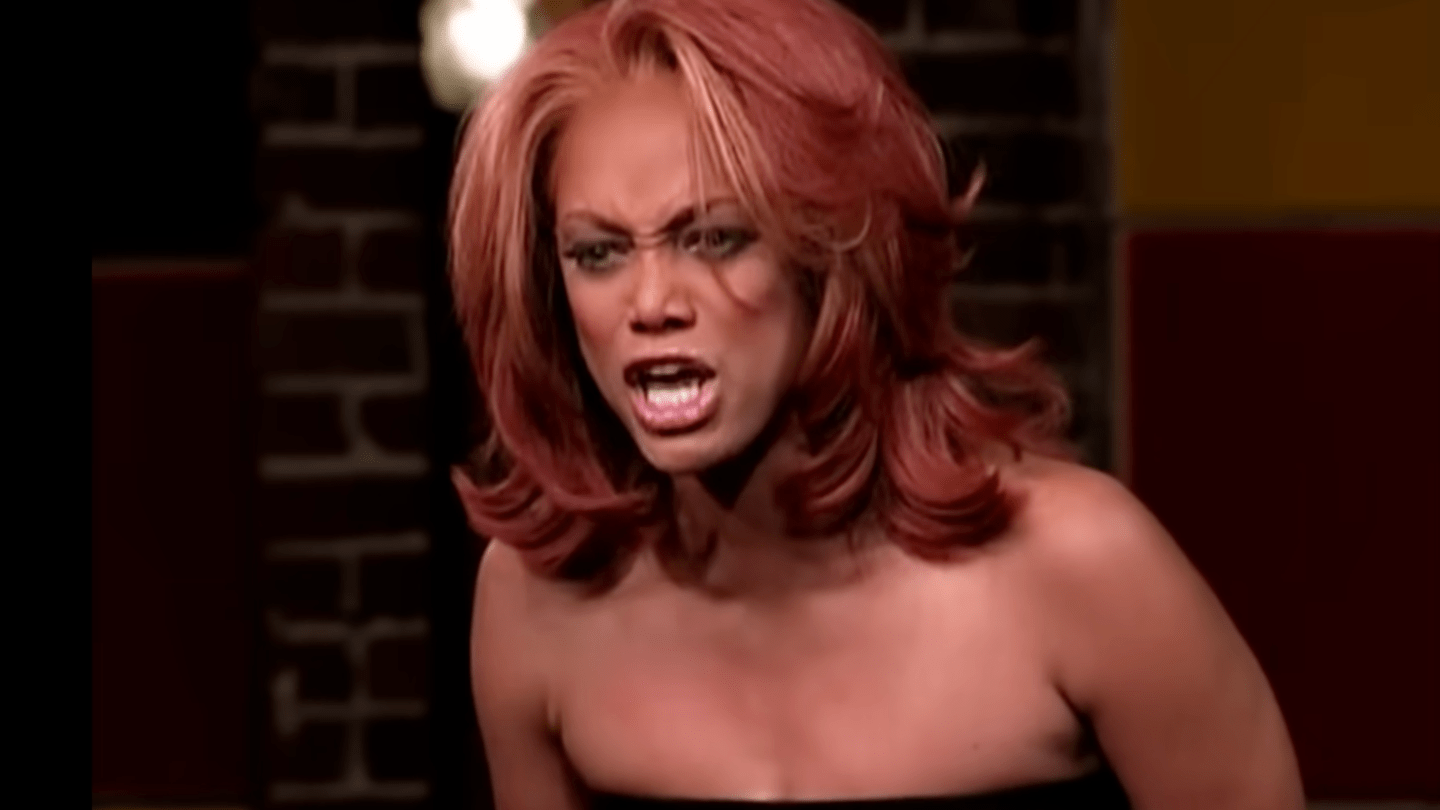
2. Banks’ Infamous Meltdown Was Worse Than What Was Shown: In cycle four, Banks screamed at contestant Tiffany Richardson after the model seemed to give up on herself (“I was rooting for you! We were all rooting for you! How dare you!”). Looking back at the viral clip, Banks says, “I just saw all that [work] going down the drain. I saw her just not believing in herself and giving up and not just giving up on a modeling competition but deeper … I went too far. You know, I lost it. It was probably bigger than her … That’s some Black girl stuff that goes real deep inside of me.” But Manuel reveals what happened on set was worse than what was shown, and another insider says Banks was escorted off set and “the next week we had all the lawyers on set.” Says Manuel: “There was a lot more that was really said and some of the things that were said were really not well-intentioned. I will probably never repeat the lines that were said in the room that day.”
1. Miss J Had a Stroke — and Tyra Didn’t Visit: The beloved runway coach Miss J was on the show for 18 seasons and reveals for the first time that he suffered a debilitating stroke in 2022 and spent five weeks in a coma. In the most emotionally devastating moment in the documentary, Miss J says, “I miss being the queen of the runway. I’m the person who taught models how to walk and now I can’t walk.” Both Manuel and Barker visited Miss J in the hospital, and the trio are shown hanging out at the documentary shoot. When producers ask Miss J if Banks ever visited, Miss J replies, “No, not yet. Never came and visited.” And then, as if Banks could sense — and she certainly is TV savvy enough to anticipate — this very question being asked by producers, Miss J checked his phone and saw Tyra had just sent a text saying she wanted to visit him.
Read the full article here