






If there’s a great crime of recent world cinema, it’s that Kiyoshi Kurosawa hasn’t been granted bigger budgets. The 70-year-old Japanese auteur has consistently spun masterful moviemaking from a relative shoestring over the four and a half decades of his prolific and deeply influential career.
Kurosawa has explored genres with a restlessness and inventiveness few directors of his generation can match: from the now-classic serial killer procedural Cure (1997) to the dread-soaked J-horror landmark Pulse (2001), the lacerating family drama Tokyo Sonata (Cannes’ Un Certain Regard Jury Prize winner of 2008), the haunting wartime mystery Wife of a Spy (best director at Venice in 2020), and most recently Cloud, the psychological action film that landed on numerous critics’ 2025 best-of lists. In nearly every case, he has worked on production budgets that would barely cover the catering costs on a Hollywood feature of comparable ambition.
Kurosawa came of age during an era of sharp contraction for the Japanese film business, after the rise of television had eroded the dominance of the country’s once-fabled movie studios. The film business responded to the period’s challenges with the rise of “pink eiga,” a soft-core erotic genre that trafficked in the nudity and violence that couldn’t be shown on TV, becoming one of Japan’s most bankable production engines through the 1970s and into the 1980s. The genre also proved an unexpectedly fertile training ground for a generation of Japanese directors — among them future Oscar winner Yojiro Takita (Departures), Masayuki Suo (Shall We Dance?), Koji Wakamatsu — and Kurosawa, whose 1983 feature debut Kandagawa Pervert Wars was characteristically trashy but also a highly film-literate riff on Rear Window by Hitchcock, the filmmaker who would later come to be seen as his greatest influence.
It was Cure, though, that eventually announced Kurosawa as a singular voice in world cinema. A beguiling, hypnotic study of a Tokyo detective (the great Koji Yakusho) investigating a series of murders committed by ordinary people who can’t seem to explain what made them do it, the film was made for less than $1 million and performed poorly upon its release in Japan, but steadily grew in global reputation over the nearly three decades since its release. As fans of the Criterion Closet will well know, it has been regularly hailed as a landmark: Bong Joon Ho has ranked it among the 10 greatest films of all time, and Ari Aster once said, “There is an argument to be made that Cure, by Kiyoshi Kurosawa, is the greatest movie ever made.”
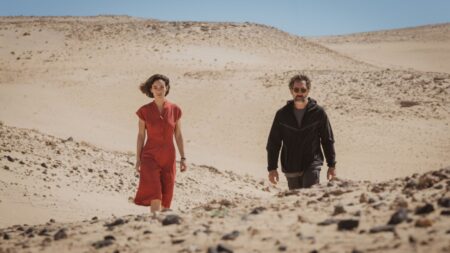
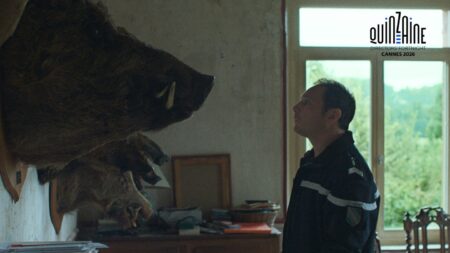
In the intervening years, Kurosawa has also extended his imprint on Japanese cinema as a teacher. During his time as a professor of film studies at Tokyo University of the Arts, he taught two aspiring filmmakers who grew into some of Japan’s most accomplished new voices: Ryûsuke Hamaguchi, whose Drive My Car won the best international feature Oscar in 2022, and Koji Fukada, whose 2016 drama Harmonium won the Un Certain Regard Jury Prize at Cannes. Both are in competition for the Palme d’Or this year, with films that have drawn some of the festival’s strongest early reviews: Hamaguchi’s All of a Sudden and Fukada’s Nagi Notes.
“Kiyoshi Kurosawa has this ability to tell incredibly powerful stories solely through the way he works with moving images — without even trying to peer into a character’s mind by the use of dialogue. He’s a pure filmmaker,” Fukada tells The Hollywood Reporter. “Every student wants to compete with their teacher one day, but I realized early on that there was no way I would ever surpass him if I tried to make movies the way he does. So I had to go away and develop my own style — which is something he allowed and encouraged me to do. I’ve loved his films since I was a teenager, but I also really credit him with helping me find my own voice.”
“And I don’t think I’ll ever surpass him, by the way,” Fukada adds.
The master will be side by side with his star pupils in Cannes this year — and although his own film is showing in the festival’s Cannes Premieres section rather than the main competition, it will arrive as a long-hoped-for event among international film buffs.
Kurosawa’s new film fills a conspicuous absence in his diverse filmography: For roughly his 30th feature, he has finally made a classic samurai movie.
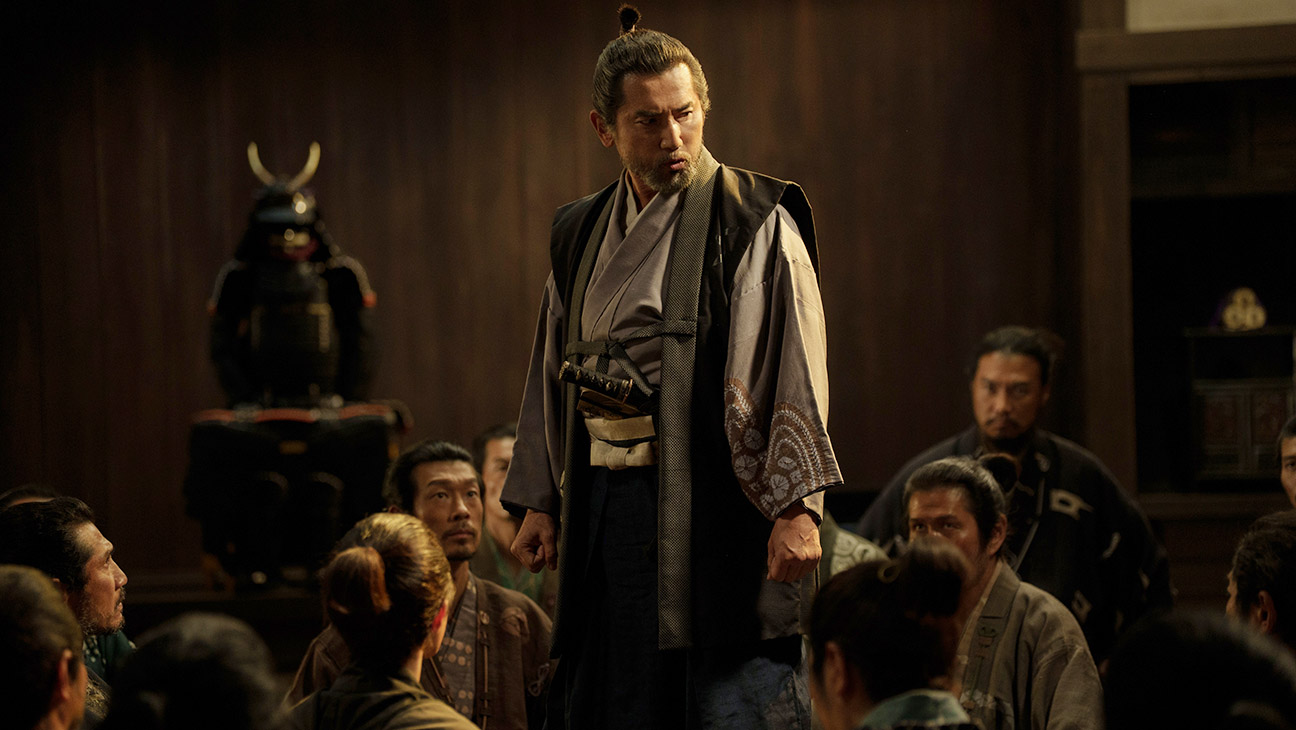
The new feature, The Samurai and the Prisoner, is set in 16th century Japan during the late Sengoku, or Warring States, period, and adapted from Honobu Yonezawa’s Naoki Prize-winning 2021 novel of the same name. The story follows Lord Araki Murashige (played by Departures star Masahiro Motoki), a real-life vassal of the tyrannical warlord Oda Nobunaga who rose in rebellion against his master in 1578 and barricaded himself inside his stronghold, Arioka Castle. As Oda’s army closes in from outside, a young samurai is murdered within the castle walls, triggering a cascade of bizarre incidents that throw the fortress into paranoia and suspicion. With traitors potentially among his most trusted retainers, Murashige is forced into an uneasy alliance with Kanbei Kuroda — a brilliant but dangerous strategist whom he himself has thrown into the castle dungeon, played by Masaki Suda, the memorable lead of last year’s Cloud. The ensemble also features Yuriko Yoshitaka, Munetaka Aoki, Ryota Miyadate, Tasuku Emoto and Joe Odagiri. Kurosawa wrote the adaptation himself, and the film is produced by 130-year-old Japanese studio Shochiku in association with Tokyo Broadcasting System Television.
Chatting with THR prior to Cannes in Tokyo, Kurosawa joked that the reason he hadn’t made a samurai film until now wasn’t because of any trepidation over the fact that the genre is so closely associated with the classic Japanese director with whom he happens to share a family name. On the contrary, he says — the looming international reputation of Akira Kurosawa has been a benefit rather than a burden to him. “From the start of my career, whenever I went overseas, people wondered if I was related to Akira Kurosawa,” he says. “I’m not related to him at all — but once they heard my name, they always remembered me.”
The real reason, Kurosawa says, is more prosaic and predictable: money. He had long wanted to make a jidaigeki (Japan’s traditional genre of pre-modern period drama), but only if he could do so in the classical mode he had grown up loving — and the kind of sets, locations, wigs, makeup and costumes that mode requires had never been within reach of his usual budgets.
“I’ve always had this desire to make a jidaigeki film one day, but to do so nowadays takes a lot of money — expensive sets and locations; wigs, makeup and costumes — and I just never really had the opportunity given to me until now,” he says.
He adds: “There are still many jidaigeki being made today, especially on Japanese TV, but most of them have been modernized in one way or another — through the costumes, the dialogue, the cinematography. Those modernized versions can be fun in their own way, but for me, for my first attempt at a jidaigeki, I wanted to try a classical style, in the similar style of the great older films that came before me.”
Before production, Kurosawa spent some time revisiting many of the great Japanese jidaigeki of the 1950s and ’60s. He began, naturally, with the elder Kurosawa. He says that Throne of Blood, Akira Kurosawa’s samurai riff on Macbeth, was especially instructive. “It was a really great film for thinking about the Warring States period — the Sengoku Jidai — but also because it involves lots of conversations between warlords, and between the lead character and his wife. There’s a lot of interior talking in my film, so those were good references for me.” He also returned to the work of Masaki Kobayashi, the director of Seppuku, whose camera lingers so often within fortified interiors; and to Kenji Mizoguchi’s The 47 Ronin — set in a later era, but instructive for its handling of confined domestic space and ritual in pre-modern Japan.
Kurosawa seriously considered shooting Samurai and the Prisoner in black and white, the format of so many of the classics he was drawing from, but settled instead on a richly shadowed, high-contrast use of color — and on European Vista, an aspect ratio narrower than CinemaScope but wider than the standard Academy format of the post-war period dramas he loves. He worked closely with cinematographer Yasuyuki Sasaki, whose work can also be seen in Cannes this year in Yukiko Sode’s accomplished Un Certain Regard entry All the Lovers in the Night. “What is interesting about the great black-and-white films I was watching is the way that they showed a lot of the drama through the play of light and shadow,” Kurosawa says. “I wanted to show the same thing, but with color.”
The most surprising difficulty of the production, he says, was a question more subtle than issues of technical craft: how 16th century Japanese characters would actually move, speak and behave outside the formal cadences of the script’s old-style dialogue. The dialogue itself drove most scenes, but the space between them was hard for the director — who, until now, had always worked in modern times — to picture. “How did they talk in their daily lives? How did they move? What was their way of being? That was something I had a very hard time imagining,” he says.
He came to see the historical gap as one of the genre’s defining challenges — and, eventually, as one of its most exciting mysteries. “There was just no way of knowing, but we still had to do it. For me as a director, and also for the actors, it was in some sense a very thrilling experience. The sense of normalcy we work with in modern times doesn’t apply. Reality is simply very different in a jidaigeki than in a modern piece.”
Many of the great Japanese samurai films of the post-war era are, in a sense, anti-samurai films — sustained interrogations of the cruelty, hypocrisy or human cost of the bushido code. This tradition runs at least from Kobayashi’s Seppuku through Yoji Yamada’s The Twilight Samurai. Asked about that alternate lineage, Kurosawa says he hadn’t framed the film that way consciously, but now sees it as part of this tradition. “It is definitely an anti-samurai film,” he says. “It’s very anti- the values represented by bushido. I was depicting a protagonist who resists those values, escapes them and ultimately becomes free of these rules.”
The Murashige of Yonezawa’s novel — and of Kurosawa’s film — is unusual for the genre: a lord and tactician who is also a lover of poetry and the tea ceremony, and who has come to despise the killing that the samurai life demands. The timeliness of the film’s pacifist message — amid a moment of widening global conflict — was part of the project’s appeal, he says.
“There is this very simple thought that exists fundamentally in this character — that he didn’t want to do any more killing — and I felt that was a very fresh take, and something that does speak to today,” he says.
But it was the second arc and message of the story that intrigued him most. “It’s also about a person who was originally moved by a lot of desire for power and authority, but then decides to abandon all of it, and through that wins a new kind of freedom,” he says. “This isn’t only about people in power. People living today — myself included — tend to be moved by different kinds of desires: making money, building a reputation, attaining influence. But what happens when you look away from all of these at once and find a new way to live? That’s the action Murashige takes in the end, and to me, that was very interesting.”
At 70 and nearly three dozen features deep, with another now in Cannes, Kurosawa says he remains unsatisfied — both with his body of work and his country’s movie output as a whole.
“Japanese filmmakers — and I include myself — have gotten very good at making films that identify universal themes in aspects of everyday life. But I question how much we are really engaging with the spirit of our times, tackling the fundamental issues that Japanese society is going through,” he says. “Are we actually able to use our current situation as a kind of fuel, and turn it into cinema?”
The auteur says he’s belatedly been catching up on last year’s U.S. awards contenders — Paul Thomas Anderson’s One Battle After Another, Ryan Coogler’s Sinners and Maggie Gyllenhaal’s The Bride! — and that he’s found himself newly galvanized by the social urgency he’s found there.
“In my opinion, none of these are quite perfect movies,” he says. “Each is a little imbalanced in its own way. I feel a certain distance between what they attempted to do and what they ended up expressing. But there is a vitality to their attempt to engage with the fundamental problems they see in American society and to make really entertaining cinema out of that. Japanese cinema in the 1950s and ’60s once did this, too. If we can find that impetus again, we’ll be able to say our film culture has entered a wonderful new era.”
He adds: “I want to urge Japanese directors to pursue this kind of filmmaking — and I include myself, alongside the younger filmmakers who are going to Cannes with me this year. That’s a desire I still have, even at my age, with the energy I have left.”
Read the full article here