






With the economics of U.S. moviemaking in flux, independent producers in Canada are tapping foreign partners via international treaty co-productions to scale financing and expand their reach worldwide.
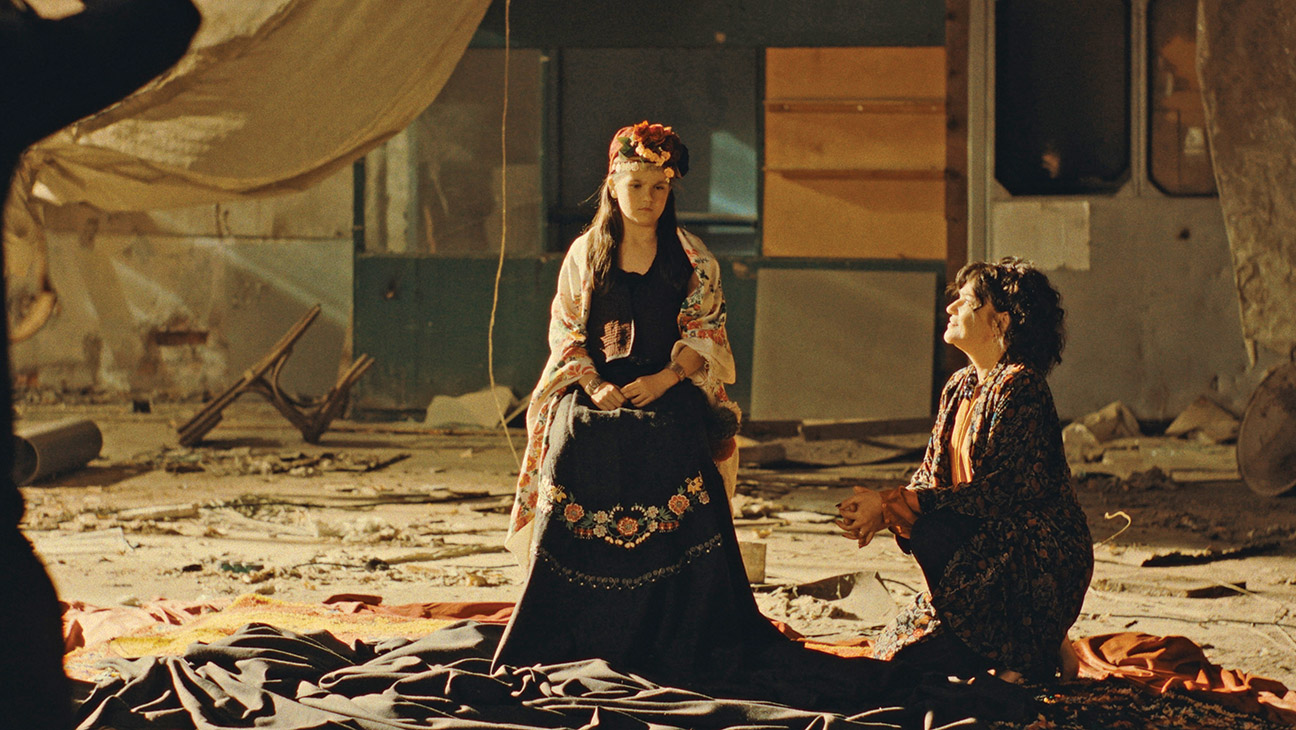
One example is Nina Roza, a transatlantic drama from Montreal-based director Geneviève Dulude-De Celles set to premiere in Berlin.
“[It’s] the story is of someone who is returning to Bulgaria, and most of his journey is in Bulgaria,” Dulude-De Celles says of her lead character, Mihail, who fled the country 28 years earlier after the death of his wife and raised his daughter, Roza, on his own. Now an art expert in Montreal, Mihail reluctantly returns to Bulgaria to authenticate the work of Nina, an 8-year-old Bulgarian artist and possible child prodigy whose paintings have gone viral online, only to confront the ghosts of his past.
Out of necessity, the Nina Roza producers leveraged Canada’s European relationships to structure a Canada-Belgium-Bulgaria-Italy co-production. Official co-production rules bar Canadian filmmakers from spending more than 25 percent of their overall budget abroad, meaning Nina Roza required foreign partners to unlock additional financing.
Solving the financial puzzle — getting four co-production partners to agree on where funding, creative and technical contributions would come from and how they would be calculated — was no easy feat. “Now it looks great, but it was a long march in the desert to get four countries on board,” Dulude-De Celles recalls.
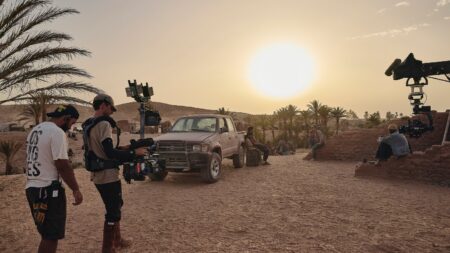
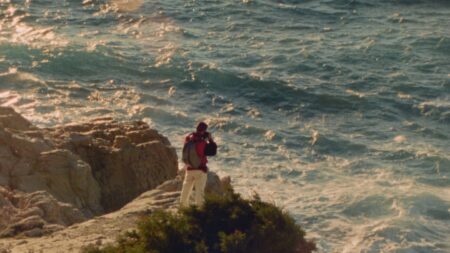
A similar challenge of stitching together a patchwork of financing faced Anne-Marie Gélinas, a producer on Jérémy Comte’s Paradise, a Canada- and Ghana-set thriller also having its world premiere in Berlin. Comte’s feature directorial debut follows Quebec teenager Antoine, who travels to Ghana for a showdown with Kojo, a local gang member, amid an escalating game of deception.
Elevation Pictures, the original Canadian producer on Paradise, structured the project as a Canada-France co-production. That allowed Gélinas and her team, as majority partners, to share the cost of shooting most of the film in Ghana, with only about a third of the scenes shot in Canada. France, as the minority co-production partner, handled postproduction.
“It’s a story about two different countries and two men, so it was easier for us in terms of production to have two producers from two sides of the world basically coming together,” says Comte. The Paradise production had Canadian and French heads of departments among the creatives, and a mainly Ghanaian crew for the majority Canadian co-production.
“So the co-production opens up the doors. But more than that, it opens up a territory,” Gélinas says, noting that Paradise was presold to Arte in France. Here, co-production serves as scaffolding, providing structure for international producers collaborating across multiple countries under official audiovisual treaties.
The model requires a careful balancing act, as creatives and crews from different nations move through a project from production to postproduction. Gélinas, a veteran of the co-production model, recalled a “gray zone” on Paradise when the film financing had been confirmed and the production was assembling its cast and crews and finalizing contracts.
“Everybody has good intentions, and nobody is trying to slow the process down. But it takes time,” she recalls as crews in two different countries prepare for the cameras to roll. “You’re trying to meet payroll, but at the same time you don’t have the money because you’re struggling to get the paperwork in order. It’s this crazy time for producers, and then, magically, we always make it to the finish line, and with a lot more gray hair.”
But once the respective producers have negotiated who pays for what, a co-production allows a director to realize their vision, with the promise of creative freedom. “It was very exciting, because Jérémy’s vision was clear. And everyone is at the service of that vision,” Gélinas says.
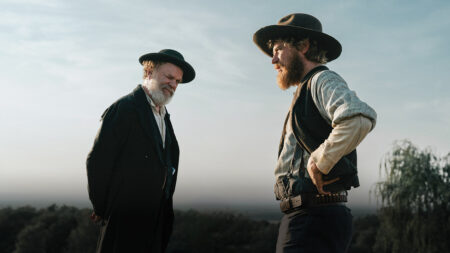
Vancouver-based director Nat Boltt also turned to an international co-production model — between Canada and New Zealand — for her directorial debut, Holy Days, as Hollywood studios increasingly prioritize action films and horror to drive theatrical box office.
There were ultimately 21 different financiers for the long-gestating project, set in 1970s New Zealand and starring Judy Davis, Jacki Weaver and Miriam Margolyes as three offbeat nuns who help a young boy retrieve his late mother from heaven before his father’s new girlfriend takes her place.
“The co-production really just provided so many more puzzle pieces because in a horribly risk-averse industry, when you have something like this — a feel-good road trip powered by three incredible female veteran actresses and a little boy in a funky car — you need all the puzzle pieces you can get,” Boltt tells THR. “Investors now are looking way more to action thrillers and horror pics, while what we really need in the world now is feel-good movies, joy and hope.”
As with Paradise, a co-production for Holy Days meant sharing the risk and resources from Canada and New Zealand and having their creatives collaborate with one another to ensure the film’s cultural integrity. “That, of course, is a labyrinth, a very difficult puzzle, but it really is completely financial,” co-producer Michelle Morris explains.
Early on, the Holy Days producers ruled out major studio financing, as they already had Telefilm Canada and the New Zealand Film Commission on board to back an international co-production. But they brought U.S. co-financiers to the table to get the project off the ground.
“It’s not that we were avoiding the studios, but this was the model that we were working with at the time,” Morris explains. The challenge was finding the budget required to meet not only the cost of the name talent attached as leads to the project, but the production values onscreen expected of that star cast.
To get there, co-producers Morris and Emma Slade of New Zealand had to do a lot of dealmaking. “Closing meant 16 lawyers and sitting around a virtual table trying to close this from all the 21 [financing entities],” says Morris of working around the clock over six weeks to finalize around 125 contracts.
And that was after the crew in New Zealand, led by local producer Slade, started prepping the film for production before final financing had been nailed down. Says Morris: “That was a real ballsy move.”
Francesca Accinelli, senior vp of program strategy and industry development at Telefilm Canada, says the global ripple effect of instability in Hollywood is prompting Canadian producers to look outward, forging new international partnerships to get films made. That shift is opening doors to emerging markets where Canadian filmmakers are finding fresh sources of financing and distribution — and new audiences in the process.
At the same time, as with Nina Roza, Paradise and Holy Days, co‑productions are increasingly being driven by the stories themselves. Many of these projects originate from filmmakers who are new to Canada, or from second‑ and third‑generation auteurs with immigrant roots drawing on their families’ journeys to — and through — new countries.
“The work Telefilm has done to welcome those stories into the ecosystem is allowing new countries to come into the financial picture,” Accinelli explains.
Still, volatility in global financing remains a constant challenge. “Closing a film in Canada, or relying on the United States or Europe, is becoming harder and harder,” she says. “But that’s also what’s pushing producers to collaborate more creatively. It’s forcing us to look at new markets with their own funds and incentives.”
For Accinelli, that international mindset has become a defining strength. “Access to content from around the world has emboldened Canadian creators to say, ‘Hey, it’s time for me to tell my story — and there’s an audience out there in the world,’ ” she explains. “That, for me, is uniquely Canadian. It’s an advantage. We’ve evolved with incredible funding opportunities — and now the world has woken up. They’re seeing that.”
Read the full article here