





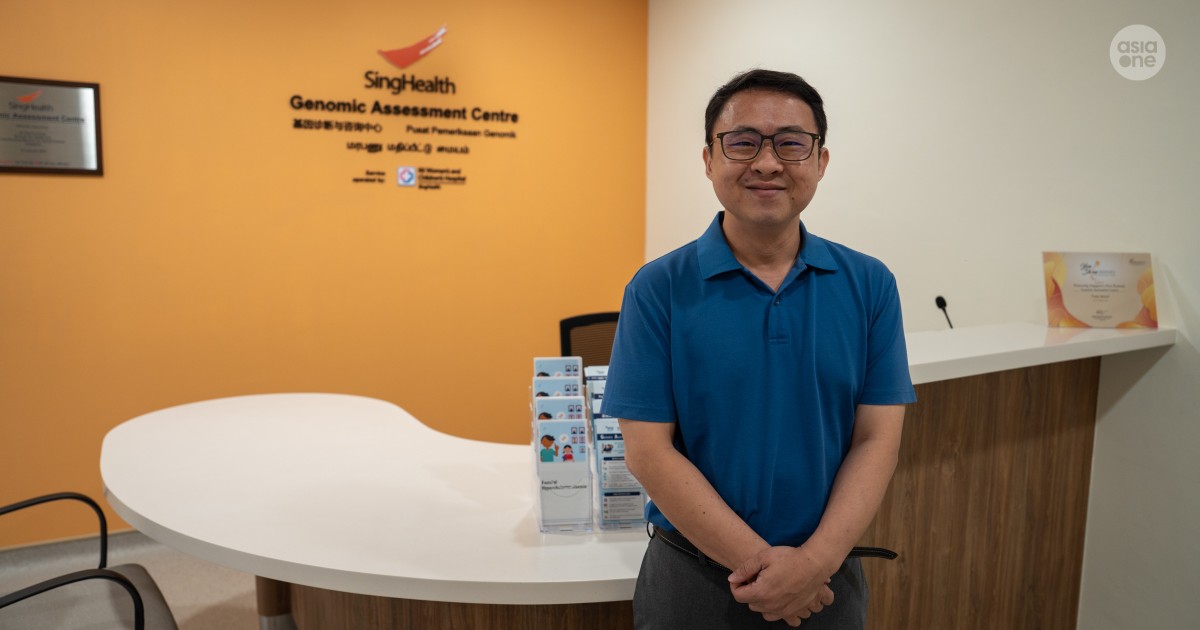


While most may feel distress when identified as high risk for certain medical conditions, Thng Kay Tiong felt relief when he tested positive for familial hypercholesterolaemia.
“I feel relieved. Because I know where I stand now rather than having to guess,” the 43-year-old engineer, who has been managing high cholesterol for over a decade, told the media.
He suffered a stroke last May, and his most recent lipid profile showed elevated levels of low-density lipoprotein (LDL) cholesterol, otherwise known as “bad” cholesterol.
While high cholesterol, or hypercholesterolaemia, is often associated with lifestyle habits, experts say that genetics also plays a large role.
Familial hypercholesterolaemia (FH) is an inherited condition with a defect in how the body processes LDL, causing those with the gene mutation to have very high levels of LDL cholesterol.
It affects an estimated one in 140 people in Singapore and over 90 per cent of cases remain undiagnosed, according to the Family Heart Foundation and World Heart Federation.
If left untreated, the condition can lead up to a 20-fold increased risk of premature heart attacks and cardiovascular disease. Over 50 per cent of men and 30 per cent of women will develop chronic heart disease by the ages of 50 and 60 respectively.
Although most people with FH have no visible symptoms apart from occasional bumps around knuckles, swollen Achilles tendons or yellowish bumps around the eyes.
The clustering of cardiovascular disease within a family can also be a sign of the condition.
In Kay Tiong’s case, his maternal aunt suffered a stroke while two of his maternal uncles had coronary artery disease. The family history, combined with his personal health profile, prompted doctors to refer him to the SingHealth Genomic Assessment Centre (GAC) for FH genetic testing.
Singapore’s first genomic assessment centre
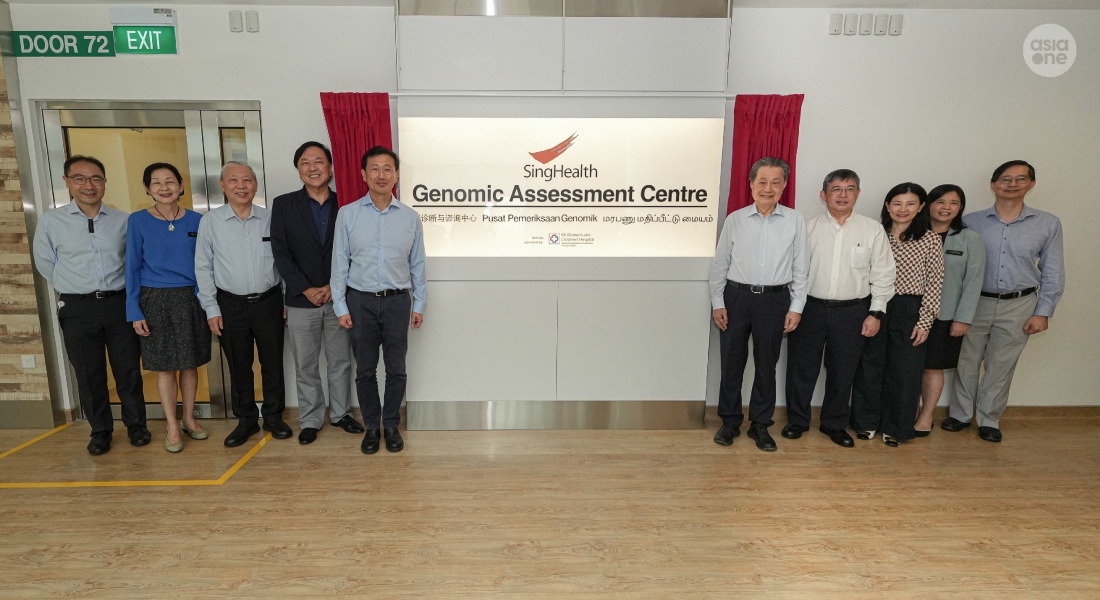

Officially opened on Monday (Jan 19), the SingHealth GAC located at the National Heart Centre Singapore is the nation’s first genomic assessment centre. It currently focuses on providing subsidised genetic testing and counselling services for FH.
The Singhealth GAC also provides clinician support to primary care physicians by providing resources and referral guidelines to support the identification of at-risk patients for genetic testing and subsequent follow-up care.
Family members of patients who test positive for FH can also undergo cascade screening, which enables early detection and intervention.
The tests are subsidised by the government, with prices ranging from $18 to $87 for index patients and $8 to $38 for cascade screening patients.
“If I test positive, my direct family is covered [for testing] as well, especially my children,” said Lim Seh Wei, a father of two.
The 47-year-old was directed to the assessment centre for suspected FH due to chronically elevated levels of LDL cholesterol in his lipid profile.
He first presented with high cholesterol in 2023 during a routine check-up. His father, older brother and older sister also had the same patterns of elevated LDL cholesterol.


The possibility of having the inherited condition was of particular concern to Seh Wei due to the implications for his two young sons aged 13 and 9.
Seh Wei said he consented to the genetic testing as it offered clarity and guidance. His test results turned out negative for FH.
“It’s the right approach, rather than not knowing,” said the IT manager, noting that doctors would have been able to provide the right advice if he had the condition.
“It’s something that can help you and your next generation, as well as the rest of your family.”
According to KK Women’s and Children’s Hospital, Singaporean citizens and permanent residents with abnormally high LDL cholesterol levels of 5.5mmol/L or higher can be referred for FH testing after speaking with a doctor.
Referrals can be made from all polyclinics, general practitioners, public and private hospitals, or clinics.
Both Kay Tiong and Seh Wei took part in the National FH Genetic Testing Programme rolled out on June 30 last year.
‘40% take-up rate a good start’

Speaking at the SingHealth GAC’s launch, Minister for Health Ong Ye Kung said that as of December 2025, more than 1,000 eligible individuals have been identified and referred for FH genetic testing.
Of these, approximately 600 have made appointments at the GAC and 420 have consented to testing.
This represents an overall take-up rate of around 40 per cent among those referred.
“A 40 per cent take-up is a good start. But it can be better,” he said.
“From our conversations with individuals who declined genetic testing, most expressed concerns about how the test results might affect insurance, employment or even how they would be perceived by relatives or society.”
To address such concerns, the minister explained that safeguards are in place to ensure privacy and non-discrimination.
Said Ong: “Since June 2025, the Ministry of Health and the Life Insurance Association have expanded the Moratorium on Genetic Testing and Insurance so that insurers are prohibited from requesting and using all genetic test results obtained from the National FH Genetic Testing programme in insurance underwriting.”
The minister noted that an exception applies to very large insurance products with claims of $1 million or more, as it may be indicative of possible abuse.
The FH Genetic Testing Programme has also expanded beyond SingHealth, as two other GACs under the National Healthcare Group and National University Health System have also started accepting referrals on Jan 2, widening access to early genetic testing and preventative care.
“With FH as our first use case, we are looking at rolling out further programmes for conditions such as hereditary cancers,” Ong added.
[[nid:724390]]
carol.ong@asiaone.com
Read the full article here