




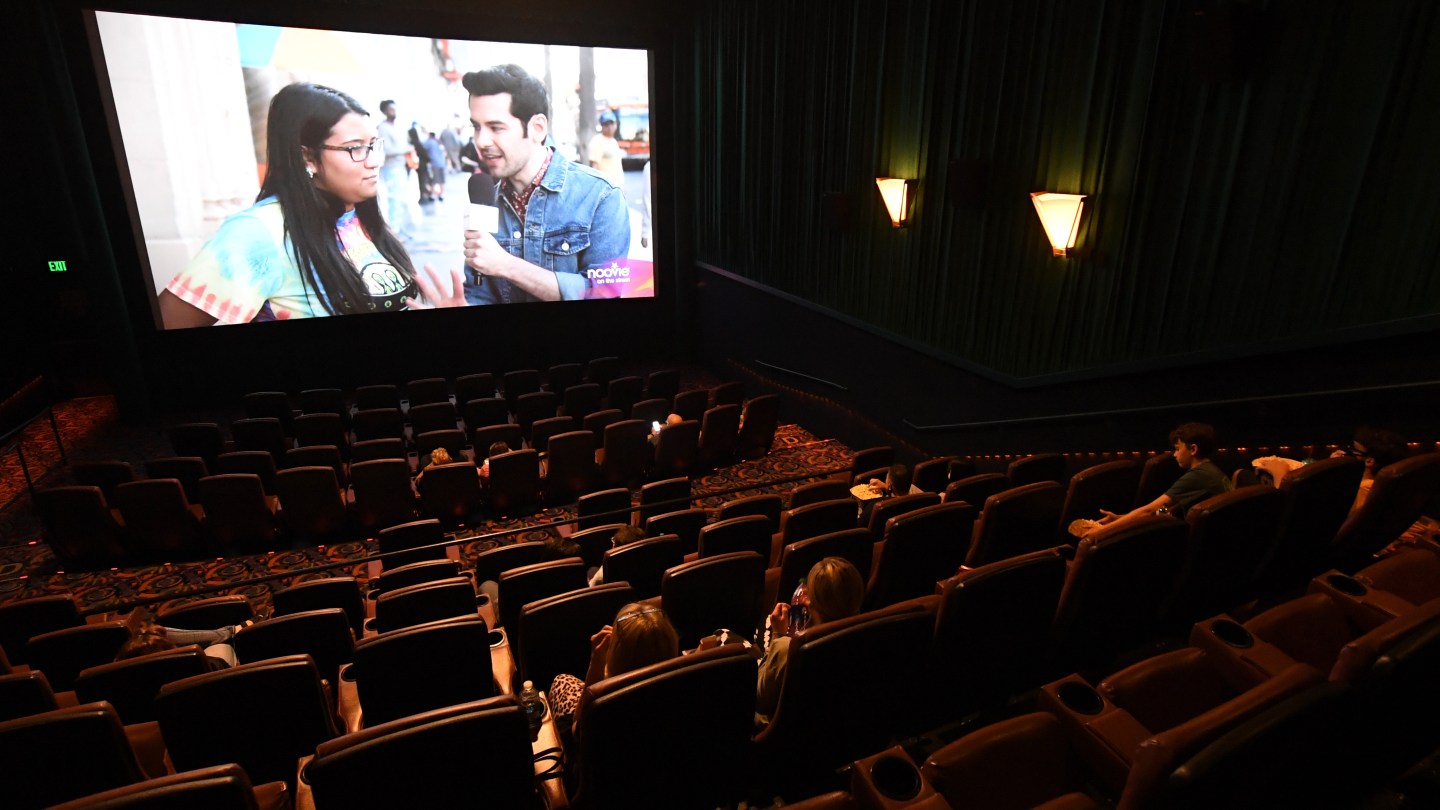

Cinema attendance and box office have remained below pre-COVID pandemic levels, so what can studios and exhibitors do to put people back in recliners and other movie theater seats? Management consulting firm Bain & Co., in a new research report, shares some suggestions and insights.
The big-picture takeaway from Bain partners Chris Xanthakis, Nicole Magoon, and Daniel Hong: “Successful companies will invest in premiumization, personalization, and partnerships to draw people back to theaters.” After all: “Audiences haven’t abandoned theaters; they need a more compelling reason to go.”
Their new report, which was completed before the Netflix deal for Warner Bros. Discovery, which has raised more concerns about the future of cinemagoing, starts off in an ominous way. “For two decades, movie theaters have consistently wrestled with how to get people into seats. Today, that challenge has become an existential threat,” it highlights. “While consumer spending on video streaming subscriptions surged from 2010 through 2024, North American box-office revenue in real terms fell during the same time frame. Ticket prices in real terms are close to flat since 2010, but the cost of a visit has risen as the increase in concessions revenue per patron has outpaced inflation. As a result, consumers now see cinema as expensive.”
The pandemic exacerbated these trends, putting them into “overdrive,” as the Bain experts emphasize. “In 2020 and 2021, release schedules collapsed, consumer habits changed, and digital platforms gained ground. Although a 2025 Bain media consumption survey of more than 5,000 US consumers found that about half of them wish they attended more in-person events, this hasn’t translated into a recovery for theatrical exhibition, with domestic cinema attendance still just 64 percent of prepandemic levels, according to data as of November from The Numbers.”
Major studios, meanwhile, have seen the number of their wide releases remain about a fifth below pre-pandemic levels, filling the resulting gap with films from smaller affiliated studios.
All this comes to a head in what Bain dubs the “Flooded Era,” where media is everywhere, with new technologies enabling “a deluge of ‘good enough’ content.” In this environment, “anyone can compete, but not everyone can compete profitably,” the consultancy warns.
So, how does the cinema experience fit into this time? Its key benefits are “immersion, spectacle, and shared experiences,” the Bain report highlights. “But this is at odds with people’s evolving consumption of media, which is increasingly short-form, interactive, and digital.” Its recommendations focus on premium experiences, community, personalization, and partnerships.
The premium offering is a key starting point. “Industry leaders recognize that, more than ever, cinema must reframe itself as a premium experience, not mere content,” the Bain consultants write. “Seeing a movie in theaters is an event, a destination, an experience that is far more affordable than a ticket to a Taylor Swift concert. Theaters can deliver on this promise via premium auditoriums, service, and personalization that can’t be replicated at home.”
Part of the experience is a sense of community, Bain argues. “Cinemas can harness community to draw people in,” the company believes. “One path is to provide social spaces and host community events, taking a cue from independent cinemas, which sometimes offer film clubs, themed watch events, and director Q&As.” This social component also translates into social media, such as Instagram and TikTok, memes, video essays, podcasts, reaction videos, and cosplay, according to the consultancy. “Our 2025 media consumption survey found that 64 percent of U.S. location-based entertainment attendees share their experiences on social media,” its report concludes. “This is earned media that cinemas and studios can lean into and actively support.” Data partnerships can further enhance the hunt for opportunities.
But what content draws in the “Flooded Era”? Bain suggests players should “remain fresh with new content and new formats” in addition to big, established franchises. “Owning popular IP remains key. In 2024, the top-grossing U.S. films were overwhelmingly franchise extensions of original IP,” the Bain report emphasizes. “But great IP and large marketing budgets alone don’t guarantee movie success, and they’re insufficient” in a world where many a theater seat remains empty. “Audiences crave novelty. Note the perennial breakout successes of innovative original movies, live streams, and concert films. … In response, we expect more theaters will forge new kinds of partnerships to deliver creative content and innovative formats for customers.” In this context, concert movies and live sports “have shown that there are other ways to draw audiences to movie theaters,” the consultancy highlights.
“Cinema executives recognize that they have no choice but to reimagine the movie theater experience,” the Bain team concludes. The winning companies will invest in premium, personalized offerings that can’t be replicated at home.”
Read the full article here