




What and where is “home”? And what is identity? Actress-turned-director Marijana Janković explores these questions as she takes us inside the emigration and immigration experience, including displacement and sacrifice, with Home, a cinematic journey through the eyes of a young girl whose family gets uprooted from Montenegro in the former Yugoslavia to Denmark.
In 2018, the creative made her debut as a screenwriter and filmmaker with the short film Maja (2018), based on her own childhood. Now, she is ready to world premiere her debut feature film, based on the short, in the Big Screen Competition of the 55th edition of the International Film Festival Rotterdam (IFFR) on Wednesday, Feb. 4.
Janković wrote the screenplay for Home with Babak Vakili, Bo Hr. Hansen, and Emil Nygaard Albertsen, with cinematography by Manuel Claro and editing by Jenna Mangulad. The cast features Dejan Čukić, Nada Šargin, Tara Cubrilo, Jesper Christensen, and Zlatko Burić, with Danish stars Trine Dyrholm (The Girl With the Needle, Poison) and Claes Bang (The Square, Bad Sisters) also playing roles.
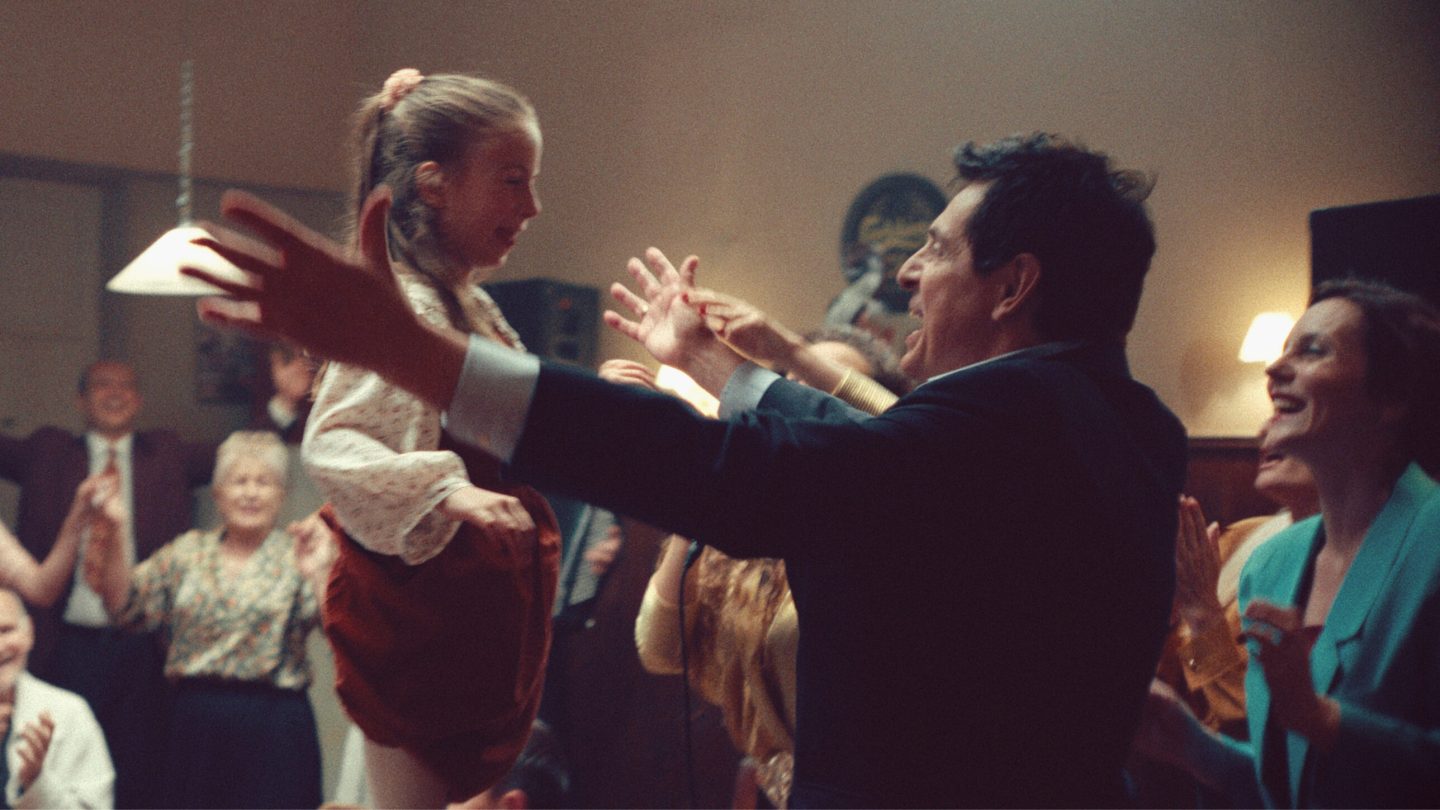
Home follows a family struggling with navigating a new world and rebuilding their lives while holding on to some of what they left behind. Maja is six years old when most of her family moves from the former Yugoslavia to Denmark, initially leaving her two brothers behind. However, Denmark is not the hoped-for all-welcoming paradise. The challenges include learning a new language, a new culture, and new customs.
With Janković’s own family having left Ivangrad, now known as Berane, for Denmark when she was six, Home is an autobiographically inspired narrative that feels particularly timely at a time of mass migration.
Ahead of Rotterdam, Janković talked to THR, via Zoom, about Home, the importance of discussing migration and sacrifice, getting her friends Trine Dyrholm and Claes Bang to join the film, and what’s next for her.
How close is your personal family experience to that shown in Home?
My father’s sister came to Denmark, which didn’t have enough workers, in the ’70s. She came to Denmark with a small group of people sitting in a little bus to work at the famous Royal Copenhagen factory, where they painted porcelain, including beautiful cups. So, my aunt came to work in Denmark for a bit, and then she just stayed. I came in the early ’90s with my parents, and we stayed at my aunt’s place. Just like in the movie, we had to leave behind my brothers because they couldn’t afford to bring all three of us in the beginning.
I found my home here in Denmark, but my parents never really found their home. They still don’t really belong in Denmark despite so many years here. That’s something I wanted to touch on in the movie. It is a sad part, but on the other hand, I think the story is also showing the sacrifices we make in life. It’s a payoff, because I am living the life my parents wanted me to live. So in that sense, they’re happy. And the film is really asking, what is home, what is happiness, and what is family?
I felt this ambiguity between the good, the challenging, and the sacrifice very strongly while watching the film. I was also fascinated by a scene in which your parents discuss where they want to be buried. Can you share something about that scene?
When the dad in the film says he wants to be buried in Montenegro, that is actually something my father really said to me. It was the time of the coronavirus, and he was afraid of dying. And he said to me, “If God wants me now, I don’t want to stay here. I’ve been here long enough. You should bury me back in Montenegro.” I just remember looking at my mother and asking, “Where did this come from?” And then it started like an avalanche in my head: Where do they belong? Where do I belong? Where do I want to be buried? What defines a home? Is home where you were born?
What do you typically call home?
I’ve been talking about Denmark as a home forever. I came here when I was six, and I learned to speak Danish, and all my friends are here. When I was a kid, every summer, we used to go to Montenegro. When I was 19, I thought I couldn’t go back anymore. So, I had a period of 10 years of not going back at all. But when I did go back, I found the love of my life in Serbia, and I’m married to him.
Have your parents seen the film?
Not yet. I really felt I wanted to give this movie to them as a present. I did the same with my short film. I gave it to them as a present, and they didn’t see it until the premiere.
What was their reaction?
I remember my mother took some friends with her, and she was just proud, but I couldn’t find my dad. We had a screening in a small cinema. When I found him, he was hiding behind a door, crying. And he just said, “Oh, my child, this is our life. It’s our life.” And I said, “Yeah, it’s a beautiful life.” And he said, “Yes, we didn’t do that badly.” His reaction was so beautiful, but at the same time, so moving. I’m still trying to figure out the best way to show them this film, because it’s a big one.
Do you think of Home as a very personal movie with a universal message?
Yes, but people have asked me if it is a political movie. I’m saying to them, “No. When we talk about foreigners and immigrants, it doesn’t have to be political.” I tried to make a movie about people who survive, people who are trying to create a better life, and the love you have for your family. You sacrifice everything. And that’s what I really love about this film – that we don’t really go into the politics.
As an actress, how easy or difficult did you find it to change your role on set to directing other actors?
I didn’t really feel the difference. It was just like my arm got longer, and I could reach everything. For me, it was such a natural transition from being an actor to directing. It was interesting for me, maybe because I know the acting work myself, so I think I’m very sensitive, and I can see what people need.
As an actress, I prefer directors who don’t talk too much, because it can confuse me. Lars von Trier was one of the directors I worked with who didn’t use many words, but when he talked, you listened, and you just knew what he meant. I was really comfortable as a director. So, I really find myself in a good place.
How early did you decide to take on a small acting role in Home?
In the short film, I played the mother myself, and I look like my mom. For Home, I thought I would play the mom myself as well. But then I felt it was such a big part, and I wanted to focus on one thing, directing. So, I decided to play this small part.
How did you get such big names as Trine Dyrholm and Claes Bang to take on roles in Home? They may not be major roles, but they are important…
They’re my friends, and everybody has been so supportive of this film. I must really say that the love I felt when doing this film has been so big and so beautiful. When they got the script, they said, “We want to support this, it’s important.” So it wasn’t only important for me, it was also important to them, which really gave me wings to fly. So that’s why I have them in my film. They’re awesome!
Now that you have completed Home, your first feature as a director, will we see you make more films from the director’s chair?
This is just the beginning. I have a lot of stories I want to tell, and I would love to direct more. It’s definitely a second love now after acting. So, yes, I would love to direct more.
Read the full article here