

For many Singaporeans, Hari Raya Puasa and Hari Raya Haji are the quintessential periods for a “balik kampung” trip or a quick getaway to Malaysia.
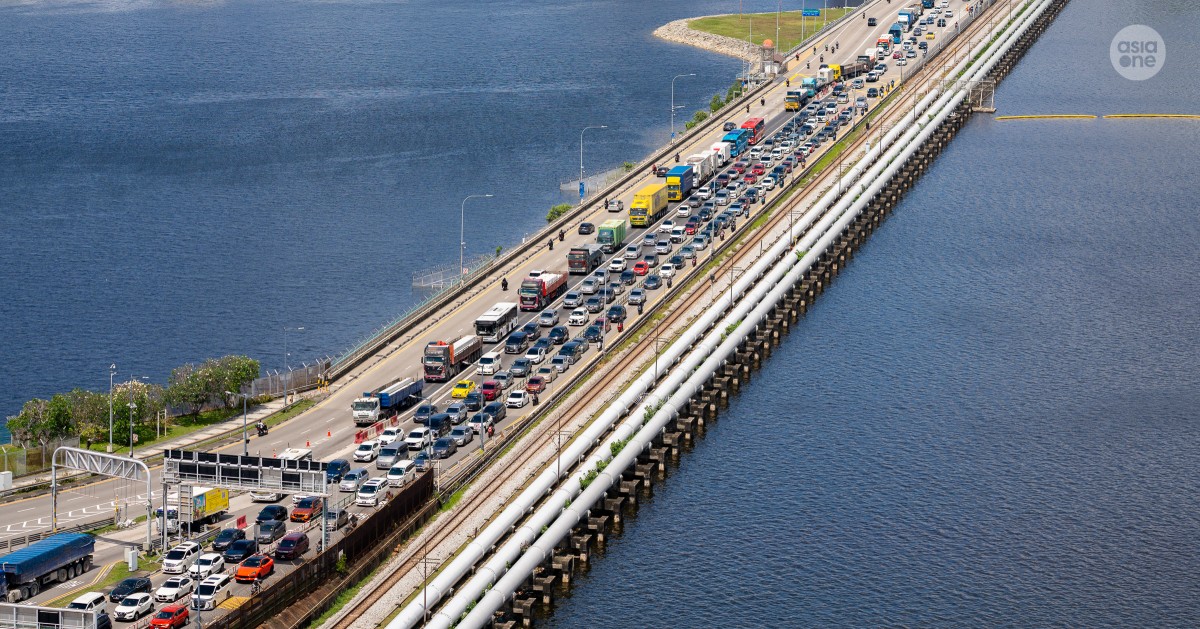
However, 2026 presents a unique travel landscape. With public holidays falling on weekends and coinciding with school breaks, the Causeway and Second Link are expected to reach record-breaking congestion levels.
If you are planning to drive across the border, your best friends are timing and strategy. This article lists exactly when to leave, which checkpoint to choose, and how to navigate the 2026 festive rush like a pro.
In 2026, there are two major Hari Raya celebrations:
Hari Raya Puasa (Eid al-Fitr): Expected to fall on Saturday, March 21, 2026.
Hari Raya Haji (Eid al-Adha): Expected to fall on Wednesday, May 27, 2026.
The March date is particularly tricky.
Because March 21 is a Saturday, the following Monday (March 23) is a scheduled school holiday/day off-in-lieu for many students. Crucially, this falls right at the end of the March school holidays (March 14–22).
You will be competing for road space with both festive travellers and families returning from their week-long school break.
Hari Raya Haji on May 27 falls on a Wednesday. This creates a “sandwich” week where many will take two days of leave (Monday and Tuesday) to create a five-day long weekend starting from the previous Saturday.
[[nid:731085]]
Best times to travel to beat the jam
To avoid being stuck for four to six hours at the land checkpoints, you should travel during “counter-flow” or extreme off-peak hours.
Departure (Singapore to Malaysia)
The golden window: Between 10am and 2pm on a Tuesday or Wednesday before the public holiday.
The late night shift: After 11pm on the eve of the holiday. Avoid the 6pm to 10pm rush at all costs, as that is when office workers and day-trippers flood the gates.
Return (Malaysia to Singapore)
Early morning: Aim to reach the Malaysian side of the checkpoint before 7am on the final day of the holiday.
After midnight: Entering Singapore after 1am on the Monday following the weekend usually sees significantly shorter traffic queues.
Choosing the right checkpoint depends on your destination and your patience for stop-and-go traffic.
Woodlands Checkpoint (The Causeway)
Best for: Travellers heading to Johor Bahru (JB) city centre, Mount Austin, or the East Coast (Kuantan/Mersing).
Pros: Shorter driving distance to food and shopping hubs in JB.
Cons: Higher volume of motorcycles and factory buses. It is notoriously prone to “human jams” at the bus halls and heavy traffic tailbacks onto the BKE.
2026 pro tip: Use the QR code clearing system (introduced by ICA) to speed up your individual clearance, but remember it won’t help with the physical car queue on the bridge.
Tuas Checkpoint (Second Link)
Best for: Travellers heading further north (Kuala Lumpur, Melaka, Penang) via the North-South Expressway (PLUS).
Pros: Generally wider roads and a more “highway-like” experience. Usually moves faster for cars compared to Woodlands during festive peaks.
Cons: Higher toll charges. If there is an accident on the Tuas Second Link bridge, there are very few “escape routes,” and you could be stuck in a complete standstill.
2026 pro tip: If you see the Causeway is red on traffic apps, Tuas is usually the safer bet for long-distance travel, even if it adds 15 kilometres to your journey.
The key to a stress-free Hari Raya road trip in 2026 is flexibility. With the March holidays overlapping with Hari Raya Puasa, the “traditional” off-peak hours may shift.
Always keep a portable charger, plenty of water, and some snacks in the car. If the jam exceeds three hours, consider postponing your departure by a few hours rather than idling in the heat.
This article was first published in Motorist.
Read the full article here