






Singapore has recently reached super-aged status, with 21 per cent of citizens being 65 and above.
And with life expectancy at an all-time high of 83.9 years, our seniors are living longer than ever — which makes ensuring they have proper support even more important.
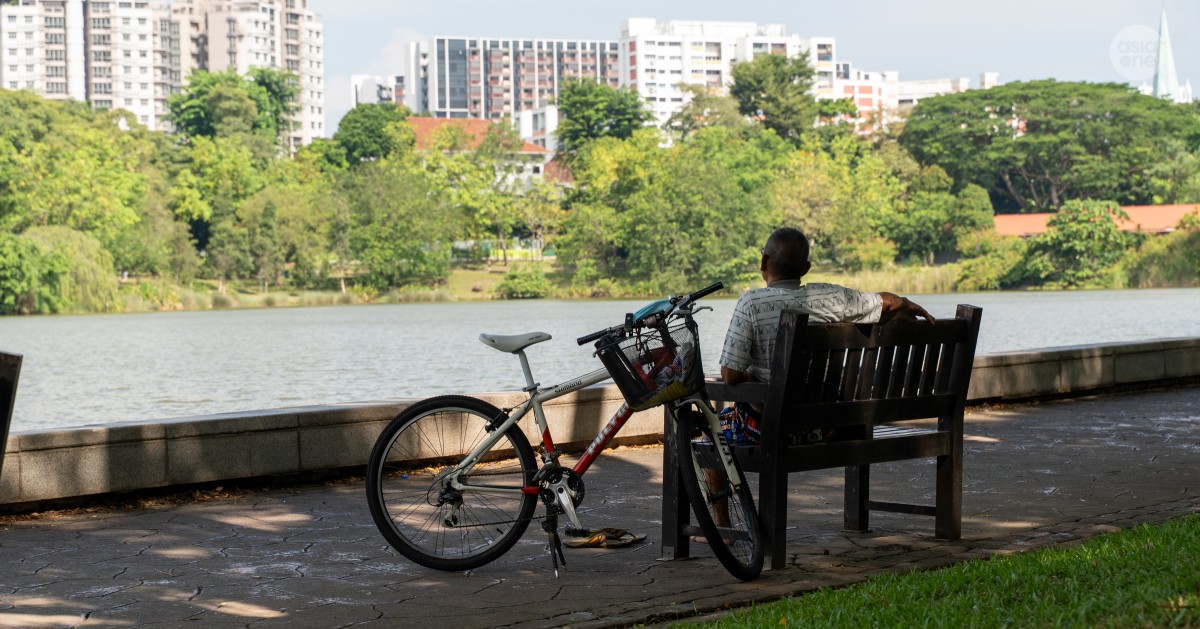
According to the Family Trends Report 2026 released by the Ministry for Social and Family Development (MSF), the number of elderly in Singapore who live on their own have more than doubled over the span of a decade.
In 2015, there were 41,200 residents aged 65 and above living alone — making up 8.9 per cent of the 460,900 seniors living in resident households at the time.
This number rose to 88,400 in 2025, comprising 11.5 per cent of the 768,800 resident seniors in Singapore that year.
Additionally, data from the Department of Statistics Singapore shows that the number of elderly residents living only with other seniors has seen a sharp rise in the past decade.
About 7,300 seniors in Singapore lived with other elderly people in 2015 and this number more than doubled to 19,500 in 2025.
Despite the rise in elderly residents living alone, an overwhelming majority of people in Singapore feel that it is their responsibility to take care of their parents.
According to findings from an MSF survey on families, 95.2 per cent of people aged 15 to 64 agreed with this sentiment in 2025, up from 93.1 per cent in 2023.
It also found that a large majority of respondents (90.1 per cent) in 2025 said they would provide financial support to family members if they needed it.
A similar proportion of respondents (94.1 per cent) also stated that they would provide emotional support to family members, while 73.8 per cent said they would offer physical support to family members should they need help with activities of daily living.
These activities include washing or bathing, dressing, feeding, using the toilet, transferring from one surface — such as a bed or chair to another — and mobility.
This year’s Family Trends Report was released during the National Family Festival Appreciation Event at the Grand Copthorne Waterfront Hotel on Friday (July 10) with the aim to provide key annual updates on Singapore’s family trends.
Speaking at the event, Minister for Social and Family Development Masagos Zulkifli said he was heartened to see that families in Singapore continue to be strong and resilient.
“Even as caregiving demands grow along an ageing population, families continue to step up, with the majority being willing to provide financial, emotional, and physical support for their family members who need it,” he said.
According to the report, the proportion of respondents who stated they have a close-knit family rose from 86.0 per cent in 2023 to 89.6 per cent in 2025.
For both 2023 and 2025, those who were married (93.8 per cent) were more likely to say that they have a close-knit family than respondents who were single (84.1 per cent), divorced, separated, or widowed (81.3 per cent).
The proportion of people who maintained close ties with family members outside of their immediate family, on the other hand, remained stable across the two years at 67.5 per cent in 2023 and 69.0 per cent in 2025.
The study also saw a higher proportion of married respondents (74.8 per cent) say that they do so as compared to single (60.7 per cent), divorced, separated and widowed (61.6 per cent) respondents.
[[nid:735820]]
Despite willingness to help, caregivers struggle
While family members remain a key part of caregiving support for seniors, the Family Trends Report 2026 also highlighted that caregivers score lower in terms of quality of life and their satisfaction with family support.
The 2025 Quality of Life study by the National Council of Social Service (NCSS) found that respondents who were caregivers scored all aspects of their quality of life (physical, psychological, social relationships, environment) lower than non-caregivers.
It also found that caregivers tend to be less satisfied with family support, with 50.6 per cent of them saying they were satisfied as compared to 56.1 per cent of non-caregivers.
Despite this gap, caregivers appear to be just as happy as non-caregivers with their family relationships — with 60.3 per cent of them reporting this as compared to 61.2 per cent of non-caregivers.
In fact, 9 in 10 families surveyed by MSF reported moderate to high family resilience scores.
These scores measure families’ ability to cope with and adapt to challenges and adversity, as well as how well they bounce back from difficult life events.
This survey also found that respondents who reported having close-knit families had higher scores. The same could be said for those who stated that they would provide their family members with support if they needed it as well as married respondents.
Less marriages, but they are more stable
The 2026 Family Trends Report also found that there were fewer marriages in 2025 than the previous year, with the total number of marriages falling by 6.2 per cent.
This decline was mainly due to a fall in the number of marriages of those aged 25 to 34.
However, a large majority (94.9 per cent) of married individuals surveyed by MSF stated that they are happy with their marriage, while 92.8 per cent stated that they feel their relationship is going well.
Additionally, more than three in four (78.3 per cent) married respondents said they frequently confide in their spouse, and 88.3 per cent of them said they have rarely or never considered ending their relationship.
On Friday, Masagos noted that recent marriage cohorts have shown greater stability.
“Most married Singaporeans continue to report strong and fulfilling relationships, with nearly 95% of married couples reporting being happily married,” he said.
He also highlighted that fathers are playing an increasingly active role in parenting, with take-up rates of government-paid paternity leave increasing from 47 per cent for children born in 2016 to 61 per cent for those born in 2024.
“This has been supported by the recent enhancements in shared parental leave provisions from 6 weeks to 10 weeks,” he said, adding that he hopes these government measures will give parents the confidence and resources they need.
[[nid:739319]]
bhavya.rawat@asiaone.com
Read the full article here