

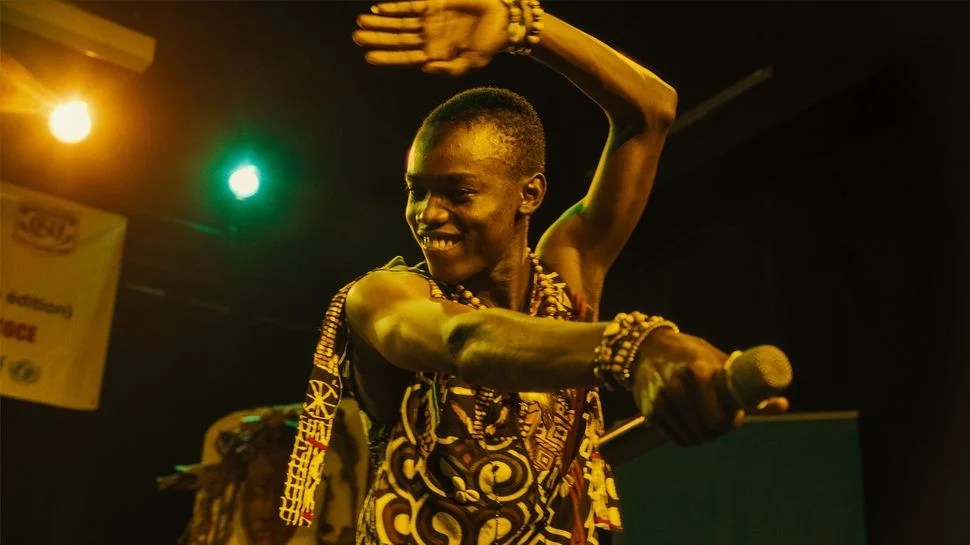


Robert is a 17-year-old Congolese refugee in Bangui, the capital of the Central African Republic (CAR). After his parents are imprisoned, he must care for his four younger siblings while striving to become a musician. That is the story of Congo Boy from director Rafiki Fariala. But it is also his, or at least inspired by his personal story.
The landmark co-production by the Democratic Republic of the Congo (DRC) and the CAR, which world premiered in the Un Certain Regard competition of the Cannes Film Festival, where it won its star Bradley Fiomona Dembeasset the best actor honor in the session, is now unspooling on the big outdoor square in Switzerland, namely the Piazza Grande as part of the 79th edition of the Locarno Film Festival, on Tuesday, Aug. 11.
Congo Boy‘s cast is led by Dembeasset and also features Christy Djomanda Louba, Pétruche Mbomba, Rosiana Kotozia, Gloria Ambacko and Dieufera Sana. The screenplay was written by Fariala, Tommy Baron and Boris Lojkine. Adrien Lallau handled the cinematography, with editing by César Simonot.
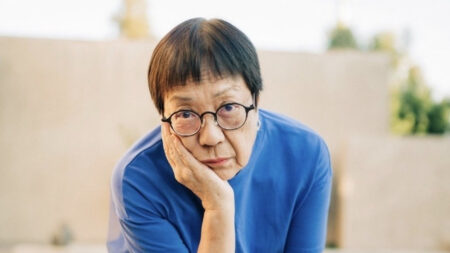
The autobiographical film – Fariala is the son of Congolese parents, based in the CAR and a self-taught musician – previously made the 2022 documentary We, Students!, in which he turned the camera on himself and his friends to capture everyday student life at Bangui University. Congo Boy is a production of Mahongo Films in the CAR, co-produced by Kiripifilms in the DRC, which is the company of filmmaker Dieudo Hamadi (Kinshasa Makambo, Downstream to Kinshasa), and France’s Unité.
You may wonder just how autobiographical the movie is. “It is really my own story, told through Robert, played by Bradley,” Fariala told THR via a translator just before the film’s world premiere. “When you see in the film that Robert is shot at, I was actually shot at.” The same is true for Robert’s stay with a colonel and his participation in a talent show, co-organized by UNICEF, among other things.
The filmmaker sees his experience as a refugee as something that reflects the lives of many people around the world and is showcased in the film. “My family fled the Congo because there was war there, and when we got to the Central African Republic, war started there, too,” Fariala explained. “They wanted to be in a country that was more at peace to protect their family. So they were thinking of going to Benin and then on to Europe to have some stability for our future. But unfortunately, they had passports and their refugee card that showed a different country, so they got arrested.”
After We, Students! was censored in the CAR, he had to go into exile in France, again as a refugee. “We often speak about refugees who want to go to Europe, but there are a lot of people who are refugees within different countries of Africa,” as the film shows, said the director. “And I want to convey that refugees are not beggars. They have to leave their home because this world is really crazy because of human destruction. But the young ones still want to fight; they still have hopes and dreams. I am proud to be a refugee.”
How did the director find his cast to tell a very personal story? “We did some street casting,” he recalled, highlighting that he added a French casting director to his Central African Republic crew to find the lead actor. “He’s my double,” emphasized Fariala. “It took months. I started looking into young singers on the music scene, but they lacked charisma. So I went to look for Congolese refugees, and we went to cultural centers in different neighborhoods. At this school at 6 a.m., we auditioned 50 young boys, including Bradley, and he was so different from the others. He was reserved and smiling, but he had something in common with me. He liked to sing and rap, but only in his bedroom, because his father didn’t want to hear anything about art. His father just wanted his son to do well in school, like mine. So I gave him an improv exercise about failing his high school degree, and it was very different from the others.”
Fariala was convinced that the young man was the right person to play the lead role. “But I had to talk to his parents, who didn’t agree at first,” he shared with THR. “So I had to be very persuasive.”
The rest of the cast is also made up of non-professional actors. And many portray their real-life experience, such as soldiers appearing in the film as soldiers, and Fariala’s aunt playing herself. That plays into the filmmaker’s interest in both documentary and fiction, and in mixing the two in his films. “I started out in documentary, but I always like to add a layer of fiction into my documentaries,” he told THR. And Congo Boy is a fictionalized version of his own life, with the reliance on a non-professional cast adding another layer of documentary vibe, he noted.
What’s next for Fariala? “For my next projects, whether they are documentary or fiction, I want to keep doing that,” mixing genres, the filmmaker told THR. “I have another documentary that I started filming before Congo Boy. It’s called To Live and is about one year of my life after We, Students! was released and was censored in the Central African Republic and I had to go into exile in France.”
What awaits audiences? “I was a bit lost in France,” the creative shared. “I was lonely, and I didn’t know how to talk to people, how to interact, and so I felt homesick. And I filmed myself to live. The camera became my friend; it kept me busy. At the same time, my little sister was sending me footage of the family back home, which helped me really hang in there. So, this will be my next film.”
But Fariala has more in the works. “I have written another fiction film which could be a sequel to Congo Boy, because of this character of Robert,” he told THR. “I want to see what happens when he has become a musician and when he becomes famous and how, when he’s accepted in the Central African Republic, he is going to live with success. I want to keep digging into that.”
Read the full article here