

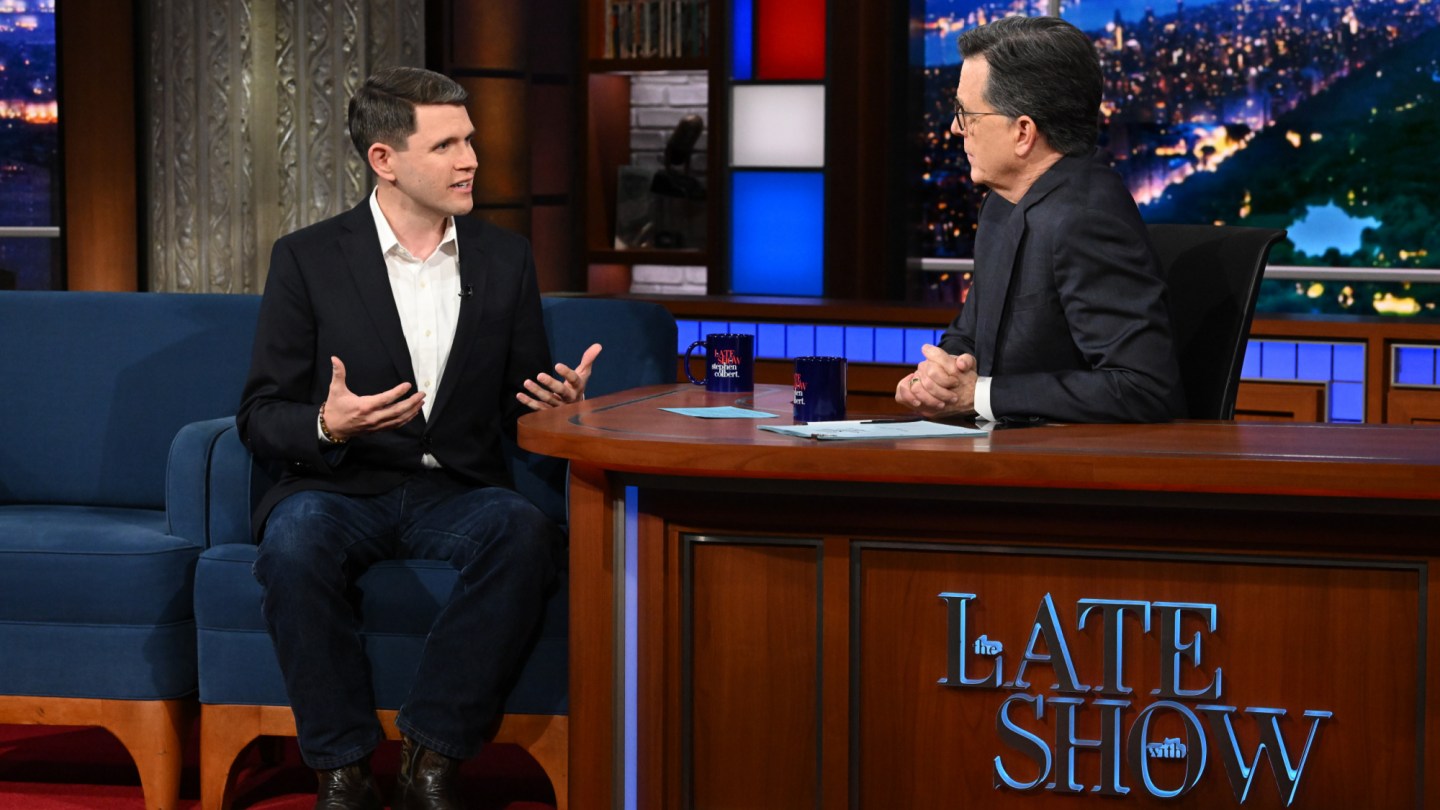


Texas State Rep. James Talarico has been making headlines after he didn’t appear as scheduled on The Late Show, but it wasn’t the first time CBS abruptly spiked a segment featuring a political candidate for regulatory reasons.
Ten minutes before air on Aug. 20, 2003, the network’s lawyers demanded that then-The Late Late Show host Craig Kilborn cut a portion of the broadcast touching on the bonkers California recall election — a satire of a speech by then-Gov. Gray Davis, the first political ad from challenger Arnold Schwarzenegger and the campaign of porn actress Mary Carey, all of which included images of the trio. Killborn said he was told by CBS’ legal team that the segment would implicate an FCC rule obligating stations to offer comparable time to political candidates. Complying with the provision would mean having to show pictures of all 135 candidates, which was a no-go for CBS, he wrote in a piece for The New York Times.
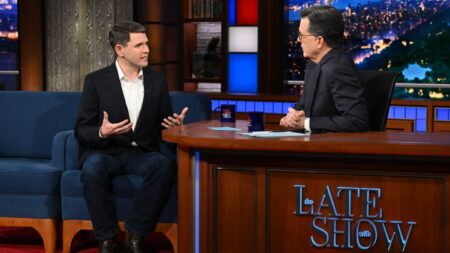
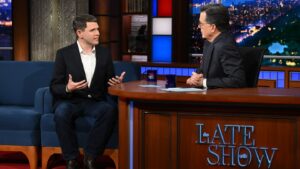
That little-known provision has been making the rounds on late night shows over the past month after the FCC clarified guidance on equal time rules, a change that is threatening to end long-standing regulatory exemptions for interviews with politicians on shows like The View, Jimmy Kimmel Live! and The Late Show. It’s early, but it appears the rule is being weaponized to prevent networks from having anyone on by potentially forcing them to have everyone on — a logistical nightmare. Its most recent appearance came on Monday night when Colbert opened the episode by addressing the absence of Senate hopeful James Talarico. “He was supposed to be here, but we were told in no uncertain terms by our network’s lawyers, who called us directly, that we could not have him on the broadcast,” he said of the Texas Democrat.
Chatter that the FCC killed the segment has dominated the narrative, but the biggest unresolved question remains the CBS higher-ups who allegedly made the call to bar Colbert from airing the interview. Under the commission’s equal time rule, comparable time must be offered to all political candidates. Like the 2003 episode with Kilborn, the network could’ve complied by simply giving rival candidates time on the show. But unlike that incident, it was actually feasible to do so considering there are only two other Texas Democrats running for Senate. Here, CBS could’ve simply provided airtime to Talarico’s opponents on some in-state affiliates, like what NBC did when it was accused of running afoul of equal time rules in its dust-up with President Donald Trump during the 2024 presidential election.
Indeed, that’s the story CBS tells. It says that its lawyers only provided legal advice and that Colbert was never expressly prohibited from broadcasting the interview, directly clashing with his account that he was instructed to stand down. “The Late Show decided to present the interview through its YouTube channel with on-air promotion on the broadcast rather than potentially providing the equal-time options,” it said in a statement issued on Tuesday afternoon.
Is CBS’ version of events spin? There are obvious incentives for the network to stay in this administration’s good graces. In talks to buy Warner Bros. Discovery, parent company Paramount has insisted that it provides an easier path to regulatory approval of the deal. And in the months since the FCC approved its merger with Skydance, the company has reshaped CBS to conform more with conservative views.
If you believe Colbert, CBS didn’t want to trigger certain obligations mandated by the equal time rule. When free time is provided, a station must create a political file of that candidate, through which rivals can then submit equal opportunity requests. In this case, the onus would’ve been on Talarico’s opponents to request appearances on The Late Show, though timing is an an issue since early voting started on Tuesday. All of that could’ve been used as ammunition to bolster allegations of media bias. Before the FCC’s resurrection of the rule, it was weaponized by Carr to accuse Saturday Night Live of trying to tip the scale in favor of Kamala Harris in the 2024 presidential election.
These reporting requirements were put under the spotlight by Carr when he signaled to the entertainment industry that daytime and late night talk shouldn’t operate as if they automatically qualify for the bona fide news exemption. The FCC is investigating whether ABC’s The View violated equal time rules after an appearance by Talarico on the program, Reuters reported.
Zooming out, the current FCC’s interpretation of the equal time rule should start a conversation on whether this is the time to mount a constitutional challenge. The Supreme Court has historically frowned upon these types of provisions compelling speech. In Miami Herald v. Tornillo, the court struck down a Florida law requiring newspapers to give political candidates the opportunity to respond when they’re criticized. Defenders will point to Red Lion Broadcasting v. FCC, which upheld an exception for broadcasters because they use public airwaves that must operate in the public interest, and subsequent rulings declining to address the constitutional issue at the core of the cases. Still, there’s a winning argument to be made that people no longer get the majority of their news from broadcast channels and that the equal time rule is chilling free speech.
Last month, Jimmy Kimmel called it Carr’s “sneaky little way of keeping viewpoints that aren’t his off the air.”
Read the full article here