




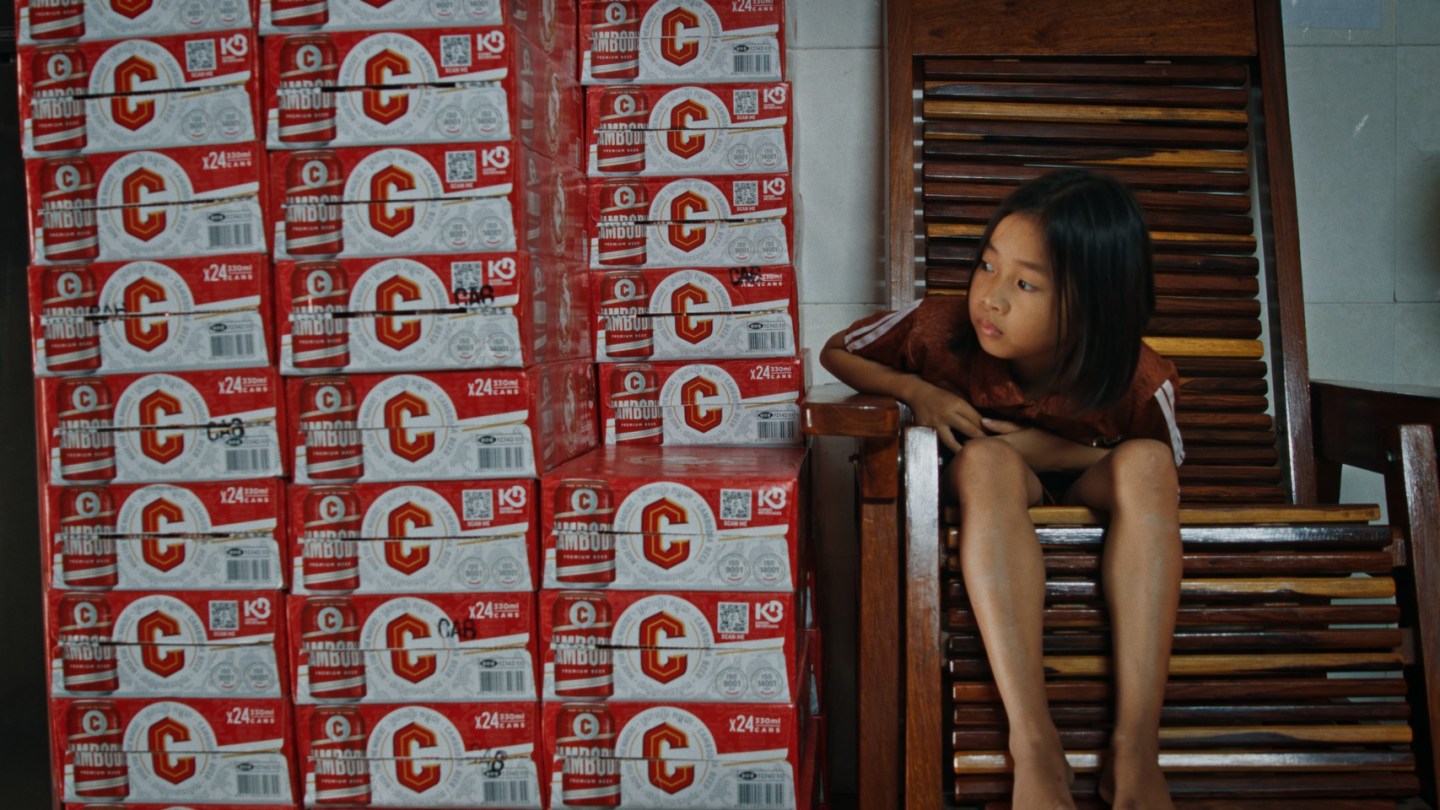


Alcohol consumption in Cambodia has increased fivefold over the past two decades, and beer has been the big driver. The country in Southeast Asia has no legal drinking age and few, rarely enforced, directives on alcohol, making it the Wild East for local and global brewers.
Cambodian Beer Dreams, the new documentary from Laurits Nansen (Welcome to the Frontline, Emilie Meng – An Investigation Gone Wrong, The Town Where Children Disappear), now explores the cocktail of factors at play far away from much of the world’s eyes and raises all sorts of ethical questions. “Through aggressive marketing, young ‘beer girls’ and promises of cash prizes, the poor population is encouraged to drink more and more alcohol – sometimes to the point of death,” the press notes for the film highlight, for example.
In Cambodian Beer Dreams, world premiering at the Copenhagen International Documentary Film Festival CPH:DOX on Thursday, March 12, Nansen follows Kim Eng, a lone activist who stands up to the beer industry and “neo-colonial alcohol capitalism” in his fight for a national alcohol law.
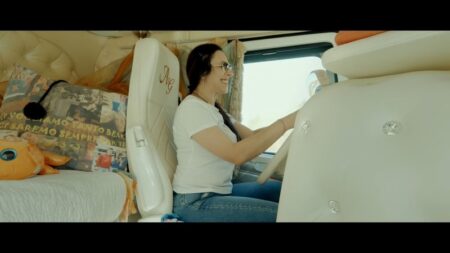
Audiences can find out what the filmmaker sees and hears on this journey in the F:act Award section of the Danish festival, whose 23rd edition runs March 11-22. But you can expect Cambodian Beer Girls, produced by Malene Flindt Pedersen of Hansen & Pedersen and Signe Skov Thomsen, to go into the dreams, such as promises of money, success and life as a party, and the nightmares, including phone threats and wandering hands.
Nansen talked to THR about how he came to make Cambodian Beer Dreams, including his personal experiences, the universal themes behind his exploration of alliances between power and money, and how he tries to take audiences inside the heads of alcoholics.
I had no idea about the rapid growth of the beer industry in Cambodia and the dangers involved. How did you find out about this and decide to make a film about it?
I wanted to do a story about alcohol because it affects a lot of people, and I wanted to look at the forces that drive and shape the way we look at alcohol. In Denmark and in Europe overall, you almost can’t see the problem, because it’s so big and so embedded in our culture. So I needed to find a new angle into this, so that we can reflect on it.
I started to do a lot of research and then stumbled onto Cambodia and saw that they don’t have a national alcohol law, alcohol consumption was just booming, and this was very intriguing to me. So I just bought a plane ticket to go there with my camera. I had an idea of what this story could look like, but when I arrived in Phnom Penh in 2022, I was still pretty surprised. I felt beer had an even bigger impact than I had expected.
In Phnom Penh and other cities, there were so many beer commercials. In many places, there are more than street signs. This is not in the film, but Kim Eng and I were driving on a road, and he was counting the beer commercials. He reached 46 within one kilometer’s drive. And they are also using the ring on beer cans and bottles – you can win a motorbike or thousands of dollars with that.
This idea of connecting gambling with alcoholism to [market to] a very poor population made me ask so many questions. What is going on here? What drove this development?
I heard you also have personal experiences with the dangers of alcohol in your family?
Yes. Like many Danes and Europeans, I have a history with that. My father died [after several years of alcohol abuse]. But I did not want to tell a personal story about that. I wanted to find out about the bigger structures behind this so that everybody can relate to it.
For me, it’s always about chasing the bigger story to see what drives it and how it affects ethics, morality and human behavior. When you have these two forces just driving parallel and together, alcohol and raw capitalism, it’s just so powerful. Both forces are so powerful and so wild. So, what happens when you unleash them like two wild animals?
Speaking of the bigger story: There are all sorts of universal angles to the story you tell…
Yes, I hope that the film has universal aspects. I hope that people can see that it’s not just a film about Cambodia and beer, but it’s a lens into our time and the future as well. Cambodia is kind of a laboratory to observe what happens when authoritarian regimes and big corporations make alliances in a way that benefit them both economically and on the power level, but it’s not necessarily good for people.
Dreams and their destruction is also a theme in the film. Cambodian people are warm and hardworking, and you have people who dream of a better life, of a better future. And in some way, these dreams and hopes are being used and corrupted to sell something. In that sense, it’s not only a story about the beer industry, but the fact that simple commodities can be used to shape people and society.
Market forces are not neutral. They have consequences. They shape people, and it can be pretty profound when profit outweighs ethics. So, it’s not an anti-beer or anti-alcohol film. I like a good IPA myself. It’s more about the scale and ethics of it.
Your doc touches on how Carlsberg has stopped working with big prices, but it has focused on another area that raises questions...
Instead, they are focusing more on young people, which is another problem. Because they would not do that back home, right? Yeah. A big part of the Cambodian population is very young. And if you are in the marketing department, you look at population numbers and you know what to do. But again, it raises ethical questions. But nobody’s watching – unless you go there with a camera.
Did you know about the use of “beer girls” to entice people to drink more before you arrived in Cambodia? Hearing about what their work involves was harrowing.
I knew about that already because of Carlsberg. There had been reports in the Danish press about beer girls and the way they handle them.
How did you approach the aesthetics of the film, going from drinking and party scenes to the serious issues and sections that have a feel of a hangover?
We wanted to create a film where you see hopes and dreams, but then also the tensions and the claustrophobic feeling that an alcoholic would experience. We are sometimes going into the mind of an alcoholic in the film, where you are kind of stuck and cannot get out. I wanted to describe this duality, the energy and the dreams, as well as the nightmares, because I think it’s important.
What’s next for you?
I have my own production company, called Eight Pictures. We are in production on a film in the U.S. right now. It’s about the obesity epidemic, another interesting issue.
Read the full article here