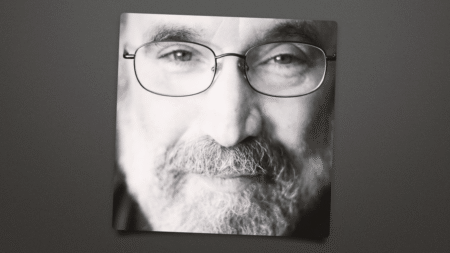







To say that Dutch documentary filmmaker Tom Fassaert likes to keep things in the family is only partly true. Yes, he has made a name for himself with his intimate, heartfelt cinematic exploration of family issues and identity. But he doesn’t keep his findings within the family. Instead, he invites viewers to join him on his deep dives into hidden histories and issues – even if it may be emotional, and at times difficult, for him, his loved ones, and viewers.
His 2015 doc A Family Affair (2015), which opened IDFA in Amsterdam and was nominated for a European Film Award, followed him accepting a surprise invitation from his 95-year-old grandmother to visit her in South Africa. The film saw him confront secrets, confessions, and illusions of a big, happy family.
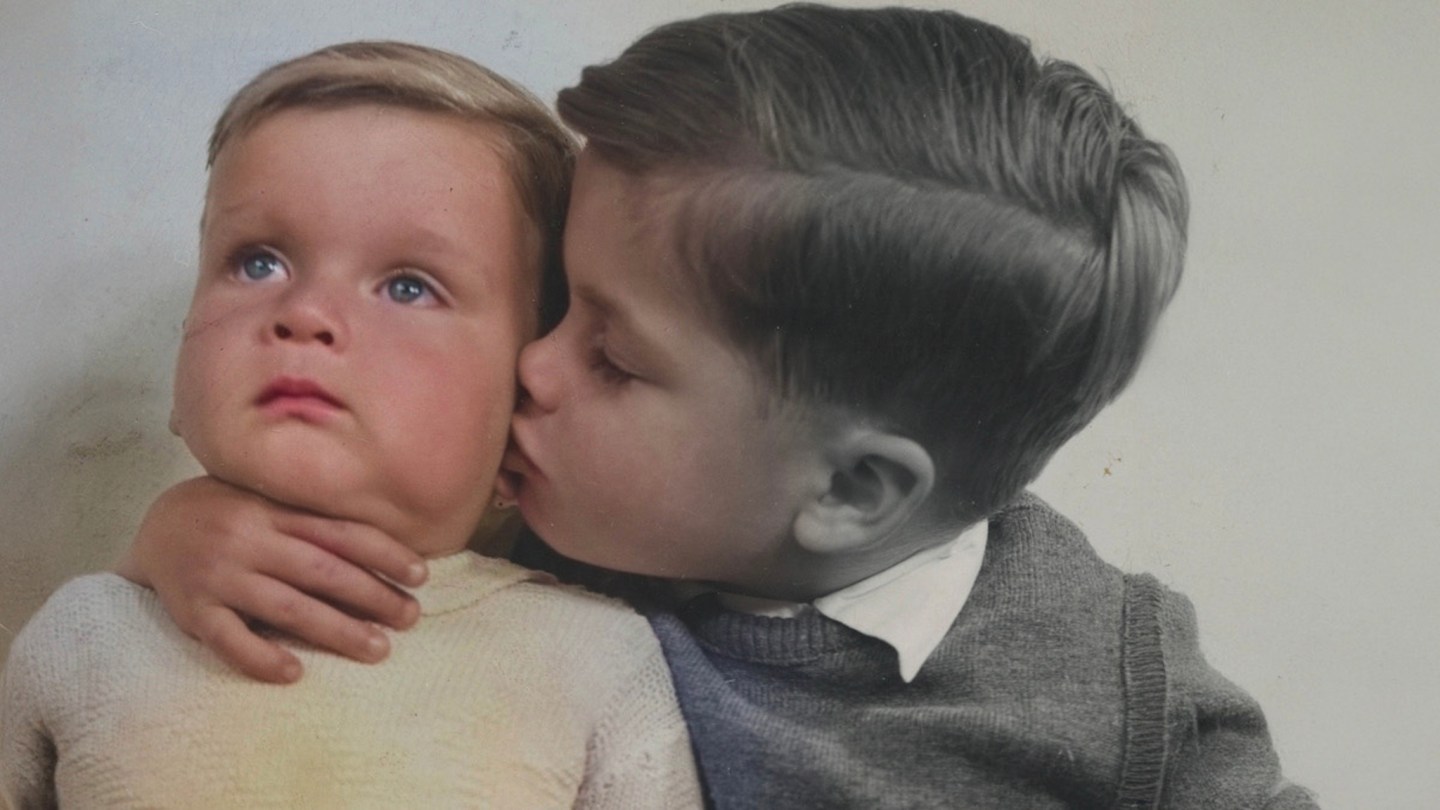
In Between Brothers (Tussen broers), the writer-director’s new family detective story, Fassaert zooms in on the relationship between his father Rob, 72, and his dad’s older brother René, 75. The film, diving into questions of family, memory, and identity, world premieres in the Limelight program of the 55th edition of the International Film Festival Rotterdam (IFFR).
Initially, the story he tells is a tragicomedy about the unusual dynamic between his father, who used to be a psychologist, and his brother, a psychiatric patient who is a hoarder and lives as a recluse. We watch Rob visiting his brother regularly and trying to help him declutter. But the film eventually morphs into a road trip of a family searching for the brothers’ unknown roots, namely their father, who left them in a children’s home when they were toddlers and disappeared from their lives for good.
“After the death of their mother, two elderly brothers make a final attempt to clear up the wreckage of their past,” reads a logline for the film. “In scenes as intimate as they are tragicomic, filmmaker Tom Fassaert, the son of one of them, is drawn ever deeper into the mystery of their long-lost father.”
Early on in Between Brothers, Fassaert wonders whether the cycle of intergenerational trauma can be broken. On the search for a possible answer, he takes audiences on a winding path full of love, drama, old and new questions, conflict, laughter, and all sorts of other emotions that families bring with them. And he wraps up the film by returning to the question of intergenerational trauma with a reveal underlying why is exploration is so important to him.
Fassaert talked to THR about the long journey that his family went on for Between Brothers, universal themes in their story, and what’s next for him.
Between Brothers is a genre-bending mix of odd-couple road trip, historical mystery, and family therapy, among other things. “Yes, it’s many things at the same time, which is also why it’s taken so long to make,” the filmmaker says, sharing that he started shooting the first material in 2016. “Between starting the shoots and finishing the edit, I became a father of two children.”
Don’t expect Between Brothers to be a talking heads and stats type of doc. “The film is investigating certain things that seem factual, yet to me, they are more emotional and psychological,” highlights Fassaert. “In many ways, in a family, things happen, traumas happen, big wars or small wars happen – parents divorcing, families falling apart. All these things happen to almost everyone of us, yet the way we deal with traumatic events differs. The way we deal with them makes one family functional and the other family dysfunctional.”
Facing such family traumas has become core to Fassaerts’s cinematic journey. “Part of what I’m attempting to do with my films is not just investigating what actually happened,” he tells THR. “I’m really much more focused on how those traumatic moments resonate throughout the lives of the people concerned, but also intergenerationally. It’s about how they cycle through generations and still affect generations that never experienced the actual happenings. I’m fascinated by these psychological mechanisms.”
Documenting interactions between people who are members of your family can’t always be easy. Is that part of the reason why Fassaert regularly makes his presence known in Between Brothers? “I’m passionate about observational documentary filmmaking, but I’m not naive,” he tells THR. “I know that the fly on the wall concept is very limited. It’s an illusion to think that my presence would not affect reality. So, I constantly try to break that idea in the film in a subtle way. I don’t want to make it too much of a meta film, but I feel it’s important for viewers to feel my presence, because this presence behind the camera is actually affecting what’s happening in front of the camera. Also, the film is extremely subjective. It’s told from the filmmaker’s point of view, with the filmmaker being a fellow family member of these two brothers.”
The writer of these lines wonders if going after, unearthing, and capturing family secrets and issues on film isn’t emotionally draining. “After A Family Affair, I felt I was done with the subject. I was just emotionally and physically burned out,” Fassaerts shares. “And I was ready to fully devote myself to my own life and stop looking at the past.”
What got in the way of that plan was – yes, you guessed it! – family. After all, soon after his previous film was completed and released, his father told him that it was time for an intervention to start cleaning up his uncle’s place. “I felt I had to go and see that, but I didn’t take the camera at first,” the filmmaker recalls. “I wasn’t planning to make a film yet. But that changed when I started observing them and seeing how, in a way, my father is so focused on creating order and has this urge to try to change his brother. They are kind of each other’s opposite. They love each other, and they suffocate each other. That ambiguity made me really want to make this film. It made me really passionate about continuing this difficult path I’m taking with these personal films.”
Editing Between Brothers was a key challenge to ensure a mix of sequences focused on information with family interactions and emotional scenes. While Fassaerts says he “shot a lot less than I shot for A Family Fair,” he acknowledges that “there were loads of darlings I had to kill” in terms of footage he really liked. “There are scenes where, up until now, I’m thinking: ‘Why couldn’t I find a place for them in the film?’ Because they’re so funny or emotional or ambiguous. But you have to make these really tough choices.”
Something new in Between Brothers that the filmmaker hadn’t used before is archive footage, including found footage. “This material is from amateur black-and-white films from the same era as the history we focus on,” Fassaert explains. “I was taking a risk with that. I’m not explicitly telling you that some of the images you see are not real images [in the sense that they are not of my family]. I thought about the ethical challenge of that, but it [worked as an added illustration] for this really subjective film. I wanted to take that risk because I don’t want to repeat myself. I think that’s the death of every creative person – if you start repeating yourself.”
What’s next for Fassaert? The Dutch filmmaker is actually working on another moving doc focused on family and trauma. “The film is called In Your Shadow,” he tells THR. “If you think A Family Affair and Between Brothers were emotional and personal, this next film is going even deeper and will be an emotional rollercoaster. It focuses on my father-in-law, who was a guerrilla fighter against Apartheid.”
Adds the filmmaker: “He was born and raised in Soweto in Johannesburg, and then was part of the ‘Generation of ’76,’ the uprising of students. The protest was never meant to be violent, yet it became a very violent protest. He became involved in such a way that he couldn’t turn back anymore, and he had to skip the country. And then he joined the African National Congress ANC’s armed wing, the MK.”
In 14 years in exile, he rose through the ranks. “Internally, at a certain moment, there was such a Stalinist kind of paranoia that everyone was suspecting everyone of being a traitor or spy or so,” Fassaert explains. “There were mutinies, there were killings, and there were prison camps worse than you can imagine. He became traumatized. And in ’89 when he skipped Angola, not to move back to South Africa, but to move to the Netherlands with his family and my wife, who was born in Angola. He decided that the past was the past and that he was never going to talk about what happened.”
Concludes Fassaert: “So, this film is actually an ultimate attempt to slowly but steadily open him up and try to deal with this trauma that’s not only his trauma, but that is also casting a shadow on the whole family. So it is a really intense process.”
Read the full article here