




A family drama of a different kind is Slovakia’s submission for the best international feature film category at the 2026 Oscars.
Father (Otec), directed by Tereza Nvotová (Nightsiren, Filthy) and written by her and Dušan Budzak, world premiered at Venice and recently won the Golden Eye for best feature film at the Zurich Film Festival, as well as the best film and best screenplay awards at the Stockholm Film Festival. Plus, cinematographer Adam Suzin was awarded the Golden Frog for best first feature at Camerimage.
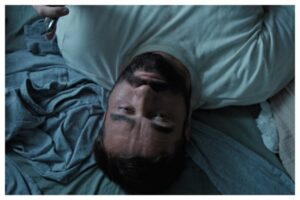
Inspired by true stories, the film stars Milan Ondrík as the titular father Michal, a devoted family man who, as a result of a temporary memory lapse and a resulting tragedy, sees his life spiraling out of control. Emotionally and visually immersive, the film from Danae Production, Moloko Film, and Lava Films, explores such themes as memory, love, grief, guilt and forgiveness. Intramovies is handling sales for Father, a trailer for which you can check out here.

Nvotová tells THR that the cinematic language of the film was just as important for her as the story itself. “When I found out about this story, I thought, ‘I don’t know how to film this. It’s impossible!’,” she recalls. “I thought it was just going to be this excruciating tragedy that nobody wants to see.”
But she found a way to handle this challenge. “I felt it shouldn’t be done in a conventional way, where everything unfolds from an objective point of view,” she says. “I thought, if the audience was completely absorbed in Michal’s perspective, then it would add both empathy and ambiguity at once. I wanted to create something immersive and experiential. That’s also why we used very long shots that flow from one scene to another, like in life.”
[SPOILER WARNING: This paragraph contains spoilers about the plot and characters in Father.]
What Father explores is a phenomenon known as “Forgotten Baby Syndrome,” and if you are not aware of it, don’t worry — the filmmaker wasn’t aware of it either before taking on the movie. “Before I met my co-writer, I had heard stories and read articles about parents forgetting their child in a car,” she tells THR. “I always assumed that these were cases of neglect, that they deliberately left them or something. And then I met Dušan, who told me the tragic story of his best friend, who forgot his own child in the car. He was there right with him after it happened and through this whole period afterwards, and it completely changed my perspective on the subject.”
Scary and eye-opening alike is the fact that this phenomenon is not as uncommon as one would think. “What’s very interesting is that it doesn’t happen only to men or women or certain ages or this or that demographic or whatever,” says Nvotová. “It doesn’t matter. It happens to everyone. It’s basically about the architecture of our minds and how memory works.”
She concludes: “There is this layer of tragedy, of course. But it’s also talking more about human existence and how we think we’re in control when we’re not really.”
It comes as no surprise that the making of Father was intense for the whole creative team. Star Ondrík even told the director that it was the most difficult role he’s ever taken on.
The cinematography, including a nearly 20-minute single-shot scene, was also designed with one core focus: “We are in Michal’s head, and we feel like he feels,” says Nvotová. “And sometimes we are even going where he wants to go in his head. For example, when he’s in the court and he loses himself in the world outside the window, the camera flies out of the window.”
The result is a lot of raw emotion, complexity and ambiguity. “It would have been very easy to make him a victim or a villain,” says the writer-director. “I didn’t want that, so I was always trying to walk the edge between these feelings and questions, but without giving the audience answers.”
And she is happy about the reactions she has been getting. “Many people are writing me messages to say how the film ignited conversations,” she shares. “That is what I love.”
Father is also the kind of story and cinema the filmmaker loves.
Says Nvotová: “I’m picking stories I want to tell. If I can’t stop thinking about it, if it makes me question my reality, like with this, that’s perfect. I thought I was never going to make this story, and it just didn’t let me go.”
Read the full article here